Get Full Government Meeting Transcripts, Videos, & Alerts Forever!
Get email alerts on the Workforce Telecommuting topic
No spam. Unsubscribe anytime.
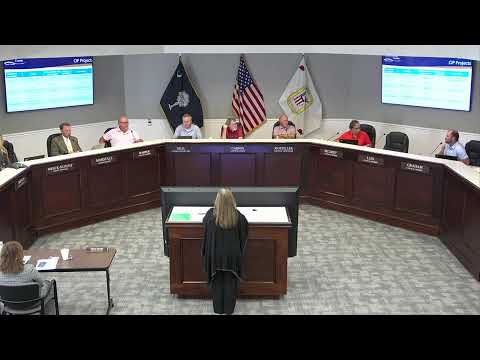
Lancaster County reviews telecommuting policy; council raises monitoring and customer-service concerns
Summary
Council reviewed a formal telecommuting and remote-work policy adopted during the personnel manual rewrite in September 2024. Staff said seven county positions currently use structured remote-work agreements; council members asked for details, monitoring measures and whether remote roles meet public-facing duties.
County Administrator (presenting) summarized Lancaster County’s telecommuting and remote-work policy and council members expressed concerns about monitoring, customer service and which positions qualify.
“Within your agenda item, we actually have the policy from personnel manual,” the administrator told council, describing a policy added during a full personnel manual rewrite in September 2024. The policy requires an employee to complete probationary periods, obtain the department director’s approval and the final sign-off from the county administrator before remote work is permitted.
The administrator said the county currently has seven positions operating under a structured remote-work agreement; two of those positions are fully remote, and the others work remotely more than one day per week. The administrator emphasized the distinction between the formal remote-work policy, alternate work schedules and seasonal “summer schedules.” He said remote work requires written agreements so personnel rules, liability and insurance considerations are clear.
Council members pushed for more detail. “The 1 thing that bothers me, we have 7 out of how many,” Councilman Harper said, arguing county staff should be visible to the public. Other council members asked whether any of the seven remote positions are public-facing; staff replied some interact with the public but not in a regular walk-up capacity. Several council members asked for a private briefing listing the seven positions and the percentage of time those employees are in the office.
Council members also raised monitoring. “We don't have no way of monitoring what they're doing,” Councilman Monstell said, urging a system that tracks remote activity or hours before expanding the program. Other members suggested simple steps—phone forwarding, schedule expectations and layered approvals (director, HR, administrator)—as interim controls.
The administrator said the current approval path and position-by-position review are intended to limit misuse: “It's 3 levels of approval that they have to go through. The director first, HR, and then the administrator.” Council asked staff to provide confidential information to members listing which positions are currently approved for remote work and to return with possible monitoring or productivity-verification options and recommendations on whether remote work is intended as a permanent recruitment tool or a temporary accommodation.