Get Full Government Meeting Transcripts, Videos, & Alerts Forever!
Get email alerts on the Wildlife Habitat topic
No spam. Unsubscribe anytime.
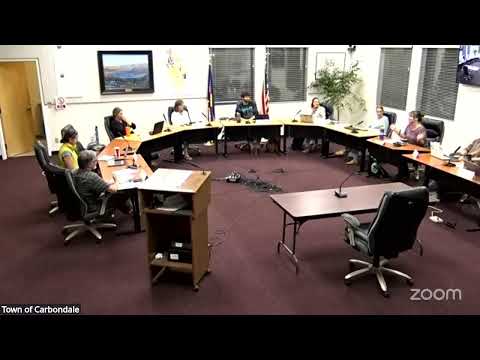
Carbondale commission approves pilot to install osprey nesting poles at Gateway Park
Summary
The Carbondale Parks and Recreation Advisory Commission voted to begin a pilot project to install a standalone nesting pole and platform for ospreys at Gateway Park (on town land at the Bob Terrell State Wildlife Area), after hearing from a presenter who had coordinated with Colorado Parks and Wildlife.
The Carbondale Parks and Recreation Advisory Commission voted to start a pilot project to install an osprey nesting pole and platform at Gateway Park on town-owned land at the Bob Terrell State Wildlife Area.
The pilot was introduced by a presenter identified as Matteo (presenter) and discussed at the Sept. meeting; the commission voted in favor after staff and multiple commissioners expressed support. Eric Bresling, town parks staff, said Colorado Parks and Wildlife (CPW) had been consulted and is “in favor of the project.”
Matteo told the commission his recommendation was “to really look at the Bob Terrell State Wildlife Area and, you know, at the Gateway Park there.” He and staff described placing a freestanding pole and platform (rather than an attachment to an existing utility pole) near the riverfront, where ospreys tend to nest.
Commissioners and staff raised operational and legal questions during discussion. Eric Bresling said the town’s municipal code contains no current prohibitions that would block the project, though he cautioned there could be code or permitting issues that emerge later. Matteo and staff noted that state and federal wildlife rules could constrain activities during nesting season; Matteo referenced conversations with CPW and with former U.S. Forest Service wildlife biologist Phil Nylund about timing restrictions tied to nest construction and egg-laying.
Commissioners also discussed logistics and costs. Bresling said the town would need to install and anchor a new pole — including grounding and concrete footings — rather than place the platform on an existing utility structure. He estimated ongoing maintenance at the Gateway site already costs the town up to about $6,000 a year for trash, toilets and road grading; the nesting pole and platform installation costs would come from the town’s parks budget or gateway funding. Matteo presented vendor price examples (telephone pricing for poles ranging from about $80 to a few hundred dollars) and said volunteers from Audubon and other community members were willing to help with installation and monitoring.
Commissioners asked staff to coordinate with CPW wildlife biologist John Groves on siting (Groves recommended locating the pole farther downstream from the river put-in where there is less human traffic), and to return with specific site details, permitting needs and budget lines. The commission approved a motion to begin the site-identification process and move the project forward.
Commissioners described the project as low-cost, likely to engage volunteers, and potentially expandable if the pilot succeeds. The commission directed staff to continue coordination with CPW and to bring a follow-up recommendation with site plans and budget information.
Notes: the commission’s approval was recorded as a motion to “approve Matteo’s proposal and start the process towards installing” the platform; the motion was seconded and carried with the verbal vote “all in favor, aye.” Individual roll-call votes were not recorded in the meeting transcript.