Get Full Government Meeting Transcripts, Videos, & Alerts Forever!
Get email alerts on the Groundwater topic
No spam. Unsubscribe anytime.
University of Rhode Island outlines townwide well‑water study, seeks Tiverton volunteers for Oct. 15 sampling
Summary
Researchers from the University of Rhode Island described a multi‑phase groundwater study for Tiverton, asking well owners to volunteer for an initial water‑quality sampling event planned for Oct. 15 and explaining selection, sampling and lab procedures.
Researchers from the University of Rhode Island on Thursday described a new well‑water study for Tiverton that will begin with a one‑day, volunteer sample collection planned for Wednesday, Oct. 15, followed by lab analysis and a written report to the town.
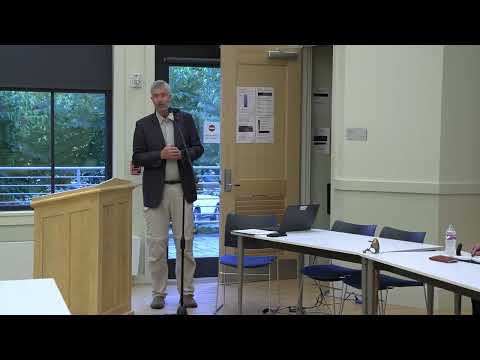
Dr. Thomas Boving, a hydrogeologist at the University of Rhode Island’s Department of Geosciences and lead of a three‑member URI team, said the study’s first phase will focus on water quality in areas that rely on private wells and on‑site wastewater systems. “Ground water is the invisible water,” Boving said, adding that the project aims to fill data gaps and help the town understand where septic systems or development may be affecting drinking water.
The study will use homeowner‑collected samples plus additional instrumentation at a small subset of wells. Participants will be asked to run a faucet for roughly two to five minutes, fill a sterile plastic bottle provided by URI, label it, and deliver it to town hall on Oct. 15. Bacterial analyses require the sample to reach the lab within 24 hours, so organizers said samples should be dropped off at Town Hall no later than 4 p.m. on the collection day; URI will transport the samples from town hall to its lab for processing.
Boving described the tests the project will perform in this first phase: routine bacteriological analysis and screening for nutrients such as nitrate, ammonia and phosphorus. He said more expensive tests — for pesticides or PFAS, for example — are not part of the basic, affordable lab package and would require additional funding. “If it does test positive, what’s the next step? Next step is to create a map,” Boving said, describing a plan to present results to the town and to recommend follow‑up measures where clusters of contamination appear.
The planning board’s chair, Bill Verlack, said the study is intended to provide credible, quantifiable data to inform planning decisions. “One of our major concerns is that the quality of our groundwater remain intact, and not be subject to any sort of degradation as a result of development,” Verlack said. He said the planning board worked with the town to contract for the study so results can feed into conversations about future development and possible mitigation.
URI also plans to install data loggers in a few select wells to measure water‑level fluctuations continuously. Boving said loggers can sample at short intervals (he noted the team can program very frequent measurements) to build a time series that helps the town understand seasonal and pumping effects on groundwater levels. He described that work as a potential follow‑on (quantity) step that would likely require additional contracting beyond the initial quality‑testing phase.
Selection and timeline: URI will review volunteers and select a representative set of wells by Oct. 1; town staff (identified in the meeting as Ed) will notify those chosen and coordinate a hands‑on workshop scheduled for either Oct. 10 or Oct. 13 to distribute sampling kits and demonstrate procedures. Organizers said they aim to run quarterly rounds (October, January, April and summer) if resources permit and mentioned a working target of roughly 30 samples per separate round as a planning figure.
Logistics and participant guidance: organizers said samples should be taken from a faucet located before any home filtration systems — for example, near a pressure tank or another point that delivers water directly from the well — so results reflect raw groundwater quality rather than treatment system performance. The team will supply sterile bottles, labeling materials and a short training session a few days before Oct. 15. They asked volunteers to avoid leaving bottles in sunlight, to keep samples cool (ideally in a cooler with ice) and to hand them to town hall staff by the deadline so URI can maintain the cold chain to the lab.
Privacy and reporting: Boving said individual household results will be treated so that only the homeowner receives property‑level information; aggregated maps and area‑level findings would be presented to the town. He and board members repeatedly noted that the study will state both what the data show and what they do not show, and that positive findings in a neighborhood would prompt recommendations and further investigation rather than immediate enforcement or public naming of properties.
Questions remaining after the meeting included details about the number of participants that could be accommodated, exactly which homes would be selected, whether homes with filtration can participate (yes, if samples are taken before the filter), and practical concerns about drop‑off windows. Organizers said they will follow up by email and that Ed will circulate clarifying questions to volunteers before final selections are made on Oct. 1.
The URI team will submit a formal report to Tiverton with recommendations and, if necessary, proposals for further study or remediation. The planning board characterized the work as an evidence‑gathering first step to inform potential policy or infrastructure action, with the quantity‑focused monitoring and modeling as a possible second phase depending on results and budget.