Get Full Government Meeting Transcripts, Videos, & Alerts Forever!
Get email alerts on the Public Safety Traffic Panhandling topic
No spam. Unsubscribe anytime.
Eugene council hears proposal to ban handing items from vehicles in travel lanes; no vote taken
Summary
Police presented a draft ordinance to bar the transfer of money or goods from vehicles in travel lanes, citing pedestrian safety. Councilors split on whether the change is necessary or constitutional; the body did not vote and will reschedule the item so an absent councilor can participate.
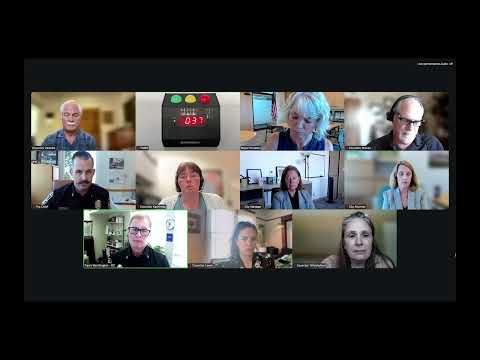
Police Chief Chris Skinner brought a sample ordinance to the Eugene City Council work session on Sept. 17, 2025, asking the council to consider banning the exchange of money or goods from motor vehicles while stopped in travel lanes. The council discussed the proposed “unlawful transfer” rule, its public-safety rationale and legal risks; members did not vote and directed staff to reschedule the item so the absent councilor can participate.
The proposal grew out of a council request from an April 2025 work session; Chief Skinner opened with a brief update on related enforcement efforts including metal-theft reductions and a city effort to return shopping carts to stores. “I have, since that time, witnessed very, several near misses as I've watched people walk into traffic,” Skinner told council, describing incidents in which pedestrians crossed lanes to accept items passed from vehicles. He said the department prefers an education-first approach but that an ordinance would give officers a clear, enforceable basis to stop vehicles when they see the transfer occurring.
The nut graf: councilors framed the proposal as a traffic-safety measure, a public-comfort issue and a homelessness-related policy all at once. Supporters emphasized pedestrian safety; opponents said existing traffic and disorderly-conduct laws already address the core hazards, and one councilor raised free-speech and constitutional concerns.
Councilor Mike Clark (first speaking) and Councilor Groves argued for sending the draft to a public hearing. Clark said handing money out of a vehicle is “a traffic safety issue,” and Groves said the measure does not stop people from giving — it only forbids exchanges from moving travel lanes and would allow donors to pull off the roadway. Several councilors urged an education campaign before strict enforcement.
Councilor Zelenka challenged the ordinance's legal footing, citing precedent in which panhandling-focused regulations were found unconstitutional. The city attorney (Catherine) answered that the proposed ordinance would regulate the motorist’s conduct — a traffic regulation — rather than the street solicitors’ speech, but Zelenka said he believes it would be vulnerable to a challenge and suggested that an early enforcement action could invite litigation.
Other councilors voiced a mix of concerns. Councilor Kaczynski asked about staff and signage costs; Chief Skinner said the department has community-outreach channels it would use but did not provide a firm cost estimate and noted sign expenses would fall to public works. Councilor Yeh and Councilor Leach urged the council to focus more broadly on traffic-safety priorities such as speeding and failure-to-yield, which show more consistent correlation with serious crashes in the city’s crash reports.
Chief Skinner described how Springfield and other Oregon cities implemented similar ordinances in recent years with heavy education components and relatively little citation issuance; he said Springfield relied mostly on conversations and warnings rather than tickets. Skinner also noted that, under the proposed draft, an officer would need probable cause — the stop must be witnessed by a sworn officer — for a traffic stop to enforce the rule.
Outcome and next steps: because Councilor Keating lost connection and had asked to participate, council did not take a vote on the ordinance. The mayor and city manager said they will schedule when to bring the proposal back (options include a Monday night action item, a public hearing, another work session or sending the draft to a hearing with requested changes). No formal motion or vote was recorded at the Sept. 17 session.
Ending: Councilors and staff agreed on the value of additional information and outreach before formal action. Chief Skinner and staff will supply any requested follow-up data about enforcement outcomes in peer cities and the department’s planned education campaign before the ordinance returns to council for a formal vote.