Lifetime Citizen Portal Access — AI Briefings, Alerts & Unlimited Follows
House commission hears testimony on bill to expand support for family caregivers
Loading...
Summary
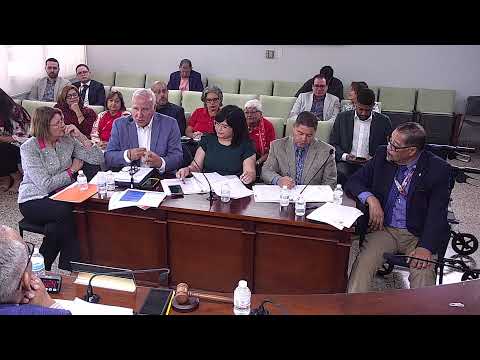
SAN JUAN — On Sept. 15, 2025 the House Commission on Older Adults and Social Welfare held a public hearing on Senate Project 652, a bill to amend Law 82-2023 to expand Puerto Rico’s public policy for informal (family) caregivers and to align provisions with the federal Recognize, Assist, Include Support and Engage (RAISE) Family Caregivers Act (Public Law 115-119).
SAN JUAN — On Sept. 15, 2025 the House Commission on Older Adults and Social Welfare held a public hearing on Senate Project 652, a bill to amend Law 82-2023 to expand Puerto Rico’s public policy for informal (family) caregivers and to align provisions with the federal Recognize, Assist, Include Support and Engage (RAISE) Family Caregivers Act (Public Law 115-119).
The measure drew broad endorsement from advocates, health agencies and the University of Puerto Rico Medical Sciences Campus, but witnesses and legislators pressed for concrete implementation steps: a usable caregiver registry, funding to run training and respite programs, and clearer regulatory language to make benefits operational.
José Acaron, representing ARP, told the commission that caregivers are central to the health system and that the bill’s aims grew from multi‑sector work and prior commissions. “el cuidador familiar, el informal, es 1 de los principales actores del sistema de salud,” Acaron said, arguing the bill should recognize the caregiver’s role, expand training, improve workplace flexibility and provide tools for financial planning.
Acaron gave several estimates and findings cited during the hearing: two‑thirds of people over 45 in Puerto Rico have caregiving experience; the island likely has roughly 400,000–500,000 people who perform caregiving tasks; about 70 percent of employers report employees have requested time off for caregiving; and only about 4 percent of employers offer specific support programs for caregivers.
The Department of the Family endorsed the bill but focused on technical wording and execution. Lic. Nicole Báez, representing the Department of the Family, said the registry of informal caregivers created under Law 82-2023 is active but lightly used: “Registrados están alrededor de 100 cuidadores informales.” Báez said the department has a near‑final draft regulation (reglamento) to implement Law 82 and its forthcoming amendments and told the committee she would provide the draft to legislators in roughly three weeks.
The Department of Health also endorsed the measure and recommended funding to support its provisions. Luis Olmedo, interim secretary of the Department of Health, backed the policy changes and asked lawmakers to “considerar enmendar el proyecto para que se contemple la asignación de fondos necesarios. Lo que representa una asignación aproximada de 200000 dólares,” to help stand up training and support services.
The University of Puerto Rico Medical Sciences Campus, represented by Dr. Ivonne Jiménez Velázquez, detailed existing educational capacity and requested specific resources to expand training. The campus proposed an estimated $150,000 for staff and program support (faculty auxiliary ~$60,000; administrative assistant ~$30,000; nine workshops ~$30,000; speaker fees ~$30,000) to scale geriatrics and caregiver training and to integrate oral health, psychiatry and interdisciplinary modules into caregiver education.
Other presenters urged mental‑health supports, respite services, and formal links between clinical teams and caregivers. Josué Paredes Román of the Administration for Mental Health and Addiction Services recommended guaranteed, ongoing training, prioritized access to mental‑health services for caregivers and periodic program evaluations. William Pellot of the Office of the Advocate for Persons with Disabilities urged lawmakers to consider legal tools to help caregivers manage practical tasks for people with severe disabilities; he referenced the Spanish civil‑law concept of a curador as an idea to study further rather than an immediate amendment.
Legislators raised recurring concerns about implementation: how to increase registration beyond the roughly 100 people now on the Department of Family registry; how to ensure that municipalities, insurers and existing municipal registries coordinate data (several legislators suggested using municipal and insurer records to expand reach); and whether budgetary impact statements and line‑item breakdowns should accompany requests for appropriations. Representative Ángel Fulket, Representative Adriana Gutiérrez and Representative José “Cheito” Hernández all pressed witnesses on registry outreach and the need for operational tools so the law would not remain “letra muerta.”
No formal vote on PS 652 occurred during the hearing; presenters provided written materials and the committee requested follow‑up information, including the Department of the Family’s near‑final reglamento and more detailed fiscal breakdowns from the Department of Health and UPR Medical Sciences.
The hearing closed with the committee chair thanking participants and noting the record would remain open for the requested follow‑up materials. The committee did not take a legislative vote at the session’s end.
The hearing combined policy proposals—training requirements, emergency‑planning priority for caregivers, a strengthened caregiver registry and workplace flexibility measures—with practical implementation questions: who will pay for new programs, how to identify caregivers who do not self‑identify, and how to ensure municipal and health‑system coordination.