Get Full Government Meeting Transcripts, Videos, & Alerts Forever!
Get email alerts on the Fire Department Budget topic
No spam. Unsubscribe anytime.
Big Bear Fire Authority adopts amended 2025-26 budget after heated debate over brownouts, reserves and ambulance costs
Summary
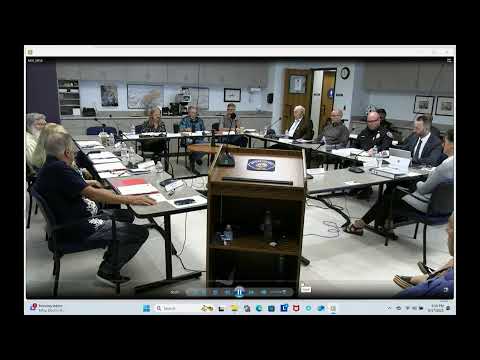
The Big Bear Fire Authority approved an amended fiscal year 2025–26 budget at its Sept. 9 meeting after a lengthy and sometimes contentious discussion about staffing levels, overtime and how to fund the department.
The Big Bear Fire Authority approved an amended fiscal year 2025–26 budget at its Sept. 9 meeting after a lengthy and sometimes contentious discussion about staffing levels, overtime and how to fund the department.
Chief Luke Wagner presented the budget the board had seen in prior sessions: an operating plan that included roughly $1 million in additional reserves and a set of possible cuts the administration and the finance ad hoc committee had discussed. Wagner and staff described about $2.1 million in potential reductions that could be achieved by a mix of personnel changes, deferred capital work and operational adjustments. Those proposals included delaying a $150,000 roof replacement at Station 282, eliminating a health retirement account (HRA) benefit for ambulance operators ($75,000), not backfilling two vacant firefighter positions (estimated $276,364), reductions in administrative pay, and the use of targeted engine “brownouts” estimated to save about $440,000 annually. Wagner told the board the list of options was intended to reduce the likelihood of brownouts but that many of the reductions would themselves affect service capacity.
The board debated the proposals for more than two hours. Directors pressed staff for more detail on ambulance revenue and the department’s large overtime line (the budget showed nearly $589,000 of ambulance overtime), the composition of the $237,430 fire‑prevention salary line, and why a $39,500 reimbursement to the Community Services District (CSD) for street‑light costs appeared in the authority budget. Director questions also focused on whether some estimates (for example, the take‑home vehicle savings of about $12,004.28) included depreciation and on how much of the ambulance overtime reflects interfacility transfers.
Public commenters and several board members warned against brownouts as a way to save money. Multiple residents said brownouts would lengthen response times and risk lives, and cited examples and news reports where reductions in coverage had had tragic consequences. Members of the public also raised concerns about how property‑tax shares between the city and the fire protection district are being allocated; one speaker (Patrice Duncan) said the city had been withholding funds and cited state law and AB 8 in support of her claim; board members and staff responded that the allocation issue is governed by the JPA and by property tax distribution rules and would require further documentation.
After several failed motions to adopt different amended budgets, the board adopted a version of the budget that excludes the $150,000 roof replacement at Station 282, removes the $75,000 HRA benefit for ambulance operators, and omits the $39,500 street‑light reimbursement to the CSD. The board also directed staff to return next month with the fiscal ramifications and remaining issues created by the adopted budget. The adopted motion was approved by roll call (majority in favor; see meeting transcript for the roll call record).
Votes at a glance - Consent calendar (FA‑1, FA‑2, FA‑3): approved by roll call earlier in the meeting. - Budget (FY 2025–26): adopted as amended — removed Station 282 roof funding ($150,000), health retirement account for ambulance operators ($75,000), and $39,500 reimbursement for CSD street lights. Board directed staff to report back on funding ramifications. - Other formal actions (summary, see provenance and minutes): auction of surplus fleet approved; November meeting (Veterans Day) cancelled; ad hoc strategic planning committee disbanded; board removed further consideration of the proposed scenario 4 Mello‑Roos/CFD item from its agenda.
Why it matters The budget decision sets staffing and capital priorities for the coming year and leaves open several contentious funding and governance questions: whether the two JPA partners (the city and the CSD) will fund the authority on a strictly 50/50 basis as interpreted by some directors, how ambulance revenues and costs should be recorded and allocated, and whether service reductions (brownouts) are acceptable as a cost‑saving tool. Staff will return with a memorandum on the practical and accounting implications of the board’s changes.
What the board directed next Staff were asked to return with a report at the next meeting outlining: (1) how the adopted reductions change cashflow and invoice requests to the JPA partners; (2) detailed ambulance revenue, write‑off and overtime analysis; (3) clarifications on the street‑light line item and any offsetting revenue; and (4) the operational impact of not funding the Station 282 roof and the HRA for ambulance operators.
Context and background Wagner said the finance committee and the chief had identified approximately $2.1 million in possible reductions, through combinations of delayed capital, staffing and benefit changes. Brownouts — temporary reductions in assigned engine companies the department described as sometimes necessary to avoid layoffs — were presented as an option that could save roughly $4,050 per engine‑day but would reduce responses in parts of the valley.
Public reaction Speakers at public comment urged the board not to reduce service: residents described concerns about longer response times for medical and fire incidents and urged preservation of current staffing. Others asked for transparency on how property tax revenues and CSD pass‑throughs are being handled.
Ending The board adopted a budget intended to reduce the authority’s near‑term spending while keeping the discussion about parity and longer‑term funding alive. Staff will return with the requested analysis so the board can evaluate both operational impacts and the mechanics of invoicing the JPA partners.