Get Full Government Meeting Transcripts, Videos, & Alerts Forever!
Get email alerts on the Local Sales Tax Public Safety topic
No spam. Unsubscribe anytime.
Mount Shasta officials propose 1.5% sales tax to shore up fire, police staffing
Summary
City staff and public safety chiefs told a town-hall audience the city faces a structural budget gap and are proposing a 1.5% general sales tax on the June 2026 gubernatorial ballot that officials say would raise about $2.6 million a year; no formal city council vote was recorded at the meeting.
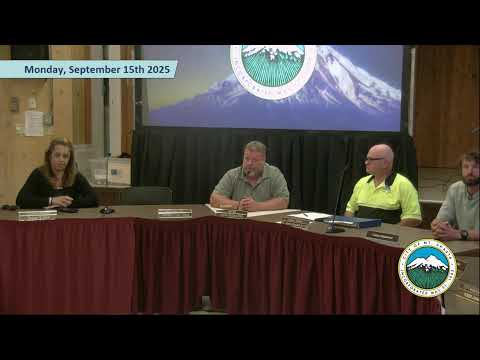
Mount Shasta city staff and public safety leaders outlined a proposal on Oct. 25 to place a 1.5% general sales tax measure on the June 2026 gubernatorial ballot to avert further cuts to the fire and police departments.
City manager Todd Juhaas told residents the city is “at a critical juncture” and described declining sales and bed tax revenue, accounting corrections that reduced an earlier reserve estimate, and a change in how online sales taxes are allocated as key drivers of the shortfall. Juhaas said the proposed 1.5% increase would raise about $2,600,000 a year.
The proposal would appear as a general sales tax increase requiring a simple majority (50% plus one) to pass. Juhaas said the city’s consultant recommended the 1.5% amount and advised staff to pursue the June 2026 election timeline rather than a special or November ballot. City staff stated they intend to follow that recommendation; the meeting did not record a formal city council vote to place the measure on the ballot.
Why it matters: Fire and police officials reported staff losses and service impacts that they said could worsen without new revenue. “For the last few years, we have been operating understaffed and with an annual call volume that is only increasing,” said Corey Burns, fire chief for the Mount Shasta Fire Department, summarizing the department’s staffing and response concerns. Burns and other speakers stressed risks to response times, firefighter safety and the department’s ability to meet nationally recommended staffing standards.
Police Chief Robert Gibson said the department has cut nearly $340,000 from its budget and that personnel reductions were required to balance the books. “The only way to cut now is personnel, and, that’s the reality out there,” Gibson said. He described losing one full-time officer, one part-time on-call officer and a dispatcher as part of recent cuts.
Budget drivers and limits: Juhaas pointed to three structural issues: lower retail sales and lodging (bed) tax collections, accounting corrections that revealed the city was not holding the previously reported 24% reserve, and changes in sales tax allocation tied to online fulfillment centers and a 1955 law commonly referred to in the presentation as “Bradley Burns.” Juhaas said large out-of-area fulfillment centers can claim collection at their facility and that reduces sales tax revenue that previously went to Mount Shasta.
What the measure would and would not do: City staff described the measure as a general sales tax, not a dedicated public-safety-only tax, meaning a simple majority vote would suffice. Officials said, however, that public safety staffing would be a priority for the funds. Juhaas said the city would establish an independent oversight committee, publish annual independent audits and issue public reports on spending if the measure passes.
Operational impacts cited at the meeting: Fire staff said the department is short two paid positions relative to its previous staffing level and that volunteers, though committed, are often inexperienced. Volunteer firefighter Katie Hikura, a former paid staff member, said the department is not meeting NFPA staffing standards and described instances in which only two responders were available for serious medical calls. She cited the NFPA guideline that four personnel should be on the first arriving engine within four minutes for structure fires.
Speakers also warned of downstream effects: volunteer reliance and slower response times can reduce the department’s Insurance Services Office (ISO) rating and, in turn, raise homeowners’ insurance costs, a point raised and affirmed at the meeting.
Grants and offsets: Officials described several grants that reduced near-term pressure but not enough to close the gap. Gibson said the police department has a roughly $2.9 million grant that funds multiple positions (a full-time officer, a full-time task-force officer and a code enforcement officer) and that COPS funding covers another officer and K-9 program costs; Gibson said those grant funds do not eliminate the broader structural deficit. Fire staff noted a successful Assistance to Firefighters-type turnout grant of about $325,000 for new personal protective equipment, and a fuels-reduction grant for mitigation work — but cautioned grants mean little without paid personnel to implement them.
Public comment and alternatives: Dozens of residents spoke at the town hall. Comments ranged from full support for the tax to requests for more detailed, itemized goals and alternatives. Some residents urged the city to pursue targeted programs alongside the tax, including stricter enforcement or fines for absentee landowners to encourage fuels reduction, better coordination with U.S. Forest Service for hazardous-fuels treatments, a townwide emergency siren, and reconsideration of city boundaries or incorporation of adjoining neighborhoods to grow the tax base.
Questions and next steps: Residents asked why the measure was set at 1.5% and whether city officials had modeled alternative amounts tied to explicit staffing levels or response-time targets. Juhaas said the consultant’s polling recommended the 1.5% level and recommended the June election timetable; city staff said they would continue community outreach and provide more details before filing deadlines. The meeting ended with city staff saying they would continue public engagement through June.
No formal council vote to place the measure on the ballot was recorded during the town hall. City staff described intent to pursue the consultant-recommended path and to bring formal actions before the council in accordance with filing deadlines and legal requirements.