Get Full Government Meeting Transcripts, Videos, & Alerts Forever!
Get email alerts on the Meeting Records And Vision Clearance topic
No spam. Unsubscribe anytime.
Planning commission discusses meeting minutes policy and vision-clearance enforcement; staff advised to notify residents about obstructing vegetation
Summary
The commission discussed whether to rely on published audio/video recordings instead of written minutes for regular meetings and addressed sightline concerns from residents, with staff advising use of the community service officer for obstructing trees and vegetation.
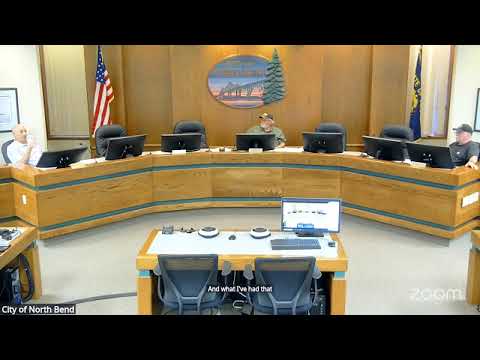
The North Bend Planning Commission discussed two items under other business on Sept. 15: whether written minutes are required for regular meetings, and neighborhood sightline problems caused by vegetation near intersections.
The city recorder (staff) told commissioners that state law allows the official record of meetings to be either written minutes or an audio/video recording. "Written meetings are no longer required for regular meetings because all meetings are recorded and published on In Q. State law, state law allows the official record of the meeting to be either in written or an audio or video recording," the recorder said on the record. The recorder clarified that written minutes would still be required for meetings that include a public hearing or other proceedings that "move the record." Commissioners discussed the workload trade-offs and indicated general support for relying on recordings for routine meetings while retaining written minutes for hearings and votes.
Separately, residents raised safety concerns about trees and tall vegetation that block sightlines at local intersections. A staff member advised that residents should contact the community service officer, who will send an advisory to property owners when vegetation creates a safety issue. "You would, send a speak to our our community service officer, ... he'll send them an advisory to let them know that they need to turn the tree," the staff member said on the record. Commissioners described prior examples where hedges or trees were trimmed after city advisories and encouraged residents to report similar obstructions.
No formal votes were taken on these discussion items; the conversation produced direction for staff to rely on recordings for regular meetings going forward while retaining written minutes for hearings and to use the community service officer process to address obstructing vegetation.