Get Full Government Meeting Transcripts, Videos, & Alerts Forever!
Get email alerts on the Licensing Enforcement topic
No spam. Unsubscribe anytime.
Council asks staff to review liquor‑license application process and clarify enforcement roles
Summary
Councilor Hillier raised concerns at the Sept. 8 meeting about businesses holding liquor licenses without trained servers or clear food‑service plans; staff said the city enforces Chapter 902 and can recommend to the OLCC and will prepare a review for council consideration.
Councilor Hillier raised concerns at the Tualatin City Council meeting on Sept. 8 about businesses in the city that hold liquor licenses but, she said, appear to lack trained servers, consistent food service and ID‑checking procedures. Hillier asked staff whether the city’s liquor‑license application could be revised to clarify responsibilities and training expectations.
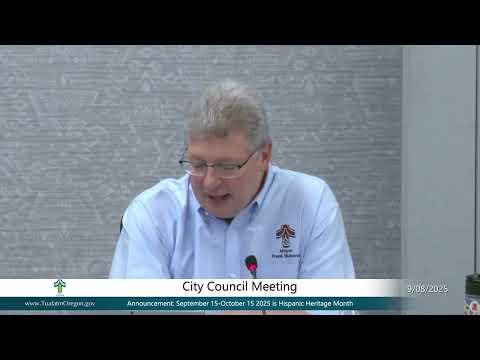
City staffer Kevin responded that the city has a liquor license ordinance in Chapter 902 and that the city can process applications and conduct investigations needed to make a local recommendation to the Oregon Liquor Control Commission (OLCC), while the OLCC makes the final licensing decision. ‘‘We do have a liquor license ordinance that’s in chapter 9 0 2,’’ Kevin told the council.
Captain Rankin of the Tualatin Police Department said the police department can assist OLCC investigators but that ‘‘the OLCC does do primarily liquor enforcement laws’’ and that most enforcement is performed by OLCC sworn investigators.
Council discussion centered on whether the city’s application could ask for more detail about the type of food service, service hours and responsible‑service training, or whether fee changes could be considered. Kevin told the council he would research what the city can add to its application, whether fees could be adjusted (noting legal limits on fees), and report back. The mayor and council asked staff to provide an informational review of the licensing process and distinctions among the state license types.
Why it matters: Councilors said they want clarity on how the city’s application process works, what the city can require or document locally, and where the OLCC retains authority for enforcement. Council members expressed concern that some establishments offering alcohol (including complimentary service at non‑restaurant businesses) may not be following responsible‑service practices.
No formal change to city policy or the liquor‑license application was adopted at this meeting; staff committed to return with additional information.