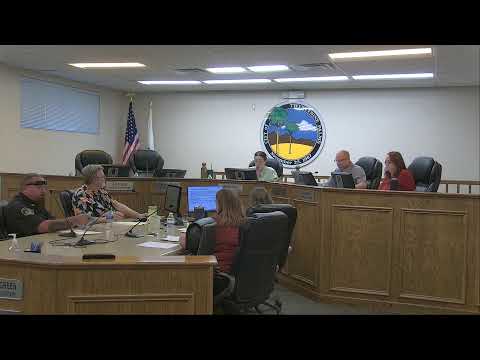
Planning commission weighs greenhouse rules and review process for community gardens
Loading...
Summary
Commissioners discussed whether community gardens and associated greenhouses should be allowed citywide, what review process should apply and whether greenhouses should be removed if the garden ceases, and asked staff to return with clearer definitions and procedures.
Planning staff told the Twentynine Palms Planning Commission that the development code is silent or unclear about community gardens and whether structures such as greenhouses should be permitted and, if so, under what review process.
Staff noted that general building-code rules typically exempt small accessory structures under 120 square feet from a building permit, but larger greenhouses (for example, a 1,300-square-foot structure mentioned in discussion) would trigger building permits and inspections. Staff asked whether greenhouses used for community gardening should require a conditional use permit because of long-term maintenance, architectural review and the risk that a greenhouse could remain in place after the garden ceases.
Public commenters and commissioners urged clear thresholds. One public commenter referenced agrarian acreage guidance, noting an argument that roughly 0.8 acre per person is needed for sustainable food production and suggesting the city consider lot size and infrastructure when evaluating garden proposals. Commissioners and staff said greenhouses could be allowed but recommended attaching conditions — for example, a requirement that the greenhouse be removed if the garden is discontinued. Staff also raised questions about whether greenhouses built on vacant parcels without a principal structure would be appropriate in residential zones.
Several commissioners suggested handling smaller community gardens administratively when on privately owned lots with existing residences, while larger greenhouses or garden projects on vacant parcels could require conditional use permits to allow architectural and long-term maintenance conditions. Staff said they will return with a more specific proposal and definitions for zones, minimum sizes and the recommended permit pathway.