Get Full Government Meeting Transcripts, Videos, & Alerts Forever!
Get email alerts on the Gas Stations Policy Study topic
No spam. Unsubscribe anytime.
Planning commission urges council to consider moratorium and feasibility study on new gas stations
Summary
After a staff presentation showing 30 existing or approved gas stations and unmet demand metrics, the Indio Planning Commission received public comment and provided feedback asking the City Council to consider a temporary moratorium on new gas‑station approvals and to fund a deeper feasibility study addressing market data, air quality and siting.
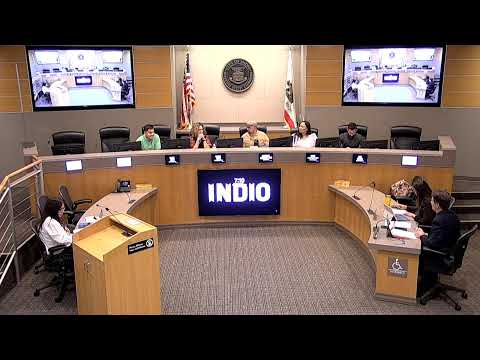
The Indio City Planning Commission on Sept. 10 heard a staff presentation on gas station supply and demand in the city and provided feedback asking the City Council to consider a temporary moratorium on new gas stations while the city conducts a more detailed feasibility study and community engagement.
"As of the date of this report, there are 30 gas stations, either open or approved within the city," said a staff presenter during the commission briefing. The presentation compared Indio's station count with other Coachella Valley cities and noted that, when adjusted per capita, Indio ranked lower regionally. Staff also reported an estimated $18 million in unmet consumer demand for gas station services and described the entitlement process, which requires a conditional use permit in zones where fuel stations are permitted.
Public comment included calls for a pause on new stations. Jonathan Becerra, who identified himself as a longtime resident and business owner, urged a five‑year moratorium and a long‑term study in partnership with a university or scientific institution. "I believe this moratorium again should last 5 years, and I believe a comprehensive long term study should be initiated," Becerra said.
Tony Maryhugh, chief financial officer of Chonde Group USA, also urged a moratorium and questioned some of the market data staff presented, saying demand is typically measured in gallons rather than dollars and warning of retail oversaturation that can harm locally owned stations. "Adding more gas stations simply oversaturates the market," Maryhugh said, and he recommended a pause to avoid harming existing small operators.
Staff and commissioners discussed related issues including environmental justice overlays, the presence of five gas stations within two high‑percentile CalEnviroScreen census tracts, electric vehicle charging infrastructure, traffic impacts along Interstate 10 and Highway 111, and the city's authority to require mitigation such as landscaping or additional EV chargers as part of conditional use permit conditions.
Commissioners debated next steps. Several commissioners said they wanted time to review more granular market analysis before deciding on a formal moratorium; others said the commission should recommend a pause to give staff time to obtain a consultant study and gather community input. Commissioners asked staff to bring refined options back to the council, including the possibility of a moratorium, a funded feasibility study and potential regulatory tools (e.g., additional CUP conditions, site design standards and EV charger requirements).
Staff said the data presented to the commission was based on purchased cell‑phone location datasets and clarified that more detailed financial feasibility work would require hiring an outside consultant and City Council direction and funding. The commission recorded the public comments and the internal feedback and indicated that those materials and any recommendation would be forwarded to the City Council for its consideration. No final binding moratorium was adopted by the commission at the meeting; the commission's feedback to council included consideration of a temporary moratorium and of commissioning a detailed feasibility study.