Get Full Government Meeting Transcripts, Videos, & Alerts Forever!
Get email alerts on the K 12 Assessments topic
No spam. Unsubscribe anytime.
Venus ISD posts assessment gains; district rating rises but '3‑D' rule keeps overall grade at D
Summary
District officials told the school board Sept. 15 that campus and district assessment results showed gains across multiple grades, the high school removed from improvement status, and the district plans targeted interventions in fourth‑grade math and expanded instructional leadership supports.
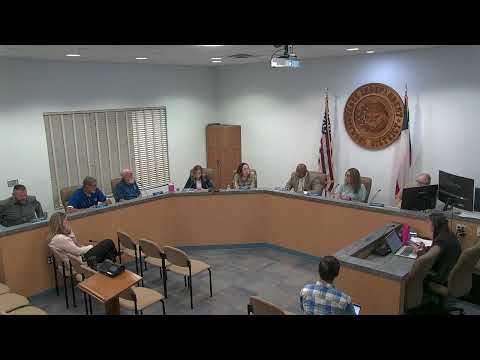
At its Sept. 15 meeting, the Venus Independent School District presented 2024–25 state assessment results and campus ratings, reporting year‑over‑year gains at the elementary, middle and high school levels while cautioning that a Texas accountability rule keeps the district’s overall rating at a D.
The district’s assessment presenter, identified in the record as Mrs. Camacho, said the district’s scaled score for 2025 was 68 — “which is a D rating” — up from 59 in 2024. Camacho told the board the district’s score rose roughly nine points year over year and that every accountability domain improved by about five percentage points.
The results included campus and subject details: third‑grade reading approaches or higher at 63 percent and third‑grade math at 44 percent; fourth‑grade reading 63 percent and fourth‑grade math 37 percent; fifth‑grade reading 64 percent, fifth‑grade math 63 percent and fifth‑grade science 51 percent. At the middle school, eighth‑grade reading was 78 percent and eighth‑grade math 57 percent. At the high school, Biology and U.S. History reported particularly strong approaches‑or‑higher rates (88 percent and 93 percent, respectively).
Why it matters: the numbers affect accountability ratings and identify where the district intends to focus resources. Camacho said the district’s overall score is constrained by the so‑called “3‑D rule” that can limit a district’s highest possible rating even when raw calculations would place it in a higher category. “If you were to actually do the math … we are actually a C. However, we fall under that 3‑D rule and so … the highest overall scale score that can be awarded is a 69,” she told trustees.
Board and staff discussion centered on where gains and gaps are largest and whether causes are curricular (the published materials) or implementation (how teachers are using those materials). Camacho and campus leaders pointed to a recurring dip in fourth‑grade math for multiple cohorts. Camacho summarized cohort tracking: students who were in fourth grade last year and took fifth‑grade math this year showed a 23‑percentage‑point increase in approaches or higher, evidence the district cited as an area of success.
Campus leaders and central staff said the district is emphasizing teacher practice: breaking standards (TEKS) into teachable elements, creating “no‑one‑show” charts and aligning small‑group instruction and interventions to students’ specific gaps rather than relying primarily on computerized interventions. One principal said the school will require documented intervention lesson plans and tighter data tracking at the individual‑student level.
At the high school, Camacho told the board the campus has exited its identification for comprehensive support and improvement after meeting required cut points. She said increases in dual credit, AP participation and revised CTE pathways contributed to gains. Camacho also warned of potential changes to College Bridge and CCMR (college, career and military readiness) accounting: “TEA has taken it off of the approval list for CCMR indicator points,” she said, and the district is working to diversify how students earn CCMR points.
Next steps identified in the meeting include rolling out Texas Instructional Leadership supports already used at the high school to other campuses, intensifying small‑group math instruction in fourth grade, and continued cohort tracking. Camacho said much of the assessment data is posted publicly on the TEA assessment site and the district’s required accountability postings.
The presentation was informational; no formal action or vote accompanied the report. Trustees asked for follow‑up details on specific cohorts and implementation plans, and campus principals were invited to add campus‑level action items in future meetings.