Get Full Government Meeting Transcripts, Videos, & Alerts Forever!
Get email alerts on the Early Learning Intervention topic
No spam. Unsubscribe anytime.
Saddleback Elementary highlights new "WIN" intervention block after early gains on reading screener
Summary
Maricopa Unified officials presented a classroom spotlight on Saddleback Elementary’s new WIN (What I Need) tier‑2 intervention block; teachers and the reading interventionist reported rapid early gains on beginning‑of‑year FastBridge screening for kindergarteners and described data, groupings and family outreach strategies.
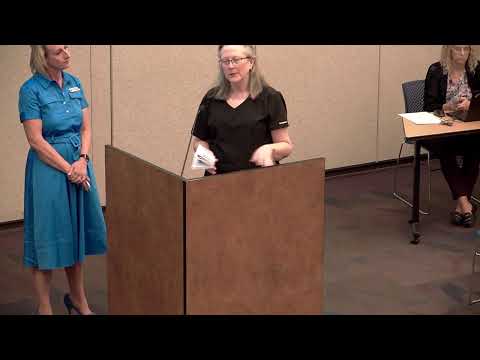
Dr. Hassan, presenting for Saddleback Elementary, described a district classroom‑spotlight on a new schoolwide tier‑2 intervention called WIN (What I Need), a 45‑minute flexible grouping block four days a week designed to deliver targeted reading and math instruction based on student assessment data.
The initiative aims to use data — including FastBridge benchmark cut scores and common formative assessments — to place students in rotating, targeted small groups so every student receives instruction aligned to specific skill gaps. "WIN stands for what I need," Dr. Hassan said, adding the model creates "time for our gifted Native American students, resource, and ELL programs to serve students without them missing their core instruction." The presentation stressed teacher collaboration, PLCs, instructional coaching and site‑based professional development as supports.
Tanya Houghton, reading interventionist at Saddleback, described daily data collection and weekly progress monitoring. She said she serves a 22‑student kindergarten WIN group that began the year with 69 percent of those students labeled "high risk" and 27 percent "some risk" on the district’s beginning‑of‑year FastBridge measures. "To date, a 100% of those students in my WIN time ... have moved into the low risk tier," Houghton told the board, attributing gains to three rotations of small‑group instruction, co‑teaching and focused work on phonemic awareness and phonics.
Board members asked for technical details. When Member Rothschild and others pressed on how the risk categories are defined, staff said they used FastBridge cut scores and that those cut scores change over the school year; placement begins with fall benchmark composite data and subscale analysis. Dr. Hassan told the board the WIN schedule began the week of Aug. 18 after staff used early data to plan groupings.
Members also asked how the school communicates progress to families. Houghton said classroom teachers use ParentSquare and that she frequently makes short phone calls at pickup to celebrate students’ effort and progress — a practice she described as especially effective for motivating students. The presentation also noted Spalding phonogram lists are used as one piece of diagnostic and instructional data; staff said WIN time provides flexible opportunities to reteach missed content and to align resources with Spalding where appropriate.
In closing, Dr. Hassan and staff said they will continue to monitor data, adjust groups by triangulating assessment, observation and student work, and share growth with families. "We are building a system for every child truly getting what they need," Dr. Hassan said, and invited questions from the board.
Board members complimented the work and asked to see end‑of‑year outcomes; one member said the early results were "pretty amazing" for the short time the model has been in place.