Queen Anne's County review committee recommends denial of proposed classical charter school; board schedules follow-up
Loading...
Summary
A district review panel found substantive gaps in the Queen Anne's Classical Charter School application including operational readiness, prekindergarten accreditation and financial contingency; the superintendent endorsed denial and the Board of Education scheduled a vote for Sept. 10.
The Charter School Application Review Committee for Queen Anne's County Public Schools recommended denial of the Queen Anne's Classical Charter School application, citing operational, financial and early-childhood accreditation concerns. Superintendent Matthew Kibler transmitted the committee—inding and recommended denial to the board, which scheduled a public reconvening for Sept. 10 to receive additional responses and vote.
The committee—ound the application did not demonstrate sufficient operational readiness, raised questions about the applicant—oard—apacity to meet Maryland standards for prekindergarten accreditation and flagged financial sustainability and contingency planning as inadequate. Michael Bell, the district—harter school liaison, summarized the committee ssessment in a presentation to the board and noted the review was completed under Maryland law and COMAR (Code of Maryland Regulations). Bell said the review teams scored the application at a composite 56.9% (Team A, instruction 59.6%; Team B, governance/operations 47.83%), and that the capacity interview score was 65.24%.
The committee singled out three overarching deficiencies: operational readiness (including facilities and staffing timelines), prekindergarten feasibility and accreditation, and financial assumptions and contingency planning. Bell said the applicants had requested nine waivers from district policy; the committee concluded the requested waivers would not cure the structural deficiencies and recommended any waiver be considered individually if the board chose to approve the application.
Applicants and supporters spoke at length during public comment. Ashley McCleary, president of the Queen Anne's Classical Charter School board, urged the board to "bypass the recommendation of the committee" and approve the application, arguing the application demonstrated capacity and noting letters of local support. Founder Audrey Scott and other application leaders described the classical model, asserted their application met state requirements and said the board lacked sufficient opportunity to receive a presentation before the recommendation.
Bell said the district had provided extra opportunities beyond COMAR requirements: remote capacity-interview participation, two supplemental submission windows (Aug. 7 and Aug. 13) and a capacity interview on July 31. Applicants removed prekindergarten from their August 13 supplemental submission after recognizing current accreditation requirements would not be met; Bell said that narrowing of scope reduced any claim of early-childhood innovation and left other questions unresolved.
Superintendent Kibler told the board he forwarded the committee's recommendation and would prefer to hear answers to the board—omments before any vote. Board Chairwoman (President) Bent and several board members asked detailed procedural and program questions about transport, special education services, facility siting across county geographies and the proposed timeline for a lottery and opening. Applicants said they would supply additional written answers and a focused logistics presentation ahead of the Sept. 10 meeting.
The board agreed to reconvene Wednesday, Sept. 10 at 4:30 p.m. for continued discussion and a possible vote. Bell noted that if the board votes to deny, the applicants would have the right to appeal to the Maryland State Board of Education within 30 days or to reapply in May 2026.
Why it matters: The decision affects local school choice, the distribution of state per-pupil funding, and how district resources (transportation, special education, other shared services) would be allocated if a charter is authorized. The committee's findings highlight the state accreditation requirements attached to early-childhood funding under the Blueprint for Maryland's Future.
Board next steps: applicants will provide written responses and a logistics presentation prior to the Sept. 10 meeting; board members and staff identified a set of technical questions to be submitted to the applicants so answers are available to the full board in advance.
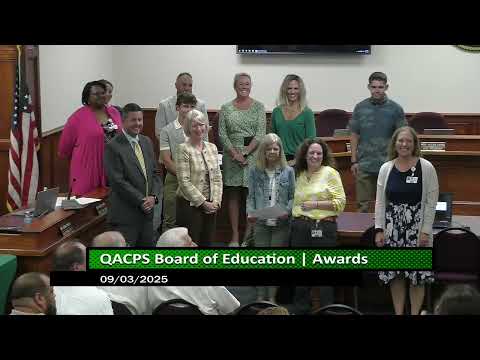
Ending: The board did not vote at the Sept. 3 meeting; the matter will return for a public vote on Sept. 10.