Get Full Government Meeting Transcripts, Videos, & Alerts Forever!
Get email alerts on the Floodplain Development topic
No spam. Unsubscribe anytime.
Board debates jurisdiction on two floodplain lots; applicant to consider withdrawal or revise application
Summary
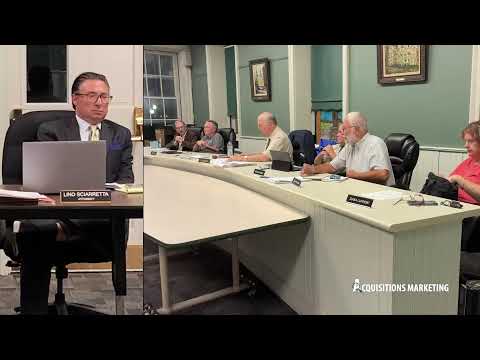
An application to build two single‑family houses on 6 and 8 Gunwood Drive spurred a lengthy Sept. 3 discussion about floodplain and stream‑corridor rules and whether prior ZBA variances remove the planning board’s site‑plan review authority; no final decision was made.
An application by Barnes Estates LLC for site‑plan approval and a special permit for two single‑family dwellings at 6 and 8 Gunwood Drive generated extended discussion on Sept. 3 about floodplain, stream corridor and aquifer overlay requirements and whether prior Zoning Board of Appeals (ZBA) relief removed the planning board’s jurisdiction.
Applicant counsel said the ZBA granted variances earlier in the year and that the applicant plans to raise first‑floor elevations two feet above the flood elevation, with no basements. Planning staff and counsel for the town raised technical requirements tied to floodplain development permits administered by the building official: where a lot lies in the floodway a technical hydraulic analysis may be required to show the proposal will not increase flood elevations, and any filling in the floodplain must be offset by equivalent excavation volume. Staff warned that constrained land (wetlands, floodway) could affect minimum lot area calculations and that the town’s floodplain permit process and federal flood‑insurance requirements apply in addition to zoning.
Board members and staff reviewed whether the ZBA decision’s language — described at the meeting as unusually broad — effectively removed the planning board’s review obligations or whether the planning board still needed to consider site‑plan issues such as access logistics, stormwater, and limits of disturbance. The building official, Frank, said he would proceed with his review and the applicant must still obtain floodplain development permits; the board suggested conditions the CEO could apply (for example, prohibiting future accessory structures or pools) and recommended that the applicant include the adjacent third lot (which the applicant owns) in mitigation discussions to provide space for required offsets.
No final decision was made at the meeting. The applicant signaled it may withdraw the application to amend plans and return; board staff asked the applicant to clarify whether the third lot would be offered for mitigation or included in a revised submission.
Why it matters: proposed construction in floodways and floodplains involves FEMA and state flood regulations, potential hydraulic analyses, and long‑term limitations on accessory development; the jurisdictional question between ZBA relief and planning board obligations affects which approvals and conditions apply.
The planning board did not vote to approve or deny the application; it directed staff and the applicant to coordinate on required floodplain permitting and on any potential plan revisions or withdrawal.