Get Full Government Meeting Transcripts, Videos, & Alerts Forever!
Get email alerts on the Administrative Code topic
No spam. Unsubscribe anytime.
Lancaster City Council reviews draft administrative code; solicitor to revise posting and agenda language
Summary
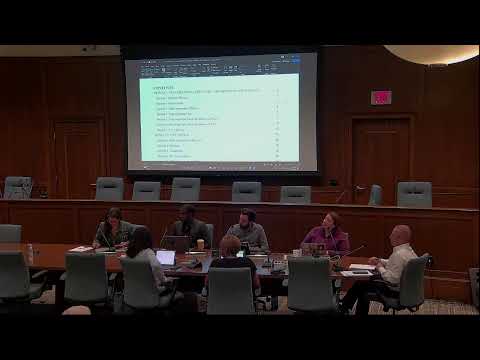
Lancaster City Council held a nonlegislative work session on Sept. 6 to continue review of a proposed administrative code that would consolidate city procedures on boards and commissions, council organization, ordinances and resolutions, forfeiture of office, ethics, employment policy and other administrative matters.
Lancaster City Council held a nonlegislative work session on Sept. 6 to continue review of a proposed administrative code that would consolidate city procedures on boards and commissions, council organization, ordinances and resolutions, forfeiture of office, ethics, employment policy and other administrative matters.
The draft prompted questions about transparency and timing. Barry Handwerker, the city solicitor, told council the draft requires boards, commissions and authorities to keep minutes and to post them to the city’s publicly accessible website, but noted there is “no legal requirement to post things on the website” and cautioned that minutes are not official until approved. He recommended wording that requires minutes to be posted “promptly” after adoption rather than setting a strict calendar deadline.
Council members pressed on how to balance timeliness and practicality. Councillor Hirsch said he has had trouble finding minutes for boards such as the traffic commission and considered a 30-day requirement before concluding that a fixed deadline could be impractical for bodies that meet infrequently. Hirsch argued for language that encourages prompt posting after approval. Handwerker replied that “promptly” is likely to produce faster posting in practice than a hard 30-day deadline and warned that drafts should not be confused with adopted minutes for Sunshine Act purposes.
The draft also addresses council organization and meeting procedures. Councilors discussed changing the agenda wording that currently lists items the agenda “shall” include to softer language—such as that the agenda “should” include those items—to give future councils flexibility on whether to provide one or two public‑comment periods and how to prioritize preregistered speakers. Handwerker said the Sunshine Act requires opportunities for public comment at times that allow the public to comment before votes are taken, and recommended that council set detailed rules at its organizational meeting in January and adopt them by resolution.
On ordinances and committee process, councilors asked when a required explanatory memorandum should accompany legislation. A council member said the memo should accompany the first presentation of an ordinance to council or a council committee; Handwerker agreed that revising the draft to say “first presentment to council or a committee” would address the concern.
Councilors also reviewed a proposed Article 8 procedure for forfeiture of office required by the charter, a separate ethics code being developed by an ethics commission, and Article 17 provisions on electronic signatures, fee schedules and website maintenance. Handwerker said the ethics commission has met twice, that a public work session will be required under the charter before any ethics code is adopted, and that staff are preparing to consolidate some boards and produce an online nominations/registry tool showing openings and information for each board.
Public comment during the session focused on the ethics commission and on how the city lists boards and membership counts. Irene Grievous of the 400 block of West End Avenue asked whether advertised ethics‑commission meetings had been canceled in violation of the Sunshine Act; Handwerker said he was not aware of any cancellations and that scheduled meetings had been advertised, and a council member later pointed to a Sept. 25 ethics commission meeting listed on the city website. A commenter asked whether the draft could list the membership count next to each board; councilors and Handwerker said that membership numbers can change and recommended the city website or the planned nominations registry as better places to keep that information up to date.
Council members directed Handwerker to incorporate the agreed edits into the next draft and circulate it to the council; they also asked staff to continue coordinating with the ethics commission and to schedule the public work session required by the charter. Councilors asked whether adoption could occur this year; Handwerker said he saw no legal barrier to adopting the administrative code by year end, though the ethics-code timeline could extend the process.
At the meeting’s start council approved the minutes of the Aug. 19 work session by voice vote. The session concluded after a short public‑comment period and a motion to adjourn that carried on a voice vote.
For follow-up, Handwerker said he will (1) revise language on posting minutes to require posting promptly after adoption, (2) revise the ordinance‑memo timing to require the memo at first presentment to council or a committee, and (3) circulate an updated draft for council review prior to further public work sessions on the ethics code.