Get Full Government Meeting Transcripts, Videos, & Alerts Forever!
Get email alerts on the Property Tax Levy topic
No spam. Unsubscribe anytime.
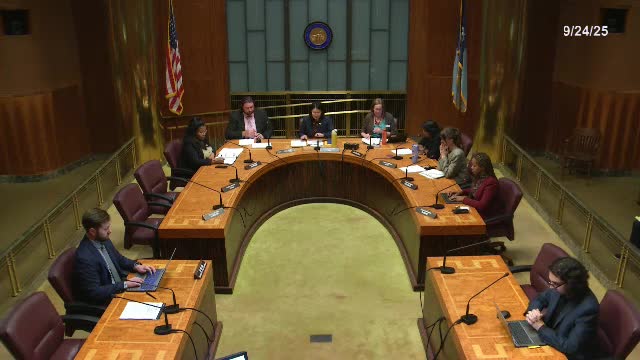
Saint Paul council sets 2026 maximum property tax levy at 5.3% after debate on cuts and services
Summary
The Saint Paul City Council voted 5-0 to approve a proposed 5.3% maximum property tax levy for 2026 after members said the rate balances service needs and taxpayer concerns; councilors emphasized ongoing budget work and the $23 million deficit the city faces for next year.
The Saint Paul City Council voted 5-0 to set a 5.3% maximum property tax levy for 2026, approving a resolution that establishes the ceiling the city will use during its upcoming budget process.
Council members who spoke during the discussion said the proposed levy is a difficult but responsible step given current budget pressures. Council Member Johnson said he did not take the decision lightly, noting that departments have already reported cuts tied to the levy proposal. "I don't think this tax levy vote [comes] easily," Johnson said, adding that councilors must weigh sustaining existing services against new initiatives.
The vote establishes a maximum levy; the final adopted levy will be set later in the budget cycle. Council Member Jost said adopting the maximum now "gives us the most flexibility in our decision making in the coming months," and emphasized that the proposed ceiling is not necessarily the final figure.
Why it matters: City staff told councilors the 2026 budget began with an estimated $23 million structural gap. Council members said that, before the levy was proposed, departments had already identified more than $5 million in cuts. Several council members raised concerns about staff capacity and service impacts if further cuts are required. One councilor noted that the fire department had already indicated it had no remaining nonessential reductions to make without affecting service.
Council members also framed the levy vote as part of a longer-term discussion about revenue diversification and planning. Several members urged deeper multi-year financial planning to reduce year-to-year volatility, and to seek ways to offset property tax pressure with increased sales-tax-generating activity or other revenue sources.
The council discussion included references to regional taxing pressures; members noted that county and school district levies also affect homeowner tax burdens. Council Member Yang (whose prepared statement was read into the record by Vice President Kim because Yang was absent with COVID) said she supports the 5.3% maximum while committing to efforts to bring the final levy down.
Next steps: Setting the maximum levy lets staff and council continue work on department budgets, public engagement and the formal budget hearings that will determine the final 2026 levy and appropriation levels.
Ending: The council approved the resolution by voice vote, 5 in favor and none opposed; the budget process will continue in the coming months and the final levy will be adopted later in the city's budget calendar.