Get Full Government Meeting Transcripts, Videos, & Alerts Forever!
Get email alerts on the Education Finance topic
No spam. Unsubscribe anytime.
Interim Winston‑Salem/Forsyth schools chief outlines $37 million deficit, 224 staff reductions and audit review
Summary
Interim Superintendent Catty Moore told the Forsyth County Board of Commissioners the district faces an estimated $37 million fiscal 2024–25 deficit, must present a repayment plan to the State Board of Education and has taken $63 million in reductions for 2025–26 including a 224‑position reduction in force.
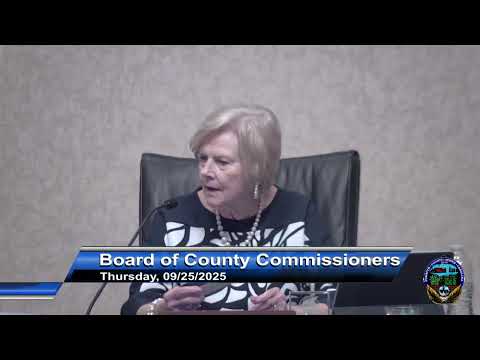
Interim Superintendent Catty Moore told the Forsyth County Board of Commissioners on Sept. 25 that Winston‑Salem/Forsyth County Schools faces two related fiscal problems: an estimated $37,000,000 deficit for fiscal 2024–25 and the need to balance the 2025–26 budget. "We have two issues," Moore said. "One issue is the fiscal deficit from 24‑25. That is now currently estimated at around $37,000,000."
Moore said the district reduced personnel and non‑personnel spending by about $63,000,000 to balance 2025–26, but emphasized those savings do not erase last year’s deficit. The district has paid some obligations this fall, including a $7,900,000 payment to the state Department of Public Instruction (DPI), which lowered the estimated deficit from previously higher figures. Moore said the State Board of Education has asked the district to present a repayment plan in Raleigh on Nov. 4 for about $3,400,000 the district still owes the state; the state will begin charging interest at 0.4% as of Oct. 1.
Why it matters: The deficit and related audit findings affect the district’s ability to rebuild reserves, maintain services and release full budgets to schools. Moore said the widespread negative balances that remain on year‑end fund statements will continue to generate audit findings until cleared, which could constrain the district’s financial flexibility and public confidence.
Moore outlined major steps taken and under way. For 2025–26 the district has:
- Implemented a reduction in force that resulted in 224 staff receiving layoff notices; some positions were later reassigned after the district’s 10‑day enrollment count came in about 1,300 students below projection. Moore said the RIF affected classroom teachers, exceptional children IAs, assistant principals, clerical staff and central services employees, and that some 12‑month positions were converted to 10‑month to generate additional savings. - Instituted involuntary furloughs for central services staff (5, 8 or 12 days depending on salary band) and held local non‑personnel spending at roughly 50–75% pending final budget clarity. - Made vendor payments this fall, including roughly $1,100,000 to the substitute management vendor and the $7,900,000 DPI payment. Moore estimated the district still shows $15–20,000,000 of negative balances owed to internal local capital and grant funds that were used for operating costs.
Moore said the district does not generate new revenue on its own and therefore must either receive additional appropriations from the state or county or make deeper budget reductions. She noted that a $300,000 monthly payment would pay the $3.4 million state loan in about a year, but producing that amount locally would require cuts equivalent to roughly 48 average‑salary teachers or a 10–15% cut of the local supplement budget. "All of these things keep me up at night," Moore said.
Audit and oversight steps: Moore described several accountability measures. The district is working with auditors on the 2024–25 audit; local auditors have asked to delay issuing a final audited financial statement while a separate review of internal controls requested by the State Board of Education and the Local Government Commission (LGC) is completed. Moore said the district has drafted a policy to create a seven‑member external audit committee to review audit scope, engage with auditors during the audit, review final audit reports and track corrective actions. She said the state‑requested review of internal controls will be paid by the district and that the district will comply with the scope determined by state authorities.
Other operational items Moore raised: the district’s Day 10 enrollment was 49,224 — about 1,300 students below projection — and Day 20 numbers were being verified for publication; 45 schools met or exceeded growth but the district’s overall performance remains below pre‑pandemic levels; Cook Elementary consolidation public hearing is scheduled for Oct. 14; the permanent superintendent search timeline under discussion could aim for a July 1, 2026 start; and the Ashley Elementary reserve timing has shifted with estimates now expected in December.
Public comments and county response: Multiple speakers during the county commissioners’ public comment period urged county action to assist the district. Kwamekea Shavers asked the county to consider forgiving or providing additional funds; Moore and commissioners clarified the county currently lacks statutory authority to make certain loans to the school board without state action. Commissioner Martin and others said the county has communicated with the district’s legislative delegation about possible revenue options.
What remains unresolved: Moore said the district will present final audit numbers to the board when auditors report to the Oct. 28 meeting, and that the state expects a repayment plan for the $3.4 million balance beginning January 2026. She also said whether the district can sustain a state repayment plan within the 2025–26 budget remains to be determined and could require further local reductions or use of one‑time funds.
Ending: Moore closed by offering to provide a plain‑language comparison of how budget overrides and approvals worked before and after the district’s new Tyler ERP system; commissioners asked for that memo to help explain internal control changes to the public. "We can certainly put something together," Moore said. "I'm hopeful the review of our internal control procedures will provide additional insight."