Get Full Government Meeting Transcripts, Videos, & Alerts Forever!
Get email alerts on the Local Government topic
No spam. Unsubscribe anytime.
CB2 Landmarks Committee approves trash receptacle at 232 W. 11th; plans letter to commission on signage and faux‑flower displays
Summary
The committee approved an irrevocable consent to install a large trash receptacle at 232 West Eleventh Street, reviewed a needs statement for enforcement staffing, and agreed to draft a letter urging the Landmarks Preservation Commission to tighten staff-level signage and permanent artificial‑flower installations.
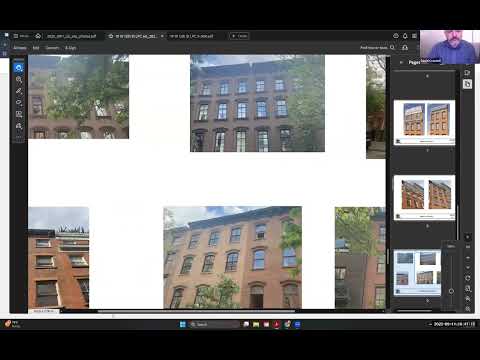
The Manhattan Community Board 2 Landmarks Committee on Sept. 1 said it "in essence" approved an irrevocable consent application to install a large trash receptacle at 232 West Eleventh Street and moved on to broader policy issues including enforcement staffing, signage rules and the use of artificial‑flower decorations on commercial façades.
A committee summary said the applicant revised the design so the receptacle fit within a panel area rather than intruding into a pilaster; the committee determined the revised solution met its earlier suggestions. "They fulfilled what we asked them to do," a committee member said, and the transcript records that the committee approved the submission in that sense.
Separately, members discussed the board’s annual needs statement to the commission, arguing the board should resubmit the same priorities rather than drop them. Members cited inconsistent enforcement and limited staffing as reasons to press for stronger follow-through from the commission. One member noted the possibility of a new commissioner taking office before the next cycle.
The committee also debated decorative artificial‑flower installations on storefronts. Several members equated large, permanent fake‑flower treatments with signage, saying they obscure historic fabric and attract attention in the same way signage does. "The fake foliage is a form of signage," said one committee member. The committee asked staff to draft the board’s usual letter to the commission arguing against treating permanent artificial‑flower displays as acceptable, but to allow limited temporary use for store openings under strict time limits.
The transcript records committee guidance and consensus on these matters; it does not record a roll-call vote for the trash receptacle item or the policy letter. Public comment was not offered on these items during the session.