Get Full Government Meeting Transcripts, Videos, & Alerts Forever!
Get email alerts on the Municipal Water Storage Tank topic
No spam. Unsubscribe anytime.
Moab seeks utility-overlay for 1.5M-gallon water tank; hearing left open for more review
Summary
City of Moab officials asked the Grand County Commission on Sept. 16 to apply a Major Utility Overlay to roughly 3 acres in Spanish Valley so the city can build a municipal water storage tank and related facilities.
City of Moab officials asked the Grand County Commission on Sept. 16 to apply a Major Utility Overlay to roughly 3 acres in Spanish Valley so the city can build a municipal water storage tank and related facilities.
The proposal seeks permission only to place the overlay on county zoning for a parcel near Spanish Valley Drive; site design, construction permits and mitigation measures would follow in subsequent reviews. “This is for a municipal water storage tank and associated facilities,” said Corey Shurtleff, Community Development Director for the City of Moab. He told commissioners the overlay is intended to enable the city to build storage that improves system reliability and enables an emergency interconnect that could serve the valley in crises.
The request drew close technical scrutiny from commissioners, county staff and nearby residents during an extended presentation and public comment. City engineers said the tank is being sized and sited to meet two operational needs: daily equalization and a large block of fire storage. “Fire storage is that 1,000,000 gallons that you see there that just has to live in there all the time,” an engineer said during the presentation, explaining why the storage total differs from everyday usable water.
City utility staff and consultants outlined why they see the parcel as favorable: the city already owns it, the ground elevations would let several of the city’s spring sources gravity-feed the new tank, it sits adjacent to an existing water main, and the site could later accommodate an additional tank if demand increases. City staff also said geotechnical testing shows the site is suitable for a buried tank and that groundwater encountered in borings lies well below the proposed tank bottom in typical conditions. Engineering consultants noted construction cost estimates from 2015 would be roughly double today and that the team trimmed an earlier 2.5‑million‑gallon design to 1.5 million gallons to control cost.
Moab’s water operators emphasized emergency benefit and system performance. “My biggest thing that I can highlight … is the hydraulic side and also the fire supply,” said Conrad, a utilities operator for the city, saying the extra reserve would improve the system’s ability to handle large, sustained demands and emergencies.
Residents and some commissioners pressed the city on visual impacts, traffic, groundwater risks, alternatives and the future use of the parcel. Several nearby residents said they would prefer park, transit or other community uses instead of a tank, or asked for on-site amenities if the tank is sited there. City staff said some of those design details — landscaping, access routing, noise and drainage mitigation, and fencing — would be resolved as part of later site-plan review and permit processes tied to the overlay.
The county planning commission previously submitted an unfavorable recommendation on the overlay; county staff and city attorneys noted the overlay language was added to the county code after the city identified the site as its preferred location and that the county’s ordinance text was not fully codified online, creating confusion during review. City staff asked the commissioners to evaluate the overlay request on planning-policy grounds and to judge whether the site fits the county’s future land‑use objectives for public facilities.
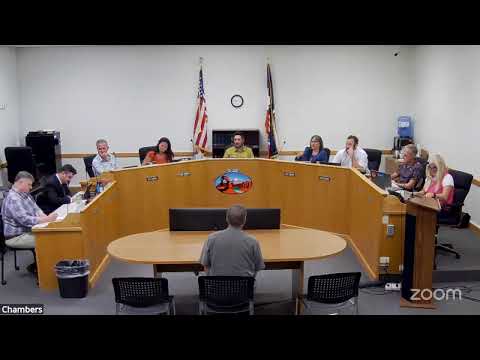
Rather than decide the overlay on Sept. 16, the commission kept the public hearing open to allow more time for information and community input. The commission announced it will leave the hearing open through Wednesday of next week and take the item up again on a subsequent agenda; staff said a vote is expected at the following meeting after the record closes.
What’s next: the city team said if the commission applies the overlay, the project would return for site-plan review with a more detailed design (a higher‑percentage plan) and specific mitigation proposals — including noise, visual screening, drainage, driveway surfacing and the emergency interconnect engineering. If the overlay is denied, the city told commissioners it would need to identify an alternative site or alternative technical approaches to meet its storage and fire‑flow objectives.
The commission scheduled the item to return after the public hearing record closes and directed staff to circulate the record and additional technical material to the commission before the next meeting.
Public hearing status: open; record to remain open until Wednesday at 5 p.m.; vote expected at a subsequent meeting.