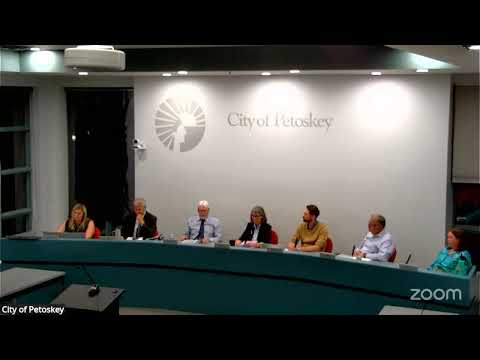
Petoskey council adopts 2026–2031 capital plan but removes Winter Sports Park from 2026 pending final bids
Loading...
Summary
City Council approved a revised 2026–2031 capital improvement plan Tuesday, moving a modular barrier safety project into 2026, trimming one dog‑park allocation and deferring the Winter Sports Park pavilion funding until bids are received. Council voted 5–0 on the amended plan.
Petoskey City Council on Sept. 15 approved a revised 2026–2031 capital improvement plan (CIP) but removed the $2.9 million Winter Sports Park pavilion allocation from the 2026 column until final bids are received.
City Manager Shane Horn told the council that the first year of the CIP is the most critical because those amounts feed directly into next year’s operating budget. He said the city has begun a master‑planning process for the Winter Sports Park and that staff does not yet have final bid numbers for the pavilion. "One option would be to consider this capital improvement plan without the Winter Sports Park component at this point," Horn said, adding that staff could return with detailed numbers at the council’s November meeting.
Why it matters: Council members said they wanted to activate capital reserves but avoid locking in a large line item without confirmed construction costs. Council adopted an amendment that (1) excludes the Winter Sports Park pavilion allocation from the 2026 budget pending bid results, (2) moves a modular street‑barrier public‑safety purchase into 2026, and (3) lowers an originally proposed $100,000 TIFA allocation for the dog park to $50,000 and moves it to parks general. Council also left a $300,000 allocation for Riverbend skatepark repairs in the plan; staff said bids and vendor quotes support that figure.
Council discussion focused on balancing near‑term safety and maintenance needs against large, multi‑year projects. Horn said the city can phase some projects — for example, placing conduit during street reconstruction and installing major equipment later — to reduce near‑term general fund impacts. He also noted the city has incurred unanticipated storm cleanup costs this year and is pursuing FEMA reimbursement that could cover about 75% of those expenses.
Councilmembers debated the Little Traverse Wheelway slope restoration, a project that previous consultant work estimated at roughly $20 million. Several councilmembers urged staff to pursue lower‑cost alternatives — including cantilevered boardwalk options above the highway or more limited repairs — and to seek state legislative support. "I don't think we always have to do the gold platinum standard," Councilmember Shields said, urging alternatives that still address safety.
Public input: Residents and Youth Advisory Council members told council they value waterfront views and public access but raised concerns about safety, the amount of shoreline closed for events and environmental cleanup if fireworks are moved offshore. Several speakers urged timely repairs to the Riverbend skatepark and expressed support for moving certain safety projects earlier in the CIP.
Formal action taken: Councilmember Nobtrough moved to approve the 2026–2031 CIP with the amendments described above; Councilmember DeMour seconded. The roll call vote was 5–0 in favor.
Implementation notes: Staff will (a) remove the Winter Sports Park pavilion allocation from the 2026 column and return with final bid numbers at the November meeting; (b) advance the modular barrier purchase into 2026 so the city can use it at farmers markets and other events; (c) move $50,000 for the dog park to parks general instead of TIFA and pursue community fundraising for additional elements; and (d) keep the $300,000 Riverbend skatepark allocation in the CIP for 2026 while staff refines scope and phasing.
What’s next: Horn said staff can return to council with updated numbers in early November and that the city will monitor state and federal funding developments that could affect CIP priorities.