Get Full Government Meeting Transcripts, Videos, & Alerts Forever!
Get email alerts on the Childcare topic
No spam. Unsubscribe anytime.
Speakers warn Ohio faces childcare funding cliff; call for sustained state dollars and workforce support
Summary
Panelists said Ohio must identify sustainable public funding and strengthen the childcare workforce to avoid losing services when one‑time federal dollars expire; they cited a $600 million funding gap to maintain current service levels.
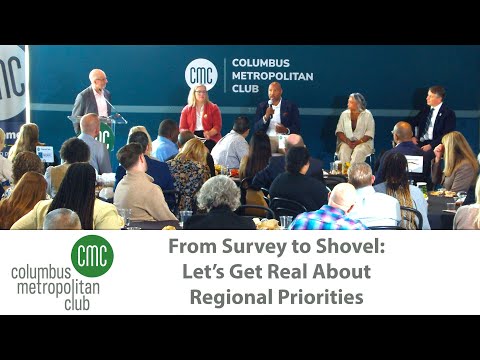
Panelists at a Columbus Metro Club forum urged state and local leaders to secure sustained public funding and workforce supports for childcare, saying the region and state risk losing capacity when temporary federal funds end.
Lynn Ann Gutierrez, president and CEO of Groundwork Ohio, said Ohio must fill roughly $600 million in state funding to maintain current publicly funded childcare capacity beyond the next biennial budget. “To maintain the statewide publicly funded child care system next budget… we have to fill $600,000,000 just to maintain the status quo over the biennium from one‑time federal dollars that are going away,” Gutierrez said.
Panelists described barriers families and providers face. Gutierrez cited cost and access metrics: average infant care in Ohio approaches $14,000 a year, and “40% of all Ohioans live in a child care desert.” She emphasized that publicly funded childcare in Ohio relies heavily on federal dollars: “Seventy percent of the publicly funded child care system in this state is relying on federal dollars.”
Speakers highlighted workforce constraints. Gutierrez noted childcare staff wages average about $14 per hour in the state, undermining recruitment and retention: “You could invest $100,000,000 tomorrow for seats … but you couldn't serve those families because the programs cannot find staff and recruit and retain staff who are making on average $14 an hour.” She urged investments not only in slots but in wages and ratios that make high‑quality care possible.
Panelists also argued that public investment has an economic return. Gutierrez cited research showing long‑term returns from early investment, referencing an estimate attributed in the discussion that every dollar invested in early childhood returns broadly in future savings and economic gains.
Ending: Panelists called for combined local, state and federal funding strategies and public‑private partnerships, and for targeted investments in the childcare workforce so families can access stable care and parents can participate in the workforce.