
Charlton conservation commission ratifies notice of violation at 26 Willis Drive; owner and staff discuss remediation and permit amendment
Get AI-powered insights, summaries, and transcripts
Subscribe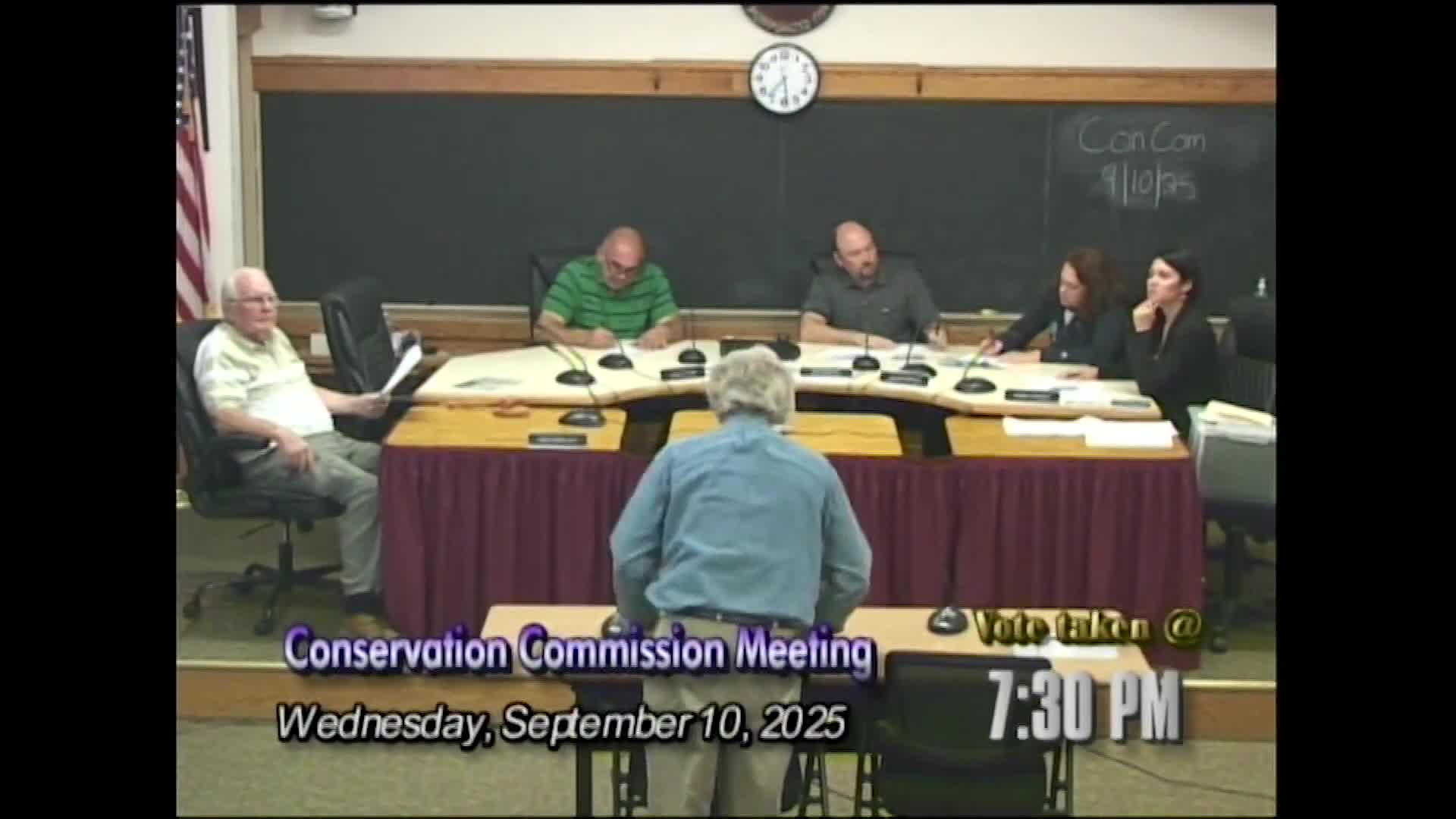
Summary
The Town of Charlton Conservation Commission ratified a notice of violation and a cease-and-desist order on work at 26 Willis Drive after staff found excavation and material within the wetlands buffer, missing or inadequate erosion controls and trenches for a stone wall not shown on the recorded plan.
The Town of Charlton Conservation Commission ratified a notice of violation and a cease-and-desist order on construction activity at 26 Willis Drive after staff found excavation and stockpiled material inside the resource-area buffer and unpermitted trenches for a proposed stone wall.
Commission staff told the board they discovered excavation and foundation work within about 30 feet of a perennial stream that feeds Prindle Lake, an unposted or missing DEP sign, stone stockpiles and a dumpster within the 100-foot buffer, and trenches dug for retaining walls that were not shown on the approved order of conditions. The commission voted to ratify the enforcement action and directed the applicant to file any needed amendment so the proposal can be considered at a future meeting.
Why it matters: the work is adjacent to a lake and resource area and, according to staff, risks mobilizing sediment or other pollutants into the wetlands. The commission required the owner to stop the disputed work, to provide a revised plan or an amendment to the recorded order of conditions, and to remedy or protect stockpiles and erosion controls while the matter is resolved.
Staff described what they found at the site and said they issued a notice of violation rather than immediately pursuing an enforcement order in order to allow the owner and his engineer to correct the record. The staff report listed missing or damaged erosion controls, an absent or improperly posted DEP sign, a dumpster placed close to the wetlands and a stockpile tarped but inside the buffer. Staff also said the permit-extension timeline and recorded documentation needed review.
The property owner, who addressed the commission during the hearing, said the excavation and foundation work responded to unusually high groundwater and a need to install a deeper, waterproofed foundation. He said the foundation is wrapped in a membrane and that a temporary sump pump had been used while construction proceeded. “It’s supposed to be completely enveloped with the membrane that prevents any water from getting in,” he said, adding the pump was a temporary measure while the cellar dried.
The owner also explained the stockpile arrived after a local farmer offered loam and that he planned to cover and protect it until final grading. He said some site signs had been present but were moved or removed during work; staff confirmed at least one DEP sign remained attached to the house but asked that posting be clearly visible at the road and lake shore.
A central factual dispute the commission must resolve is whether the trenches and stone wall shown in later drawings were included in the plans that the conservation commission approved and recorded. The owner and his representatives said a revised plan that includes the wall exists; conservation staff said they could not find a recorded amendment or a properly dated order-of-conditions amendment in the files and therefore treated the trenches as unapproved work.
The commission told the owner the most straightforward remedy is to file an amendment to the recorded order of conditions, which triggers public notice and allows the commission to consider the wall and associated work formally. Staff said they would advertise an amendment for the commission’s next agenda and follow up with the applicant and his engineer about payment for the newspaper advertisement and the submission of materials.
The commission also ordered the property owner to maintain and repair sediment controls, to provide information about the dumpster contents, and to protect or remove stockpiles to avoid runoff. Staff said they would follow up by email and requested the applicant’s engineer submit the amendment and related documentation for the next hearing.
The commission’s ratification is procedural: it confirms the enforcement order was issued by staff and requires the applicant to respond through the amendment process or face further enforcement actions if violations continue.
What’s next: staff will send a follow-up email summarizing the meeting, the required advertisement for an amendment, and the timeline for materials to be submitted. The commission indicated it will consider a formal amendment at the posted hearing once advertising and submittal requirements are met.