Get Full Government Meeting Transcripts, Videos, & Alerts Forever!
Get email alerts on the Public Works Highway topic
No spam. Unsubscribe anytime.
Lakeville highways budget centers on more part‑time labor, equipment replacements and salt storage
Summary
Highway Superintendent Franklin told the Board of Selectmen the FY2020 highway operating budget makes modest changes focused on hiring part‑time laborers, replacing aged trucks and adding salt storage; capital requests include a used sander/dump truck, salt sheds and vehicle replacements intended to shift full‑time crews to road projects.
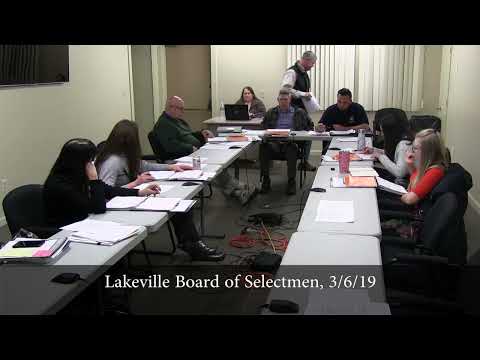
Lakeville Highway Superintendent Franklin told the Board of Selectmen on March 6 that the town's proposed FY2020 highway operating and capital budgets include relatively small staffing and wage changes, expanded use of part‑time labor and several equipment replacements and storage projects aimed at freeing full‑time crews for road repairs.
Franklin said the operating budget shows small wage increases (including a $2,000 proposal for an administrative assistant) and a plan to hire additional part‑time laborers for landscape work so full‑time employees can focus on catch basin work, pothole patching and other road‑work season priorities. He also proposed modest increases in line items for police details, building and grounds maintenance, vehicle repairs and public works material.
The capital plan includes a request for a used sander/dump truck to replace a 1990 vehicle that will no longer pass inspection; Franklin described that truck as necessary for sanding and snow‑and‑ice operations and said the replacement would have a multiuse dump body for year‑round work rather than a winter‑only body. Other capital items discussed were two 40-by-30 salt storage buildings (a lower‑cost alternative to a previously planned $300,000–$400,000 single large salt shed), a leaf loader and additional zero‑turn and riding mowers to improve cemetery operations and reduce labor hours.
Franklin and board members debated outsourcing some catch basin cleaning to reduce the volume of material stockpiled at the highway yard and to free a full‑time employee for other road work. Franklin said the town currently cleans nearly 1,000 catch basins and estimated contractor costs “in the mid‑20s to high‑20s” dollars per basin for a service that would measure, clean and truck out material; he said contracting could cost roughly $25,000–$30,000 to free one full‑time worker’s seasonal time. He also said the department is shifting from sand/salt mixes to more straight salt, which over time should reduce the quantity of sand being removed from catch basins.
The board discussed replacing a smaller bucket truck, which Franklin said is nearing the end of its serviceable life and is used frequently for tree trimming and storm response. Some selectmen said high‑cost equipment that is used infrequently can be contracted out, while Franklin argued that owning equipment gives the town control during storm responses.
On fleet and storage costs Franklin said a recent purchase of three trucks cost about $60,000 each and that a comparable replacement would be about $75,000 if a multiuse body is required. He said the two proposed salt sheds (including site prep and a concrete pad) were priced in the low tens of thousands each in the packet (Franklin noted a total “around $24,000” for the shed itself plus site work in the capital estimate).
Board members encouraged Franklin to continue recruiting part‑time laborers and to consider adding a contracted line item for catch basin cleaning in the operating budget as a one‑year trial to assess labor savings and impacts on other priorities.
The discussion also covered repair and maintenance funding for facilities and vehicles, street lighting costs (including repairs in the industrial park and potential LED conversions), and longer‑term equipment replacements such as a chipper, a second bucket truck and other forestry equipment. Franklin and the board agreed to keep the requested capital items on the capital plan for further review during the budget cycle.
Ending: The board accepted Franklin’s presentation and agreed to continue reviewing the highway capital and operating requests as part of the town budget process; Franklin said he would work with staff on more precise cost estimates and potential contract pricing for catch basin cleaning.