Get Full Government Meeting Transcripts, Videos, & Alerts Forever!
Get email alerts on the Pond Management Echo Harvester topic
No spam. Unsubscribe anytime.
Lakeville committee reports pond flow increase after Echo Harvester work; will apply for Community Preservation Act funds for sediment removal
Summary
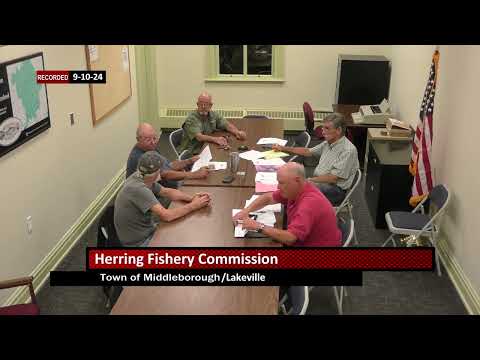
Members at a Town of Lakeville meeting discussed results from this summer's Echo Harvester weed-removal project, noting increased flow, a measurable drop in pond level and continuing vegetation and sediment challenges.
Members at a Town of Lakeville meeting discussed results from this summer's Echo Harvester weed-removal project, noting increased flow, a measurable drop in pond level and continuing vegetation and sediment challenges. Committee members agreed to prepare a Community Preservation Act funding application for sediment removal, with a provisional cost estimate and a named contact to file the Sept. 15 application.
The project produced visible changes in shoreline and flow. One speaker reported shoreline gain increasing from about 9 feet at the last meeting to roughly 18 feet, and that the river had dropped "about a foot since August 7," a change attributed to the Echo Harvester work. The same speaker said paddlers and observers reported clearer flow and removal of surface weeds in treated stretches.
Why it matters: the work aims to restore fish passage and reduce nuisance vegetation. The committee said the primary success metric is an increase in herring returns; members said monitoring this year showed fewer herring than hoped despite the harvest work. The group discussed follow-up options including additional Echo Harvester operations, mechanical piling and longer-term sediment-removal methods such as hydro dredging, and cautioned that permits would be required for any disposal into wetlands or waterways.
Project details and monitoring
Committee members reported approximately 270,000 pounds of vegetation removed during the operation, a quantity cited in discussions with a Nature Conservancy representative who has contacted the committee about post-removal monitoring and messaging. Observers reported seeing adult turtles but no herring in the sections they inspected during snorkeling and paddling.
Speakers also reviewed recent rainfall and evaporation conditions: reported rainfall amounts were below historical normals for June (actual 2.4 inches vs. nominal 4.13), July (2.24 vs. 3.82) and August (2.68 vs. 4.17); the group noted no extended 90-degree periods that might otherwise increase evaporation and affect levels.
Funding, permitting and next steps
Members discussed submitting a Community Preservation Act application to fund sediment removal. The committee decided to move forward with an initial application filed by the Sept. 15 deadline, listing a provisional funding figure and requesting updated contractor and engineering cost estimates afterward. One member said they would serve as the contact and would "get it in by the fifteenth," and the committee agreed to pursue engineering estimates before finalizing method and cost.
The group also discussed disposal methods. Hydro dredging was identified as an effective but potentially costly approach; speakers warned that pumping dredged material into marshes or waterways would raise permitting and legal issues. Members noted the review timeline: preliminary applications due Sept. 15, review in November and, if advanced, consideration at town meeting in April.
Volunteer assistance and local partners
Volunteers and a private excavator helped pile removed material at temporary staging areas; committee members said they plan to send a thank-you letter to the excavator operator for donated work. The committee reported continued conversations with the Totten Water Department and the Nature Conservancy about monitoring and possible subsequent treatments.
The committee said final assessments of herring returns may require multi-year monitoring: speakers noted life-cycle timing for runs can produce multi-year variability and that definitive evaluation may take several seasons.
Ending
Committee members resolved to file a preliminary Community Preservation Act application by Sept. 15 with an approximate figure (provisionally $200,000), to request updated contractor and engineering estimates, and to continue monitoring fish returns and pond/river conditions.