Get Full Government Meeting Transcripts, Videos, & Alerts Forever!
Get email alerts on the Economic Development Survey topic
No spam. Unsubscribe anytime.
Lakeville committee to relaunch business and resident survey, update economic development guide
Summary
The Town of Lakeville Economic Development Committee agreed Sept. 15 to develop updated business and resident surveys, pursue a grant-funded strategic plan and refresh the town's economic development guide; members set outreach options and a timeline and approved meeting minutes.
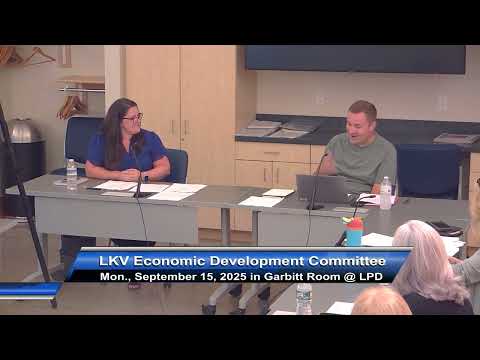
The Town of Lakeville Economic Development Committee on Sept. 15 agreed to relaunch an economic-development survey for businesses and residents, pursue a strategic-plan grant, and update the town's economic development guide to help attract and retain businesses.
Committee Chair Lorraine Carboni, a select board representative, said the committee had discussed resurfacing an earlier survey and that the town has applied for a Community One Stop grant to support a strategic plan. "Andrew did let me know that, but we haven't heard back from Community One Stop yet; he expects it'll be probably about another month," Carboni said, referring to the town administrator.
The survey work is intended to produce baseline data for a strategic plan that the committee would use to shape outreach, zoning and infrastructure priorities. Dan Wilga, the committee's associate member representing the planning board, summarized options drawn from comparable towns and recent practice, saying that "paper surveys, believe it or not, are out," and recommending primarily electronic outreach with paper copies available at town facilities for residents without internet access.
Members debated formats and audiences. The committee favored either (a) two targeted surveys, one for businesses and one for residents, or (b) a single survey with conditional logic that directs respondents to business or residential sections. The business questionnaire proposed by Dan Wilga would ask about location, industry, employees, years in business, ownership type, zoning or permitting constraints, infrastructure barriers (water/sewer/parking), and near-term expansion plans. Committee members emphasized collecting basic demographic fields as required items so results could be meaningfully analyzed.
Outreach methods discussed included: using a QR code and a landing page on the town website; posting paper copies at the senior center, library and town hall; including a small buck-slip or flyer with tax-bill mailings (a previous Lakeville survey was distributed with tax bills); and town communications channels such as the administrator's newsletter and an electronic sign at the police station. Laurie Driscoll, a commercial loan officer with SEED (Southeastern Economic Development Corporation), noted the tax-bill insert had been used previously and that paid insertion by the mailing vendor could be expensive: "I've heard that it could be, you know, $6,000," she said, and the chair said she would check costs.
Committee members also discussed practical support: low-cost online survey platforms (examples cited: SurveyMonkey, Qualtrics) and the possibility that a consultant hired under the grant would provide survey tools and data analysis. The group suggested a 2-to-3-month field period for the survey, avoiding major holidays, and suggested including optional sections so respondents could skip detailed questions if they preferred.
Beyond the survey, members supported updating the town's one-page economic development guide and creating or linking to a living inventory of commercial properties for lease or sale to make searches easier for prospective investors. The committee discussed using third-party commercial listings (for example, LoopNet or MLS) and soliciting commercial brokers to provide Lakeville listings for a centralized town page. Committee members said that such a listing could drive search traffic to the town website and help external investors find available properties.
The committee noted outreach opportunities and resources: invites to the local chamber of commerce and the Massachusetts Office of Business Development (Regional Director Jen Menard expressed willingness to meet), the town administrator's communications channels, and potential collaboration with neighboring towns that had recent surveys. Members stressed the need to support existing businesses as well as to market Lakeville to newcomers; suggestions ranged from permitting and zoning assistance to linkages with funding and permitting resources.
Formal business at the Sept. 15 meeting included approval of the Economic Development Committee minutes from Aug. 11 and an adjournment motion. The committee set a homework deadline: each member should send suggested survey questions (up to 20) to staff analyst Emily Surratt ahead of the next meeting. The group scheduled its next meeting for Monday, Oct. 20.
Votes at a glance: the committee approved the Aug. 11 meeting minutes by roll call (recorded as ayes); at 7:20 p.m. the committee voted to adjourn.