Get Full Government Meeting Transcripts, Videos, & Alerts Forever!
Get email alerts on the Demographic Data And Language Access topic
No spam. Unsubscribe anytime.
Revere commission debates more detailed demographic categories, multilingual outreach and community intake options
Summary
Commissioners discussed locally feasible steps to better capture and serve undercounted groups — from adding more granular demographic options on local forms to multilingual outreach, suggestion boxes and a public resource landing page.
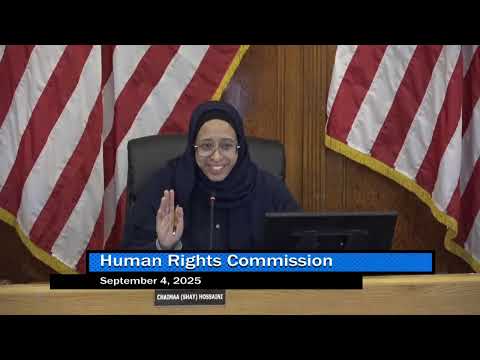
Commissioners at the Revere Human Rights Commission meeting opened a broad discussion about whether city‑level data collection and outreach could better reflect the city’s diversity and improve access to services.
Chair Shane Husseini framed the topic by noting how some groups — for example people from Middle Eastern or North African countries — are often categorized as “white” on federal forms and can be overlooked in local planning. “If we do break down the population even more, we’ll see that our city is actually a lot more diverse,” Husseini said.
Commissioners explored steps that are possible at the municipal level even if the federal census categories are fixed. Suggestions included: adding more detailed race/ethnicity fields to local intake forms where legally permissible; offering multilingual paper intake cards and suggestion boxes at events (festival tables, school events, food pantries); producing translated online forms and outreach materials; and creating a public landing page of HRC resources.
Dr. Garcia and Commissioner Pitch emphasized collecting qualitative “street data” through listening sessions and written comments to document community needs and to support requests for further changes. “That data is not numerical, but it’s based on what people are feeling on the day to day,” Dr. Garcia said, describing storytelling and oral histories as important sources of community information.
City staff described steps the city has already taken on language access. The meeting referenced Esma Abafuda, the city’s language coordinator, and staff reported that the city’s top three translated languages are Spanish, Portuguese and Arabic. The city provides interpretation devices and contracts with services such as Lionbridge; Rivia TV is being used to add live Spanish translation for some meetings. Commissioners discussed using those resources at community events and ensuring translated suggestion cards are available in commonly spoken languages.
Other practical ideas raised included establishing a small HRC landing page or resource database listing local services and educational materials; creating social‑media accounts to promote HRC activities and accept comments; and building partnerships with nearby human‑rights commissions (Lynn, Cambridge) to share best practices.
Commissioners agreed to continue the conversation and to add the topic to the October agenda for targeted action planning and possible outreach pilots.