Get Full Government Meeting Transcripts, Videos, & Alerts Forever!
Get email alerts on the Redevelopment Rda topic
No spam. Unsubscribe anytime.
Riverdale RDA approves $45.6 million West Bench budget amendment to support America First campus
Summary
The Riverdale Redevelopment Agency on Sept. 16 approved an amendment to the West Bench redevelopment-area budget that raises the cap from roughly $9 million to $45,591,683 and shifts tax-increment participation to 80% over 20 years to fund infrastructure tied to the planned America First Credit Union campus.
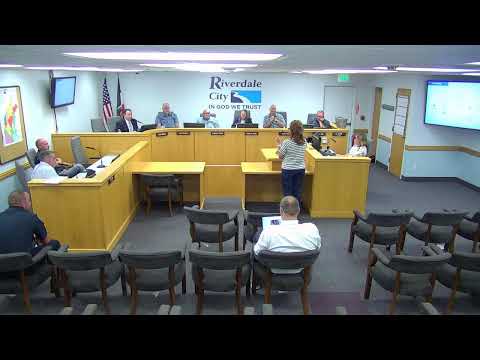
The Riverdale Redevelopment Agency voted unanimously on Sept. 16 to amend the West Bench redevelopment-area budget, approving resolution R 2025-07 to provide 80% tax-increment participation over a 20-year period not to exceed $45,591,683. The board approved the measure during a public hearing at the Riverdale City Hall RDA meeting.
The amendment raises the project-area budget from about $9 million to $45.59 million and extends the participation period from 17 years to 20 years. Agency staff said the additional funds are intended to pay for transportation and utility infrastructure needed to support new commercial development, including a multi-building campus proposed by America First Credit Union.
Brandon Cooper, the RDA staff member who presented the amendment, told the board the proposal responds to recent development interest in the West Bench and showed renderings and an infrastructure list used to estimate needed improvements. “We are looking at an amendment to the existing West Bench redevelopment area… taking it from a 100% participation to 80% and taking it from 17 years to 20 years with a max budget of $45,591,683,” Cooper said during his presentation.
Why it matters: the West Bench district, created in 2005 with a base year of 2011, covers roughly 74 acres of largely vacant land the city has sought to develop for years. RDA staff said tax-increment financing (TIF) is the primary way to pay for the roads, utility relocations, and access improvements that developers and the city say have blocked large-scale development.
Key details from the amendment and presentation: - Current and proposed budget: the existing RDA had a roughly $9,000,000 cap; the amendment raises the cap to $45,591,683 and extends the TIF period to 20 years at 80% participation. Staff said the project area’s first triggered tax year is 2025. - First-year participation: staff explained the first year of collections (tax year 2025, collected in calendar year 2026) will be treated as 100% participation because the amendment comes after tax-rate certification; the board then expects collections to adjust to 80% in subsequent years. - Agency and entity impacts: the presentation included a breakdown of estimated benefits and contributions by participating entities; staff said Riverdale City’s total nominal contribution over the life of the amended RDA would be about $6.7 million (present value roughly $3.4 million) and that Weber County, the school district and special districts would see larger future returns driven by new value created in the project area. - Infrastructure needs: staff listed transportation and utility projects estimated in the tens of millions (a slide cited roughly $42 million in infrastructure costs) that would be eligible under the amended budget to support development.
Cooper told the board the proposal grew from earlier drafts and negotiations with the taxing-entity committee (TEC). He said staff had presented multiple versions and that the final recommendation — 80% over 20 years — reflected discussion with the participating entities. Cooper also said the RDA intends to return later with a community reinvestment area (CRA) proposal to include additional land north of the current boundary.
Board members and staff discussed taxing-entity outreach. Cooper said the TEC vote certifying the proposal was not unanimous: Weber County voted no, but the committee’s majority vote carried the certification forward. RDA counsel Adam Longer (RDA attorney) appeared with staff during the discussion; Longer provided legal advice during the TEC review, according to Cooper.
Kim Cho and a second representative from America First Credit Union addressed the board during the meeting. Kim Cho and Miss Shultz (identified in the record as representatives of America First Credit Union) thanked the agency and said the credit union planned a multi-year campus investment. RDA staff and the city emphasized that the private investment drives the amended budget’s assumptions; Riverside staff said the amendment depends on America First and similar projects moving forward.
The public hearing was opened and closed with no public speakers recorded. The board then moved to adopt resolution R 2025-07. Board member Arnold moved to approve; a second was recorded. The roll call recorded unanimous votes in favor: Board member Hanson — yes; Board member Richter — yes; Board member Stevens — yes; Board member Haas — yes; Board member Arnold — yes. The motion passed.
What the amendment does not change: Cooper clarified the amendment affects only the project-area budget and not the RDA’s stated development objectives or the project-area plan. He also said an earlier waiver of a housing set-aside remains in place for the existing area; any housing set-aside requirements would be addressed later if a CRA covering additional land is proposed.
Context and next steps: staff said the RDA will continue negotiations with county and school district staff about the future CRA for the land north of the current boundary and that board members should expect future presentations with a draft project-area plan and budget. Cooper told the board that if the private investment does not occur as assumed, projected revenues and the need for the amended budget would change.
The board approved the amendment to allow the city and private developer to begin infrastructure planning tied to the America First campus and other anticipated development.
Ending: The RDA’s approval is expected to clear a path for detailed infrastructure planning and future agreements; staff said it will return to the board and to taxing entities with further materials if and when the CRA process moves forward.