Get Full Government Meeting Transcripts, Videos, & Alerts Forever!
Get email alerts on the Roads Traffic topic
No spam. Unsubscribe anytime.
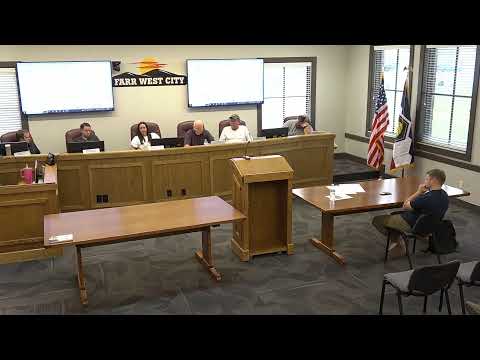
Planning commission presses developer for traffic study as residents warn Far West Drive is unsafe for proposed 39‑lot subdivision
Summary
At a Far West City Planning Commission work session, residents and commissioners raised safety, ownership and stormwater concerns about plans that would add 39 lots and increase local traffic by about 60%. Commissioners said an independent traffic study by the city engineer is needed before conditions or exactions can be set.
At a Far West City Planning Commission work session, residents and city staff discussed a proposed subdivision that would add roughly 39 lots off Far West Drive and increase vehicle counts on that road from about 65 existing residences to roughly 104 — a change the presenter described as "a 60% increase." The commission pressed the applicant and city engineers for an engineering traffic study before deciding what roadway improvements or developer exactions would be required.
The dispute centers on Far West Drive, a narrow, partly vacated street the presenter said measures 20 to 25 feet of asphalt in most places, and that in winter operations by public works can leave a drivable surface as narrow as about 15 feet. "We're already pushing the limit of what Far West Drive can safely handle," the resident presenter said, adding that the road also serves pedestrians and schoolchildren walking to Mountain View Park.
Why it matters: City code and the planning commission's general‑plan guidance treat a collector street as requiring a substantially wider right‑of‑way. The presenter told commissioners the municipal code and general plan call for collector streets to be 60 to 80 feet wide (a minimum 60 feet), which the presenter said would translate to a roughly 40‑foot driving surface — about double the existing asphalt. The presenter also read from a 1988 ordinance (Ordinance No. 88‑330) that narrowed and vacated part of Far West Drive and noted that the city quick‑claimed the vacated portion to abutting landowners, which complicates where the developer would need to acquire additional property to widen the road.
Commissioners repeatedly said the legal test for imposing a roadway exaction on the developer is constrained by state law. The city attorney and staff cited the state code provision the staff read aloud (transcribed as "state code 10 9 8 5 0 8") that requires any exaction to have an "essential link" to a legitimate government interest and to be "roughly proportionate" in nature and extent to the development's impacts. Commission members and staff said that requirement makes the city reliant on an engineer's traffic analysis to quantify the development's incremental effect on Far West Drive before setting widening or acquisition conditions.
Commission discussion and concerns included:
- Road width and safety: The presenter said there is not enough room for two vehicles and a pedestrian at the same time in many sections, and that snow plowing reduces clear width further. Commissioners and staff repeatedly framed the issue as a question of whether the driving surface could safely accommodate the additional trips the subdivision would add, not simply whether asphalt could be widened.
- Ownership of the vacated right‑of‑way: The presenter read from the 1988 ordinance narrowing Far West Drive and said the vacated portion was quick‑claimed back to abutting landowners, meaning the developer may need to negotiate land acquisition with property owners to assemble a 60‑foot alignment where required.
- Emergency and secondary access: Fire and public‑safety concerns were raised about the subdivision having essentially a single main exit. The commission noted temporary or improved emergency access would have to meet the fire district's standards; the fire marshal's review would carry "substantial weight" in any decision.
- Construction traffic and enforcement: The applicant and several commissioners discussed a temporary construction access that would use a 21.5‑foot access on an adjacent industrial parcel (described in the record as "21 and a half" feet). Commissioners and staff expressed skepticism about relying on GPS routing and worried heavy trucks would nonetheless use Far West Drive; the developer said it would attempt to direct construction traffic to the temporary access and accept responsibility for damage to Far West Drive if trucks used the wrong route.
- Stormwater and downstream ownership: Staff and the applicant discussed a detention pond and conveyance that currently lie on private property. The commission told the applicant a stormwater maintenance agreement and city access to the pond would be required if the city were to accept downstream drainage or maintain the facility.
What the commission directed: The commission did not take a final vote on the subdivision at the work session. Commissioners repeatedly directed staff and the applicant to obtain an engineering traffic study — and for the city engineer (Matt) to analyze the study — to determine how much of Far West Drive, if any, would need widening and what portion of any improvement could legally be required of the developer under the state's rough proportionality standard. The commission also asked staff to confirm the precise legal status of the vacated right‑of‑way through county records and to have the fire district weigh in on secondary access and emergency access standards.
The applicant's team said it had a civil engineer and land‑use attorney available to respond to more technical questions and that the plan meets the R‑115 zone's lot size standards; staff and commissioners emphasized that entitlement to build under the existing zoning does not eliminate the city's duty to analyze and, if appropriate, require proportionate mitigation for public impacts.
Next steps: Commissioners said they expect a formal traffic study and engineered analysis from the city's consultant before final conditions are drafted. The city will also need to resolve whether portions of the right‑of‑way must be acquired from private owners and whether temporary construction access can be required and enforced.
Ending: Commissioners characterized the session as having "homework on both sides" and agreed to reconvene in another development meeting or work session after the engineering and legal issues are clarified.