Get Full Government Meeting Transcripts, Videos, & Alerts Forever!
Get email alerts on the Parking Policy topic
No spam. Unsubscribe anytime.
Council adopts modified parking rules after state change on counting garages toward parking minimums
Summary
The council approved Ordinance 25‑23 to revise residential parking rules to reflect recent state guidance counting garages toward required parking; council voted 4‑1 for the modified (planning commission) version.
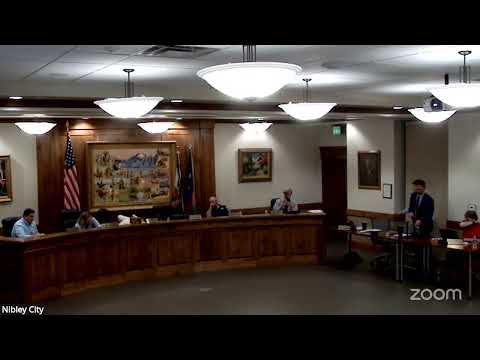
The Nibley City Council on Sept. 10 approved a revision to city parking rules for single‑family homes and accessory units after the state clarified how garages count toward required parking.
The ordinance, numbered 25‑23, responds to state code language that requires counting a garage as a parking space. Staff and the planning commission had different red‑line recommendations; the council accepted the planning commission’s red‑line version, which offers somewhat more flexibility in how parking counts are applied for small lots and attached accessory dwellings.
Levi (City Planner) told the council the practical effect will be limited in most Nibley neighborhoods because most recent homes include two‑car garages. He said the change matters most where a developer might propose smaller, more affordable single‑family homes with a one‑car garage and limited driveway length. “It allows a little more flexibility if there is that type of market for something like that,” he said.
Planning commission members had expressed concern about spillover parking affecting winter on‑street parking and neighborhood impacts. Council discussion weighed allowing flexibility for smaller, more affordable lots against avoiding a rise in on‑street parking pressure. One councilmember noted that many recent developments still result in two‑car garages and ample driveway space; another said the city should consider future transportation trends and household choices.
Vote: The council voted 4‑1 in favor of the planning commission’s recommended language and the ordinance changes; the roll call produced four votes in favor and one opposed. The council directed staff to finalize the ordinance language consistent with the motion.
Ending: Councilmembers said they would monitor neighborhood parking after the ordinance goes into effect and revisit implementation if neighborhood spillover becomes problematic.