Get Full Government Meeting Transcripts, Videos, & Alerts Forever!
Get email alerts on the Post Conviction Counsel Appointment topic
No spam. Unsubscribe anytime.
Appeals court hears argument on whether district judges must formally acknowledge post‑conviction counsel factors in Washington v. State
Summary
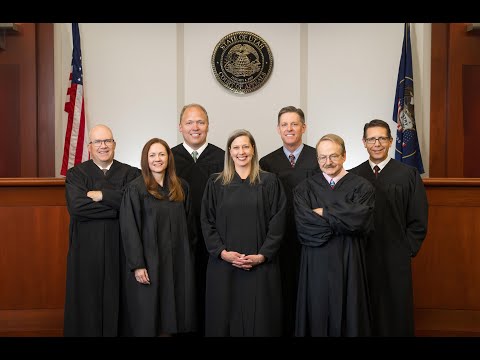
At a special session of the Utah Court of Appeals held in Southern Utah University's Great Hall, three appellate judges heard oral argument in Washington v. State over whether a district court abused its discretion by failing to acknowledge and engage statutory factors when it denied a post‑conviction request for appointed counsel.
At a special session of the Utah Court of Appeals held in Southern Utah University's Great Hall, three appellate judges heard oral argument in Washington v. State over whether a district court abused its discretion by failing to acknowledge and engage statutory factors when it denied a post‑conviction request for appointed counsel.
Appellant counsel Vincent Miller told the three‑judge panel the district court “failed to review the filings as a whole” and did not engage the statutory factors the petitioner asked the court to consider, arguing the omission requires reversal or a remand for a hearing on appointment of counsel. The state countered that the petitioner’s argument was buried in a supporting memorandum and that courts should treat post‑conviction petitions as a whole when determining whether a claim was properly presented.
Why it matters: the panel’s decision could clarify how district courts should treat pro se post‑conviction petitions and whether a judge must make an on‑the‑record acknowledgment of discretionary statutory factors (the parties repeatedly discussed the difference between a statute’s “may” language and a mandatory “shall”). If the appeals court finds an abuse of discretion, the matter would be remanded for further district‑court proceedings and possibly a hearing on appointment of counsel.
During argument, judges repeatedly pressed both sides on how to craft a workable rule. At oral argument Miller said the record shows the district court “didn’t even recognize” a basis for appointing counsel and cited precedent the appellant reads to require some engagement with discretionary factors. The state responded that the petition had headings and that one paragraph containing the contested claim was submitted in a memorandum of support rather than in the petition itself; the prosecutor argued courts regularly treat petitions and their supporting memoranda together but that courts are not required to rescue arguments that were not plainly presented in the petition.
The panel questioned whether remand or reversal is appropriate and whether the appellate court could make the factual determination itself from the record. Judges also pressed the parties on which statutory or rule provisions should control; both parties cited state cases (McNair, Sanchez and others) and competing readings of how a “may” clause operates in post‑conviction appointment decisions. Appellant repeatedly emphasized the petitioner’s incarceration, pro se status and asserted competency issues as reasons the district court should have more explicitly engaged the appointment factors.
No opinion was issued from the bench. The court took the matter under advisement and told the parties it will issue a written opinion resolving the appeal.
The oral argument was part of the Utah Court of Appeals’ special session at Southern Utah University; the panel said it will provide a written decision when ready.