Get Full Government Meeting Transcripts, Videos, & Alerts Forever!
Get email alerts on the Criminal Evidence Excited Utterance 404b topic
No spam. Unsubscribe anytime.
Court of Appeals weighs admissibility of neighbor statements and officer testimony in William Paul Mike appeal
Summary
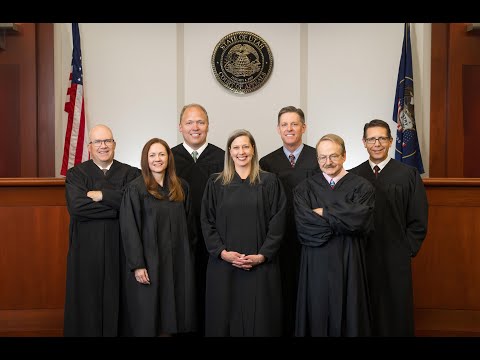
In a special session at Southern Utah University, the Utah Court of Appeals heard argument in State v. William Paul Mike challenging the admission of a neighbor’s statements as an excited utterance, an officer’s lay opinion testimony, and use of other‑acts evidence; the court will issue a written decision after taking the matter under advisement.
The Utah Court of Appeals heard argument in State v. William Paul Mike at a special session at Southern Utah University, focusing on three evidentiary rulings the defense says tainted the jury’s verdict.
Appellant Benjamin Miller, arguing for William Paul Mike, challenged the admission of a neighbor’s account of events as an “excited utterance” hearsay exception, an officer’s lay‑opinion testimony about statements the defendant allegedly made while detained, and the prosecutor’s use of that testimony in closing to imply assaultive intent. The State defended the district court’s evidentiary rulings as within the trial judge’s discretion.
Argument centered on factual sequence and legal tests. The appellate panel asked whether the neighbor’s narrative was a spontaneous statement made while the declarant was under the stress of the event or, instead, a response given after she reached safety, entered the home and answered questions; the court described the inquiry as highly contextual. The State argued that the declarant remained upset and that the trial court’s ruling fit within the range of reasonable discretion on a mixed factual‑legal inquiry.
Counsel also disputed whether testimony about the defendant’s alleged question on detention — “how much time can I get for assaulting a police officer” — was admissible and whether it was used impermissibly to show propensity in violation of Rule 404(b). The defense argued the officer’s testimony and the prosecutor’s closing argument invited jurors to infer that the defendant had a violent character, while the State said the testimony was relevant to intoxication and was not the only evidence on that point. Defense counsel pointed to a split jury verdict, an expert who said he could not rule out multiple explanations for the victim’s injury, and argued the cumulative effect of the evidentiary rulings was prejudicial.
Judges pressed both sides on whether the jury could have viewed the charged act as occurring in a private dwelling (which bears on unanimity and the charged theory) and whether the prosecutor’s closing remarks clarified the theory and limited the risk of juror confusion. The State argued the prosecutor’s closing framed the relevant act as occurring in a home and urged that any instructional or unanimity concerns did not produce reversible prejudice in this record. The State asked the panel to review the trial court’s evidentiary rulings for abuse of discretion.
At the end of the argument, the court told counsel it would take the matter under advisement and issue a written opinion resolving the appeal.
The hearing was held in the Great Hall at Southern Utah University as part of the court’s outreach to campus audiences; the court thanked university staff and public‑safety partners for hosting the session.