Get Full Government Meeting Transcripts, Videos, & Alerts Forever!
Get email alerts on the Post Conviction Appointment Of Counsel topic
No spam. Unsubscribe anytime.
Court of Appeals hears argument in Washington v. State over appointment-of-counsel standard in post‑conviction petitions
Summary
At a special session at Southern Utah University, the Utah Court of Appeals heard argument in Washington v. State about whether a district court must formally acknowledge statutory factors when denying appointed counsel in post‑conviction proceedings; the court took the matter under advisement.
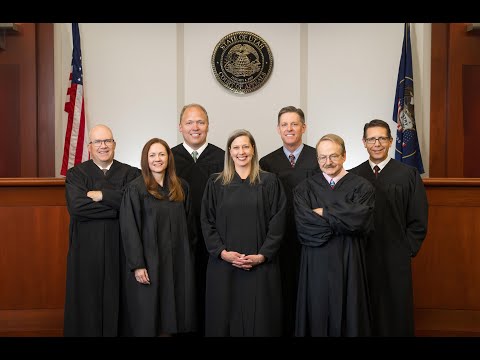
The Utah Court of Appeals heard argument in Washington v. State on statutory standards for appointing counsel in post‑conviction proceedings during a special session at Southern Utah University in Cedar City.
The central dispute is whether a district court errs when it denies a post‑conviction petitioner’s request for appointed counsel without expressly acknowledging or engaging the statutory factors that the legislature listed as matters the court “may consider.” Appellant counsel argued that the district court failed to treat the petition as a whole and overlooked a claim that had been included with the petition, while the State countered that the petition must be read in context and that attached memoranda cannot be used to bury new claims.
The question animated extended questioning from the three‑judge panel about how to reconcile the statute’s use of the word “may” with the idea that courts should not issue rulings showing “no engagement whatsoever.” Judges pressed whether a remand for the district court to apply the statutory factors would be the appropriate remedy or whether the appellate court could itself resolve the claim on the record. Counsel for the appellant said the record contains enough factual material for the court to remand for a proper analysis, and that a remand to allow the district court to apply the factors would be consistent with recent appellate precedent cited by the appellant.
Argument also turned on procedural presentation: the State said petitioners must raise claims in the petition itself rather than in a supporting memorandum, while the appellant responded that courts should read pro se filings with some flexibility and that the petition plus its attached memorandum together put the post‑conviction claims before the court. Both sides discussed Utah and federal precedent about how strictly to construe pro se filings and when courts should presume they considered relevant factors.
A number of published decisions and doctrinal points were invoked by counsel during argument, including references to case law the parties offered as guidance on when a court’s silence or minimal explanation constitutes reversible error. The panel repeatedly asked how an opinion should instruct district judges to proceed in light of a statutory list of non‑mandatory factors — whether judges must at least acknowledge statutory factors on the record or whether silence is legally permissible.
At the close of oral argument, the court said it would take the matter under advisement and issue a written opinion resolving the matter.
The hearing was part of the court’s outreach session at Southern Utah University; the panel thanked university staff and others who helped host the proceedings. The court did not announce a decision at the hearing; the written opinion will resolve whether the district court’s handling of the appointment‑of‑counsel question was legally adequate or whether further proceedings are required.