Get Full Government Meeting Transcripts, Videos, & Alerts Forever!
Get email alerts on the Infrastructure Water Sewer topic
No spam. Unsubscribe anytime.
Le Mars discussion centers on sewer, water projects and rate history
Summary
City speakers and residents discussed the condition and funding of Le Mars’ sewer and water systems, recent rate increases, project necessity and limits on municipal fund reserves.
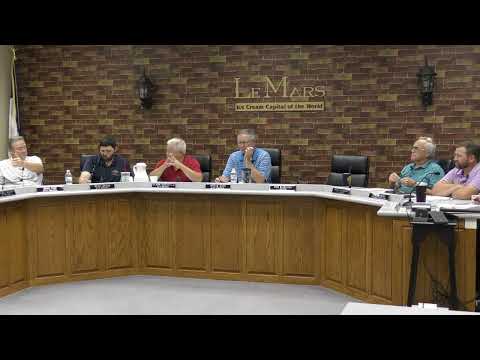
Le Mars residents and city officials on an unspecified meeting date discussed the city’s water and sewer infrastructure needs, recent rate increases and limits on how the city may hold reserve funds.
Speakers said the city’s wastewater treatment plant is nearing the end of its useful life and that a reverse-osmosis (RO) system is intended to extend its lifespan. “The sewer plant is probably beyond its useful life,” said Brad (resident), describing the RO system as a measure to extend service life. Speakers emphasized that work on the plant and related projects “have to be done” regardless of whether Le Mars grows to 5,000, 10,000 or 15,000 residents.
The discussion placed those capital projects in the context of water and sewer rate increases. Brian (resident) said his tax bill dropped even as assessed values rose and urged people to check the breakdown between city, county and school tax rates. Other speakers said earlier rate increases had been delayed for years, pushing larger increases now rather than smaller, incremental adjustments.
City participants noted a legal or policy constraint on reserving large sums in municipal enterprise funds. “The municipality is not allowed to stockpile money…you can’t just stockpile money without a plan,” said a speaker identified only as a resident who referred to prior attorney guidance. The speaker said the city must show a purpose for collected funds or risk legal trouble, and that past committees repeatedly discussed whether and how to phase rate increases.
Speakers also discussed funding sources for community projects. Several community betterment projects (CBP) and amenities, including the Olsen Center and the local golf course, were credited to philanthropic donations and local-option sales tax rather than ongoing utility revenues. One speaker said maintenance costs remain a consideration for those amenities.
On plant sizing, a participant asked whether the new water and wastewater plants were being built for a population of 20,000; another participant replied they are not, saying the design target is closer to 13,000. “So we’re not overbuilding it,” the meeting heard.
The meeting closed with routine community announcements about upcoming events including a local bash, marching band competition and a pancake feed; a motion to adjourn carried without a recorded roll-call vote.
This report draws only on statements in the meeting transcript; details such as exact project budgets, specific engineering plans and formal adoption dates were not specified in the transcript.