Harrison County considers bringing senior transportation in‑house as CTA funding is cut
Loading...
Summary
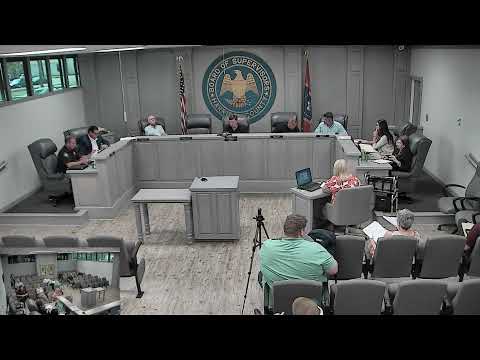
Jeff Clark, senior resources director, outlined growth in demand for senior transportation and presented options to absorb services now provided by the Community Transit Agency (CTA). Supervisors agreed to ask CTA to remove senior-shopping trips and to plan a phased county takeover focused first on on‑demand services and dialysis runs.
Jeff Clark, Harrison County senior resources director, told the Board of Supervisors that demand for senior transportation has grown sharply and presented options for the county to assume services currently provided by the Community Transit Agency (CTA).
Clark said the county’s senior transportation program runs field trips, on‑demand rides and center runs, and that on‑demand service has “increased 100% over the past year.” He described staffing and equipment needs and said the county is in queue to receive two additional buses from MDOT but would need to hire another full‑time driver if it expands services.
Clark said CTA received county funding in fiscal 2025—about $60,387 per quarter in the county’s accounting—and that CTA requested an additional roughly $15,000 per quarter in last year’s budget. Clark said the county also receives $70,000 annually from the South Mississippi Planning and Development District (SMPDD) for senior transportation. He said CTA has responded to earlier funding reductions by reducing certain services, and that county staff picked up some event transportation when CTA curtailed trips.
Clark presented three options the county could pursue if it reduces CTA funding and brings services in‑house: 1) take over senior‑center runs and on‑demand services (the county has capacity to start this first); 2) take over all services except dialysis; or 3) take over all CTA services including dialysis runs, which Clark said would require additional buses and drivers. “We get $70,000 of our budget comes from SMPDD just for transportation,” Clark said. He told supervisors that dialysis runs are more operationally complex but that his team would “learn” if the board directed them to take over those routes.
Supervisors discussed balancing continuity of dialysis transportation—described in the meeting as “life or death” for some riders—with a plan to phase in other services and give CTA notice to adjust its budget. Board members instructed staff to tell CTA to remove senior‑shopping trips from its request and to reallocate the corresponding funds between senior centers and dialysis transportation, prioritizing full funding of dialysis runs. Supervisors also asked county staff to prepare a transition plan and an MOU so that no services would be lost during a transfer; Clark said a phased start could begin as early as October 1 if the board moves quickly.
No formal appropriation changes were approved at the meeting; supervisors said they expected to finalize details during budget discussions and to present a transition plan and staffing requests in the next budget cycle.
Background: Clark said the county currently operates MDOT‑grant buses that require CDL drivers; two of the four CDL‑licensed drivers work primarily at a single senior center. He also noted potential operational support from SMPDD, which has offered staff with scheduling and maintenance expertise.
The board emphasized that any change should avoid service gaps for dialysis patients and asked staff to report back with a phased plan and staffing/cost estimates.