Get Full Government Meeting Transcripts, Videos, & Alerts Forever!
Get email alerts on the Emergency Watershed Protection topic
No spam. Unsubscribe anytime.
NRCS outlines Emergency Watershed Protection process as county weighs sponsorship after Lee and Elk fires
Summary
Todd Bolt, a Natural Resources Conservation Service official, explained the Emergency Watershed Protection program and the county’s potential sponsor responsibilities after the Lee and Elk fires, including a 75% federal/25% sponsor cost split and a 60‑day window to request assistance.
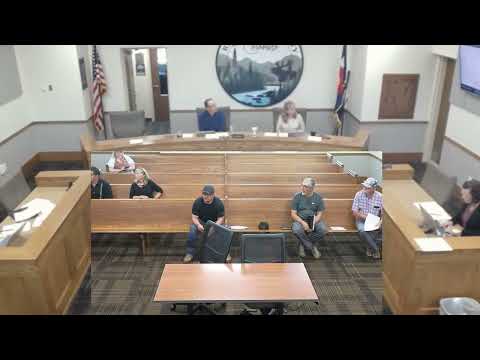
Todd Bolt, a Natural Resources Conservation Service official, explained the EWP program to the Rio Blanco County commissioners and staff and described the county’s role if it becomes a sponsor after the Lee and Elk fires.
Bolt said the EWP program is designed to “relieve imminent hazards to life and property caused by a watershed impairment,” including post‑fire erosion, sedimentation and flood risk. He told the board that a local unit of government must request assistance in writing to the state conservationist (Clint Evans) and that the request should happen within 60 days of when access to affected areas is available for damage assessment.
The request starts a damage survey report process in which NRCS and county personnel assess damaged sites, estimate costs and prepare a priority list. Bolt said NRCS provides technical and financial assistance to address issues on private property and public infrastructure but works through the sponsor, who is responsible for landowner permissions, permits, contracting and administering work.
Bolt summarized the funding mechanics: NRCS pays about 75% of construction (financial assistance, “FA”) and the sponsor is responsible for about 25% of construction costs; NRCS also provides technical assistance (“TA”) calculated at about 15% of estimated construction costs to support planning and administration. Sponsors pay contractors up front and are reimbursed by NRCS. After installation, sponsors are responsible for operation and maintenance of installed measures.
Commissioners asked whether the required 25% match must come from county funds. Bolt said the match can be cash or in‑kind contributions (labor, machinery, county time) and can come from other partners (state agencies, river districts, conservation districts) through agreements. He noted TA funds can reimburse reasonable administrative costs at 100%, including hiring engineering or project management consultants.
County commissioners and staff raised practical concerns: identifying which local entity should submit the request (county versus conservation district), the county’s staffing and grant‑management capacity to administer a potentially complex project, and the timeline for arranging a 25% match. County staff and commissioners said they wanted more time to consult with the conservation district and potential partners before sending a formal request. A commissioner summarized: “I don’t think we authorize this right now. I think we have some more conversation of who submits that.”
Because requesting assistance only initiates the damage survey and does not commit the county to implementing projects, commissioners said they would continue discussions with the conservation district and other partners.
The county did not vote to sponsor or submit a request during the meeting. Officials said they aim to refine staffing, match‑fund arrangements and partner commitments before taking formal action.
Why it matters: The EWP process provides federal funds and technical help to reduce post‑fire hazards, but the sponsor bears administrative and cost‑share responsibilities. County leaders must decide quickly whether to request NRCS assistance to access federal money and to define which local body will manage contracts and landowner agreements.
What’s next: Commissioners planned further talks with the Rio Blanco conservation district and potential funding partners to determine who will act as sponsor and how the county would meet the 25% match and administer any resulting contracts.