Get Full Government Meeting Transcripts, Videos, & Alerts Forever!
Get email alerts on the Large Scale Development topic
No spam. Unsubscribe anytime.
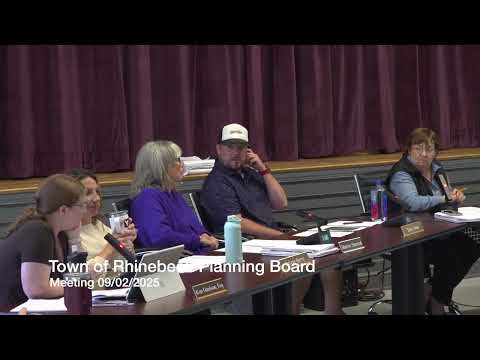
Planning board continues large Southlands project public hearing after site visit; neighbors press for alternate wastewater location and screening
Summary
The board continued its public review of the multi‑building Southlands development and its proposed wastewater treatment plant after a site visit. Neighbors and board members pressed the applicant on the plant’s location, wetland and archaeological impacts, and the need for a pedestrian sidewalk connection.
The Planning Board continued public review on Sept. 2 of a large multi‑building project referred to in the record as Southlands. The project—which includes multiple buildings, a private wastewater treatment plant, access roads and landscaping—remains under review and the board scheduled further hearings and site visits while requesting additional information from the applicant.
Applicant representatives described the site layout, noting the proposed wastewater treatment plant and electrical interconnection are sited in a low corner of the parcel near an intermittent stream and existing overhead‑to‑underground utility line. The applicant said the location was chosen to minimize wetland buffer disturbance, to avoid trenching across third‑party parcels, and to shorten the trench length to the nearest customer‑owned pole.
Neighbors and several board members raised multiple concerns. Public commenters and a board member outlined eight risk areas tied to the wastewater plant’s present siting: winter visibility from residences and scenic roads, wetland disturbance due to the access road and discharge path, generator noise and fuel spill risk near wetlands, discharge proximity to an intermittent stream, access for emergency vehicles and firefighting chemicals, and the complexity and vulnerability of long pump/trench runs from the building nexus to the plant. Concerned residents urged the board to consider alternative siting that would reduce wetland and tree disturbance and shorten pumping runs.
Historic and archaeological issues also surfaced. Board staff and consultants noted previous archaeological studies covered only certain parts of the parcel and that a separate Area of Potential Effect (APE) related to the proposed plant and trenching would likely require additional Phase 1A/1B work. The board asked the applicant to supply archaeological documentation for the new APE and to coordinate with county/state reviewers.
Board members noted other outstanding items: a tree survey (inventory of trees by size), signage plans that may require a variance, and details for a proposed sidewalk connection to Route 9G. The board reported the applicant has engaged with neighbors and with “Four Brothers” (a neighboring property) about a sidewalk link; the developer said the neighbor supports the connection in principle.
Several board members who attended the site visit described the walk along the roadway as unpleasant and emphasized the importance of a sidewalk for pedestrian safety. The board also discussed mitigation for a stone wall and integration of site topography into the design to reduce cutting and filling.
The board left the public hearing open and instructed the applicant to provide: (1) a clearer justification for the wastewater‑plant siting or consideration of alternate locations, (2) a tree survey and planting plan, (3) archaeological Phase 1 results for the relevant APE, (4) detailed signage plans, and (5) draft designs and cost implications for the sidewalk connection. The board indicated the review will continue at a future meeting and encouraged continued neighbor engagement.