Get Full Government Meeting Transcripts, Videos, & Alerts Forever!
Get email alerts on the Religion In Public Meetings topic
No spam. Unsubscribe anytime.
FFRF letter on school‑board invocations read to commissioners; speakers clash over prayer in public meetings
Summary
A speaker read a Freedom From Religion Foundation (FFRF) attorney letter arguing that school‑board invocations violate policy and court precedent; commissioners defended invocation practices and said the county’s invocation is voluntary and not coercive.
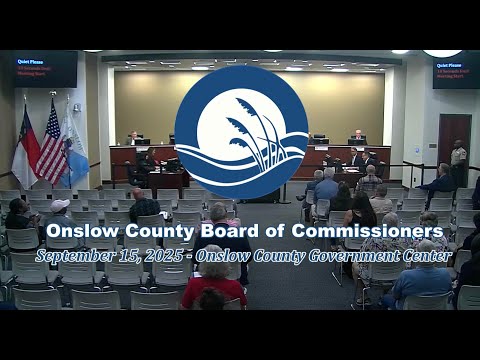
A public commenter read a letter from an attorney with the Freedom From Religion Foundation (FFRF) to the Onslow County Board of Education during Monday’s Onslow County Board of Commissioners meeting, arguing that invocations and prayers at school‑board meetings violate the Establishment Clause and the district’s own policy.
Ari Rakowitz told the commissioners he had provided the FFRF letter to the Board of Education and read excerpts for the county record, citing legal concerns and prior court rulings. Rakowitz said Onslow County School Board policy 3515 states the board “will neither advance nor inhibit any religion or religious belief, viewpoint, expression, or practice,” and argued that including an invocation as an official part of a meeting advances a religious practice and could expose the district to financial liability. Rakowitz referenced a Chino Valley case in which the speaker said a court ordered a district to pay more than $200,000 in plaintiff attorney fees and additional fees on appeal.
During and after the reading, members of the commission and the chairman responded strongly in defense of current invocation practices at county meetings. The chairman and other commissioners said the county’s invocation is voluntary, that no one is compelled to participate, and that the national motto “In God We Trust” and a moment of silence are consistent with existing precedent. One commissioner said the nation’s courts have not required removal of the motto and urged civility in public debate.
Commissioners repeatedly emphasized the distinction between governmental coercion and allowing invocations or a moment of silence, and asserted that their invocation practice does not coerce attendees. The meeting audio includes heated exchanges during and immediately after the reading; the chairman interjected several times to end a speaker’s extended remarks and to maintain order.
No formal board action, policy change or vote on invocation practices occurred at the meeting. The item was presented as public comment; the letter referenced by Rakowitz pertains to the school board, not the county commission. Commissioners said they would continue to offer the invocation and moments of silence as they have in prior meetings.