Get Full Government Meeting Transcripts, Videos, & Alerts Forever!
Get email alerts on the Environmental Permits topic
No spam. Unsubscribe anytime.
Consultant: DEP requests decommissioning details and an anti‑degradation study for GP plant permit renewal; commissioners and residents raise sludge and plume‑s
Summary
A consultant for Georgia‑Pacific’s permit renewal described a Department of Environmental Protection request for additional information, including a decommissioning plan, stormwater/peak flow calculations, groundwater monitoring updates, and an anti‑degradation study tied to a proposed move of the discharge point upstream. Residents pressed for a U
Taylor County commissioners heard a detailed permitting update on the former mill’s wastewater and decommissioning work, including a Department of Environmental Protection (DEP) request for additional information (RAI) and a requirement that Georgia‑Pacific (GP) complete an anti‑degradation study if it seeks to move its effluent discharge upstream.
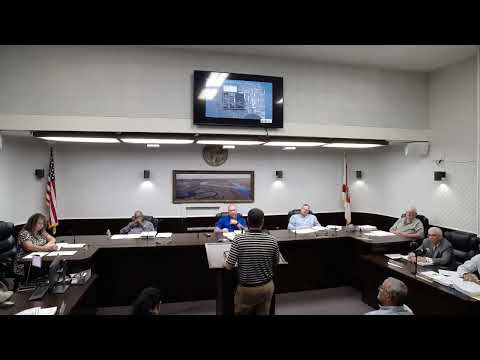
Jeff Tompkins, P.E., principal at Due Diligence Associates Inc., told the board that DEP issued a formal RAI after GP filed amendments to its wastewater permit renewal. "DEP actually has 60 days to review that application, then make a request for additional information," Tompkins said, adding that DEP’s questions were thorough and that GP must respond by Oct. 11 unless DEP grants an extension. He noted the administrative rule allows up to 90 days for a response and that GP may request additional time.
Tompkins summarized DEP’s principal requests: a decommissioning plan for the on‑site wastewater treatment infrastructure; peak stormwater calculations and how the holding pond will be managed; additional sampling and monitoring data; updated corporate officer certification; production‑well withdrawal rates; and an updated groundwater‑monitoring plan. He said GP has proposed moving its point of discharge back to the location used from 1972 until 2020, upstream of the U.S. 19 bridge, and that DEP requested an anti‑degradation analysis because even discharges meeting numeric standards can still cause degradation that must be justified under state rules.
Tompkins described the likely sequence for DEP review and public involvement: DEP reviews GP’s RAI response, may issue further questions or draft a permit, and will publish a draft permit for public comment; EPA Region 4 will be notified for concurrence on the draft prior to final issuance. He said the full permitting process could extend months and that, in some circumstances, the process might take up to a year if extensions and appeals are exercised.
Residents and commissioners raised concerns about on‑site sludge, groundwater impacts and what happens if pumping stops. One resident asked where sludge from holding ponds will be taken; Tompkins said DEP has requested GP provide those plans in its response and that consultants (Tetra Tech was referenced in the meeting) are developing alternatives. Board members and speakers noted the site currently operates production wells that lower groundwater under the mill; Tompkins cautioned that if pumps were stopped, groundwater behavior could change and long‑term monitoring or engineering controls (for example, cutoff walls or capping) may be necessary.
Several commissioners and residents urged the county to seek clarity on the public interest and on alternatives. Commissioner Newman and others suggested the county could condition support for GP on limited or conditional terms if GP requests a local resolution; Tompkins said when an industrial site pursues an anti‑degradation demonstration it is customary for the applicant to brief local government and seek supportive resolutions where appropriate.
Tompkins closed by urging continued vigilance and public input and said he would remain available to brief staff and commissioners as the RAI response and subsequent DEP steps unfold. No permit decision was made by the board at the meeting; DEP’s administrative process and GP’s RAI response will determine the next public notice milestones.