Get Full Government Meeting Transcripts, Videos, & Alerts Forever!
Get email alerts on the Public Transit topic
No spam. Unsubscribe anytime.
Duluth Transit Authority says reduced state subsidy forces large levy request; warming-center shuttle and neighborhood routes at risk if levy is cut
Summary
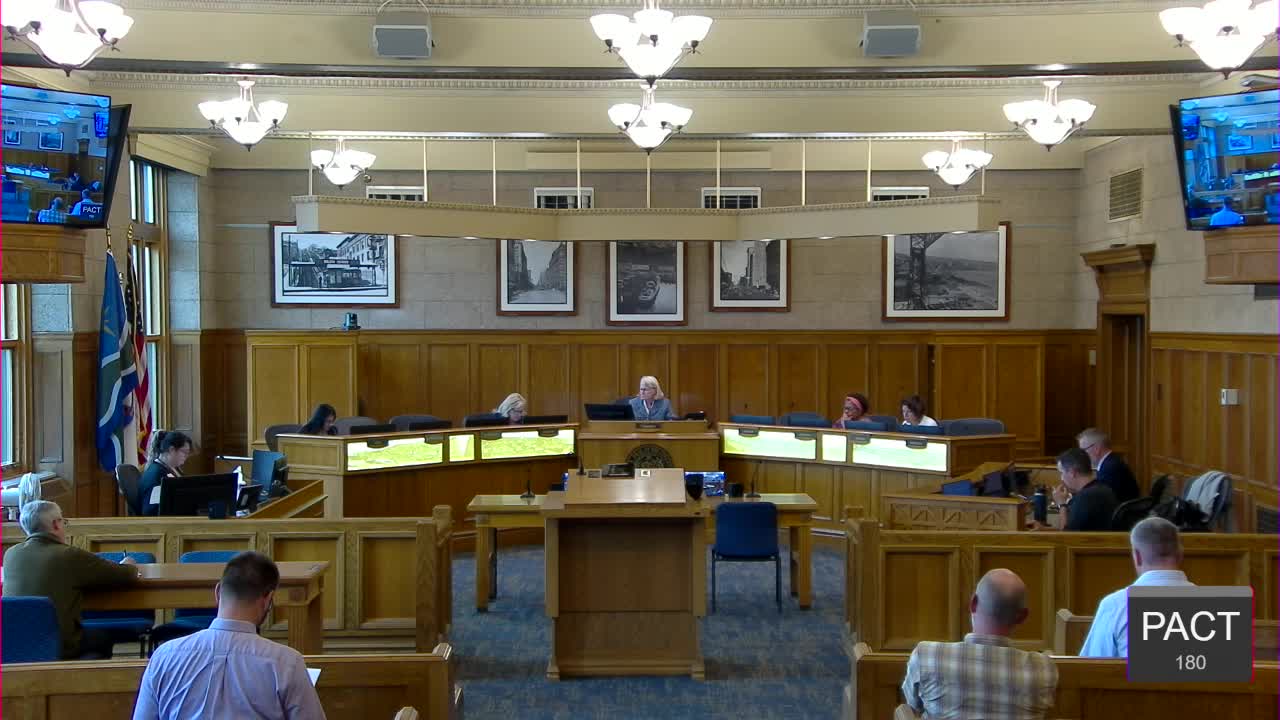
At a Duluth City Council meeting, Duluth Transit Authority General Manager Chris Belden described why a planned 42.9% local levy request follows the end of a temporary Minnesota Department of Transportation subsidy and outlined service reductions the agency would consider if the increase were limited to about 21–25%.
General Manager Chris Belden of the Duluth Transit Authority told the Duluth City Council that a temporary Minnesota Department of Transportation subsidy that reduced the agency—s local match to 5% has ended, prompting a proposed 42.9% levy increase for 2026 and possible service reductions if the council limits the increase.
Belden said the DOT subsidy had kept local levy requests lower in recent years. "The last 2 years, Minnesota Department of Transportation had an additional subsidy where our local match percentage went from a typical 20% all the way down to 5%," he said. "Now that subsidy is gone, so we're back again." He added that if the council approved a smaller increase—about 21.5% to 22%—the authority would need to identify cuts to close the gap.
The authority identified specific options to reduce costs. Belden said the warming-center program involves two pieces: free evening rides to warming centers and a dedicated morning shuttle to return riders to service providers. The morning shuttle addition costs roughly $50,000 annually, he said. "That would be a straight local levy reduction of $50,000," Belden said. He estimated lost fare revenue at a maximum of about $11,000 if previously free riders began paying fares, but said continued ridership at prior levels was unlikely.
Belden said seasonal tourist services are another early target. The Port Town/Canal Park trolleys are primarily for tourists and some employees, and suspending that seasonal service could save roughly a quarter-million dollars annually. He cautioned that the authority recently purchased three specialty trolleys and federal rules likely require vehicles bought with Federal Transit Administration funds to be returned or accounted for if removed from service, limiting any capital recapture.
Larger service cuts would affect low-performing neighborhood routes, Belden said, listing Route 113 (Park Point/Canal Park), Route 112 (Woodland/UMD/Kenwood/Duluth Heights/Miller Hill Mall), and Route 109 (Spirit Valley and Bayview Heights). "So in order that would be some of our lowest performing routes, we'd have to start at the bottom," he said, adding Park Point would be particularly consequential because the route has historically existed for more than 100 years and serves residents and employees with no alternate public transit.
Councilors asked how large those savings would be. Belden said the Park Point route operates at about $570,000 annually and that it is the system—s lowest-performing route and highest subsidy per rider. He said eliminating a route would be "all or nothing" in many cases because labor minimums and prior attempts at on-demand shuttles during the pandemic increased costs.
Councilors and Belden stressed that any service reductions would require community engagement and board approval. Belden described the equity considerations the authority would weigh: "Equity is a big foundational piece of our decision making," he said, noting some routes serve communities without alternatives and that the authority would analyze redundancy before proposing changes.
Councilors also explored partnerships to preserve specific programs. Belden said a local nonprofit (CHUM) might be able to provide in-kind support; when asked, he said he believed the authority could accept a $50,000 in-kind donation to cover the morning shuttle cost.
The Duluth Transit Authority's formal levy request was read into the record as Resolution 702, "a resolution proposing the sum to be raised by taxation for the special taxing district Duluth Transit Authority for the year 2026." Councilors recorded questions and asked the authority to prepare options if the council amends the levy at an upcoming vote.
The council did not take a vote on the DTA levy during the meeting; questions concluded before the agenda moved on.
Belden's full list of proposed or possible reductions and the agency's analysis will be part of further budget discussions and required outreach to riders and affected neighborhoods.