Get Full Government Meeting Transcripts, Videos, & Alerts Forever!
Get email alerts on the Parks And Recreation topic
No spam. Unsubscribe anytime.
Arlington Park review highlights pond management, invasive plants and canopy loss
Summary
Board members and neighborhood representatives reviewed recent improvements at Arlington Park and raised environmental concerns about shoreline management, herbicide use, invasive Brazilian peppers and iguanas; residents asked for signage and continued plantings to protect tree canopy.
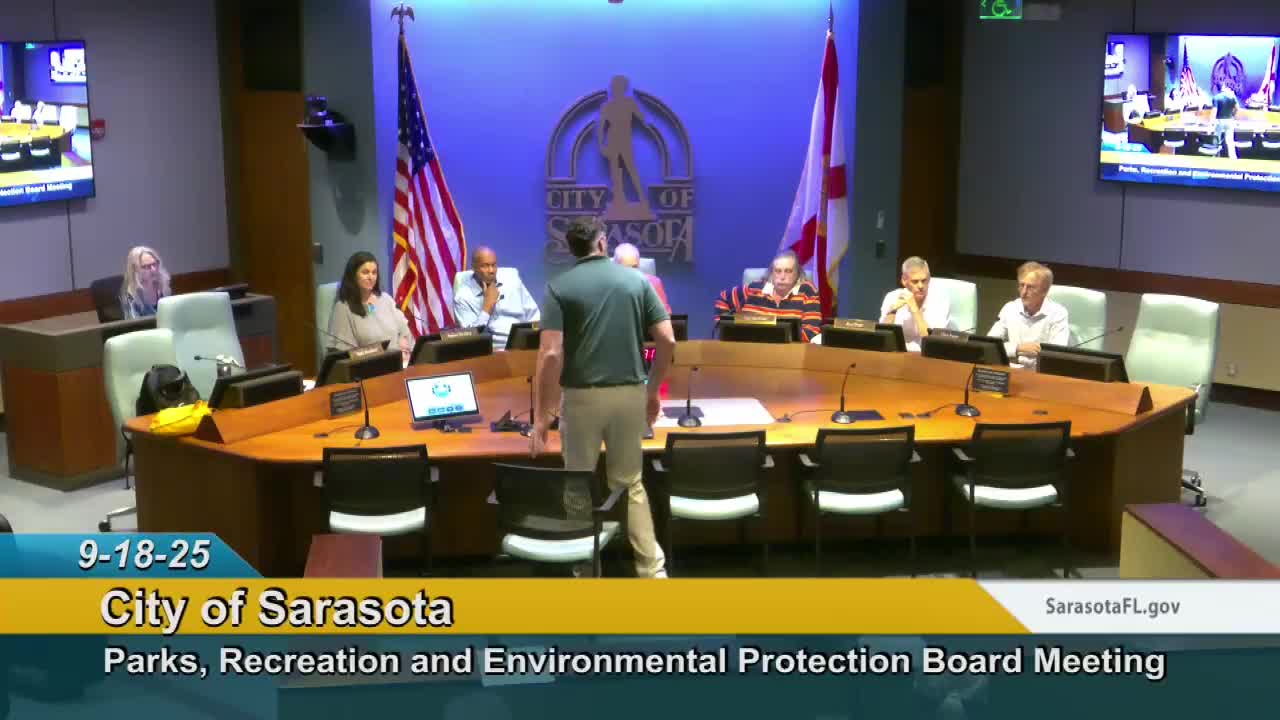
Chris Nace, a member of the Sarasota City Parks, Recreation and Environmental Protection Board, delivered a monthly review of Arlington Park, describing the site’s facilities and recent upgrades and flagging environmental problems that need attention. "It's a really special park in the city," Nace said, noting the park’s 23 acres, two pools, trails, dog area and an outdoor fitness center.
Nace summarized recent facility work including resurfaced tennis and basketball courts, refurbished locker rooms and new drainage and dog‑wash stations. He credited park staff and volunteers for replanting after storm damage and for installing a mural at the lifeguard building. Board members also noted a gym refresh and a heater/chiller project that is expected to restore full temperature control at the pool.
The discussion shifted to environmental concerns at the park’s stormwater pond. Nace said county crews had applied a herbicide around the pond and cut back emergent plants, a move that "created some concerns for residents as to what that might do to the water quality and the turtles and things living in the pond." He recommended looking to models such as St. Petersburg’s Round Lake for shoreline management, improved aeration and littoral planting to reduce muck and improve habitat.
Board members and Nace raised invasive species—particularly Brazilian pepper plants—and the rising local presence of iguanas, which they described as destructive to landscaping and canopy trees. Nace suggested working with the University of Florida extension office and local groups such as Suncoast Waterkeepers on pond best practices, and coordinating with Sarasota County where jurisdiction overlaps.
Resident Flo Antler, president of the Arlington Park Neighborhood Association, urged improved traffic signage for an entrance/exit near Tuttle to reduce safety risks during large events and meets. "The sign is so small that most people don't see it, and they use that as an entrance," Antler said, and she thanked the board for its volunteer work to protect parks.
The board agreed to follow up: staff will confirm which plant species were chosen for recent replanting, pursue options for littoral zone aeration and coordination with county stormwater authorities, and consider additional neighborhood signage. No formal votes or budget decisions were taken on these items at this meeting.
The board scheduled continued park reviews and asked that written follow‑ups on pond plant choices and next steps be circulated to members ahead of the October meeting.