Get Full Government Meeting Transcripts, Videos, & Alerts Forever!
Get email alerts on the Tencare Policy topic
No spam. Unsubscribe anytime.
Committee approves TennCare rule allowing immediate family members to receive payment for certain home‑based services
Summary
The committee recommended permanent TennCare rules aligning with 2024 statute (Public Chapter 621) so immediate family members employed by participating providers may be paid for home and community‑based services, private duty nursing and home health services under specified conditions.
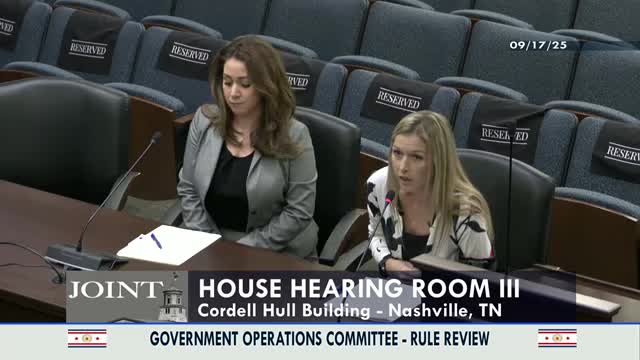
The Joint Government Operations Committee on Sept. 17 approved permanent TennCare rule amendments that align state policy with Public Chapter 621 from the 2024 legislative session, allowing immediate family members to receive payment for certain home‑and community‑based services when other statutory and program conditions are met.
Amanda Petri, an associate counsel for TennCare, explained the permanent rule changes modify definitions and update multiple rule chapters so immediate family members are no longer categorically precluded from payment for community living supports, private duty nursing services and home health services provided to eligible TennCare enrollees. The changes amend the definition of “immediate family member” and adjust rules in chapters covering community living supports and private duty nursing so they align with the 2024 statute.
Petri said rules will allow a member’s conservator to receive payment for services if permitted by the conservatorship order; the agency received three public comments at a Jan. 7, 2025 public hearing and responded in writing but made no changes to the rules based on those comments.
Committee members asked about safeguards and oversight. Petri said family members must be employed by a participating provider agency for home and community‑based services and must meet provider eligibility and qualification requirements for private duty nursing and home health services. Oversight and competency are enforced through the employing provider agency’s supervision and the provider participation requirements, she said.
The committee recorded a positive recommendation by roll call in the Senate and a voice vote in the House. TennCare said it will continue stakeholder discussions on implementation as needed.