Get Full Government Meeting Transcripts, Videos, & Alerts Forever!
Get email alerts on the Council Funding Policy topic
No spam. Unsubscribe anytime.
Jacksonville committee debates ‘strategic initiative’ spending, approves mix of carryovers and community grants
Summary
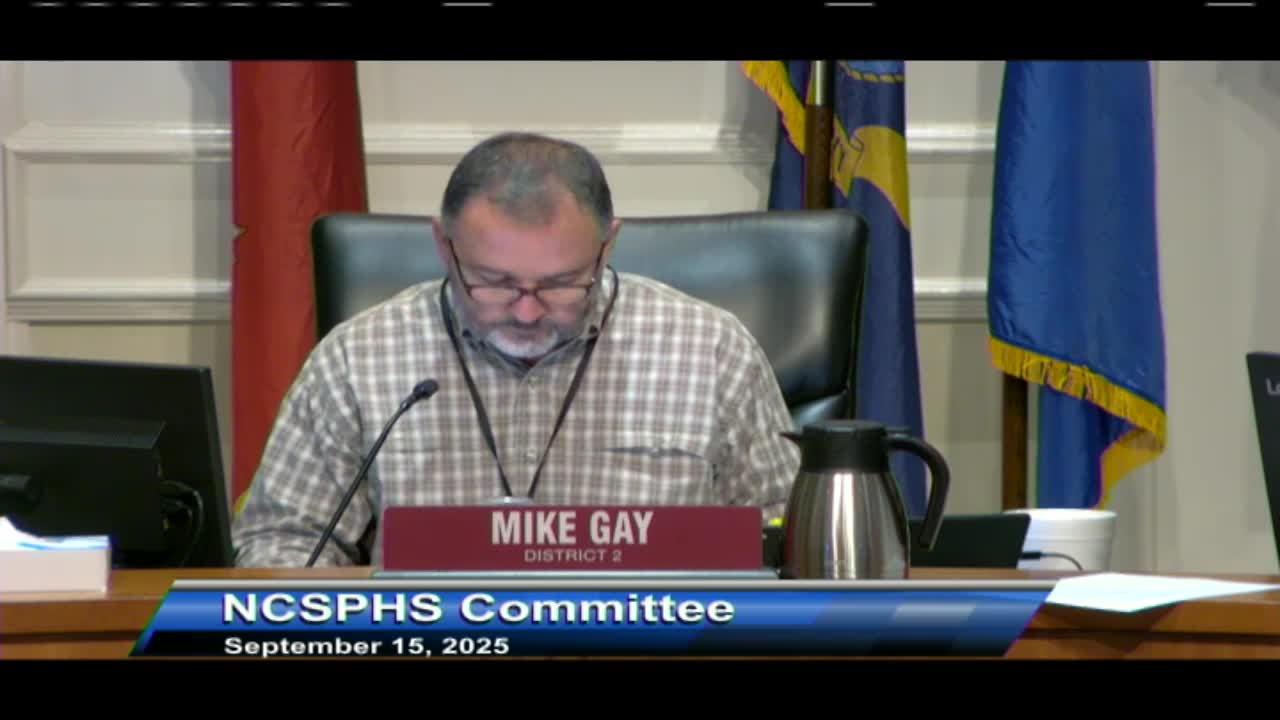
Members of the Neighborhoods Committee spent much of their Sept. 15 meeting arguing over council “strategic initiative” appropriations and the practice of redirecting unspent budget dollars. The committee approved several carryovers and neighborhood grants but deferred a handful of items that lacked the votes needed under committee rules.
Council members on the Jacksonville City Council Neighborhoods Committee on Sept. 15 debated whether small, district-level “strategic initiative” appropriations have become informal “pocketbooks” for council members and whether city practice should automatically sweep unspent or “vacant” funds into the city operating reserve.
Councilmember Michael Boylan (District 6) opened the debate, telling the committee that he was “taken aback” by the number of small appropriations and saying the strategic program had become “Council pocketbooks” rather than a coordinated set of investments. He urged a return to competitive requests for proposals and more concentrated awards, citing his own approach of issuing an RFP and making a single larger award rather than many small grants.
The point struck a chord with other members. “I will be voting against all of them,” Councilmember Dr. Salem said of multiple small grants, adding that awarding many $5,000–$10,000 appropriations creates the same workload for auditors and Office of General Counsel as much larger grants. Salem said he plans to introduce legislation to set a $25,000 minimum for these strategic appropriations going forward.
Mary Stifopoulos of the Office of General Counsel reminded the committee that the legal test for spending city dollars is public purpose. “Public purpose is…tantamount to the expenditure of public dollars,” she said, explaining that OGC and auditors vet whether a proposed grant or appropriation meets that standard and that OGC sometimes recommends adding explicit findings to legislation to document the public purpose.
Councilmembers raised a related concern they called “sweeping funds”: dollars identified in the current year because of budget savings (for example a nearly $10 million debt-service savings discussed during the meeting) that can be reallocated. Several speakers proposed an ordinance to require truly vacant or unspent funds to roll automatically into the operating reserve so that access is equitable across council members rather than reallocated ad hoc.
Committee members also pressed for fewer direct contracts and more competitive, transparent solicitations for neighborhood services; Councilmember Boylan and others said repeated small direct awards place an administrative burden on neighborhood housing and audit staff and increase compliance risk. Several members asked staff and finance committee members to study a formal policy change.
Beyond the policy debate, the committee considered and acted on a long series of agenda items, moving some forward, approving emergency carryovers, and deferring others that failed to reach the committee’s required quorum for committee reporting.
Votes at a glance
- 20250641 — Veterans and military family community center trust fund: Approved (5–0). The committee approved a $600,000 transfer into the Veterans and Military Family Community Center Trust Fund to begin preliminary design and engineering for a city-owned building in the Cathedral District. (Recorded vote: 5 yeas, 0 nays.)
- 20250690 — Florida Avenue Main Street (FAMs) operational support (emergency): Approved (5–0). The committee approved an emergency appropriation to provide one-time operating support for Florida Avenue Main Street, with discussion of the organization’s Main Street certification and staffing. (Recorded vote: 5 yeas, 0 nays.)
- 20250691 — A neighborhood/organizational appropriation (emergency): Vote recorded 3–2; deferred per committee rules (requires 4 votes to report out). The committee took a 3–2 vote in favor, but the committee clerk noted the committee must have a majority of the full membership to report the bill out; the item was therefore deferred to the next meeting.
- 20250654 — Twelfth Street park (dog park/walking track and activation): Approved (5–0). The committee approved withdrawal from the Kings Road landfill mitigation fund to create a passive park with a walking track and dog park in Councilmember Clark Murray’s district. (Recorded vote: 5 yeas, 0 nays.)
- 20250687 — Youth program (Newtown Success Zone / Step by Step) (emergency, amended): Approved (5–0). The committee amended the agreement to allow limited program expenses (participant incentives, food, field trips, t-shirts) and approved the emergency funding to support after-school enrichment at Wallace Small Community Center. (Recorded vote: 5 yeas, 0 nays.)
- 20250640, 20250643, 20250647, 20250648, 20250649, 20250650, 20250651, 20250652, 20250653, 20250655, 20250659 — Assorted appropriation bills and technical corrections: Approved. These items passed by committee votes recorded in the meeting (most recorded as 4–0 or 5–0 depending on attendance); details recorded in committee minutes and the roll calls documented in the transcript.
- 20250472 — Introduced appropriation (councilman Gaffney’s item): Withdrawn by the introducer (ballot approved 5–0). Councilmember Gaffney withdrew the bill to permit either a carry-over or reintroduction as an in-and-out emergency if needed.
- 20250660, 20250661 — Additional strategic appropriations: Approved (5–0).
- 20250682, 20250683, 20250664, 20250657, 20250656, 20250713, 20250716, others — Several items recorded votes without reaching the committee reporting threshold or failed on committee ballot and were deferred. Many of these were recorded as 3–2 or 2–3 and were deferred under the committee rule requiring a majority of the full committee to report a bill.
What the debate means
The hearing concentrated less on individual line items than on how the council should govern the strategic-initiative process going forward. Multiple members said the current pattern—lots of small, district-level awards, some direct contracts, and occasional midyear reallocations of unspent funds—creates administrative burdens, raises compliance risk, and produces perceptions of favoritism. Several members asked staff in the finance and rules committees to examine options: (a) require unspent funds to roll automatically into the operating reserve; (b) set a minimum award size (Councilmember Salem proposed $25,000); and (c) favor RFP-driven, competitive awards rather than many direct contracts.
Office of General Counsel guidance and next steps
Mary Stifopoulos of the Office of General Counsel told members that OGC and auditors review public-purpose findings and sometimes recommend including explicit findings in legislation so a court can defer to the council’s stated public purpose. Philip Peterson (council lawyer’s office) and auditors also advised the committee about procedural limits: for example, one item that received a simple majority on the committee ballot could not be reported out because committee rules require a majority of the entire committee membership to report a bill.
Committee members asked staff to bring options back to Neighborhoods and to Finance/Rules: potential ordinance language on sweeping funds, a proposal to limit the number of small direct contracts, and a suggested minimum award size for strategic-initiative grants. Several members signaled readiness to pursue statutory or rule changes so future awards are more transparent and easier for city grant administrators to manage.
Ending
After several hours of debate the committee advanced a mix of neighborhood projects, veterans funding and program grants while deferring other items that failed to reach the committee’s reporting threshold. Committee members directed staff to work with finance and rules on policy options to standardize the handling of found/unspent funds and to reduce the administrative burden of many small direct awards. The items deferred will return to committee or to the council after additional review.