Get Full Government Meeting Transcripts, Videos, & Alerts Forever!
Get email alerts on the Detention Center Corecivic topic
No spam. Unsubscribe anytime.
Residents, advocates press California City planning commission to demand permits and transparency for CoreCivic facility
Summary
More than 100 speakers urged the California City Planning Commission to demand licensing, environmental review and public hearings for a newly opened facility run by CoreCivic; city attorney said no action was before the commission.
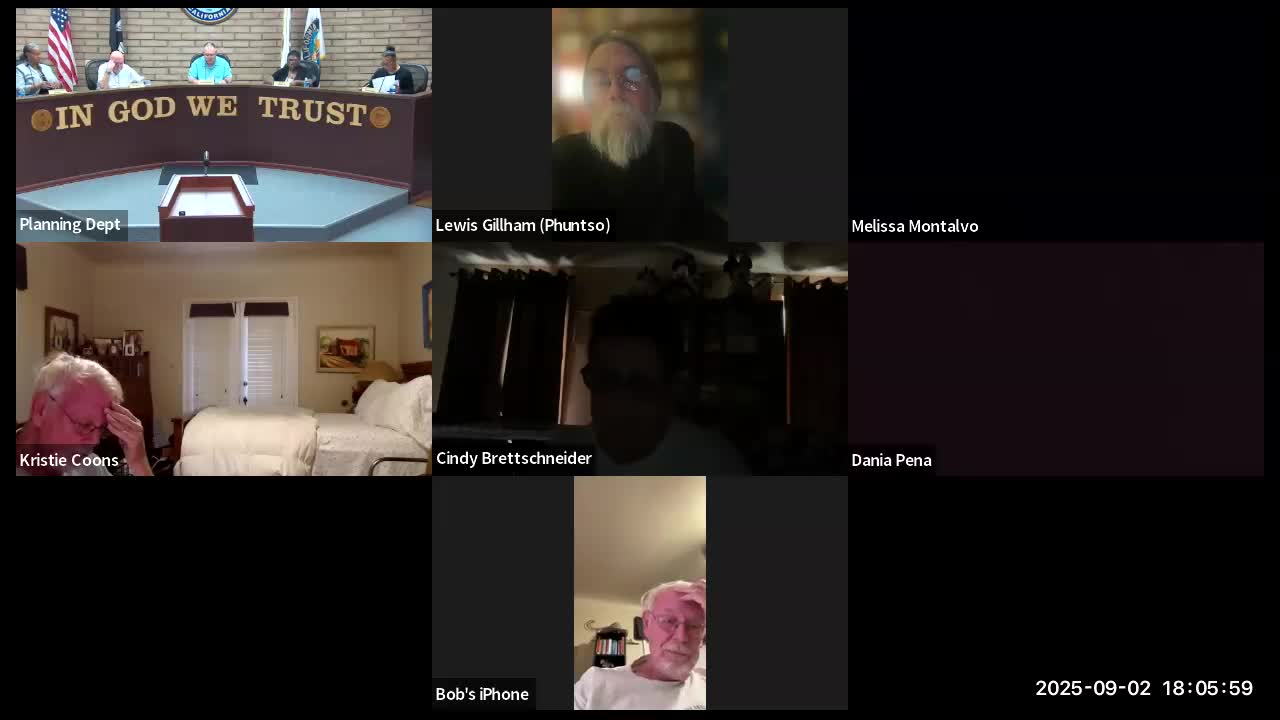
More than 100 residents and advocates urged the California City Planning Commission on Sept. 2 to block or publicly scrutinize the operation of a CoreCivic-run detention facility in California City and to enforce local licensing and review requirements.
Speakers at a public-comment session that ran more than three hours described transfers of detainees into the city and said the facility is operating without required local business licenses, conditional use approvals and environmental review. "We really wanna encourage you all today to continue to ask questions," said Marcela Hernandez, identifying herself as with Detention Watch Network.
The comments pressed the commission to use local rules and state laws, including Senate Bill 29, which several speakers said requires two public hearings and advance notice when jurisdictions approve or license immigration detention facilities. "Transparency, proper licensing, and public trust are not optional," said Natalia Saka of the Coalition for Humane Immigrant Rights (CHIRLA).
Speakers also cited a 1998 conditional use permit for the site and argued that the new use as an immigration detention center is legally distinct from the earlier permit. "You have a long-wing problem," said Andrew Free, an immigration and civil-rights lawyer, referring to legal limits on treating civil detention as punitive; Free cited conditional-use-permit 97-01 as a relevant document and shared it with the public. "This conditional use permit doesn't work anymore," he told the commission.
Bridal Ruiz, senior managing attorney at the Immigrant Legal Resource Center, told the commission that CoreCivic "is operating without the proper licensure, without proper business licenses" and argued the company should pursue a new conditional use permit, environmental review under CEQA and any required discretionary approvals. "CoreCivic needs to apply for [a] conditional use permit," Ruiz said.
Community members described personal harms from transfers and family separation. "My son has been already detained for six months," Jose Hernandez, speaking for his mother, told the commission, asking what local officials could do for affected families. Several speakers said detainees had been moved from other local facilities without public notice and raised concerns about medical care, mental-health impacts and forced labor allegations in private detention operations.
City staff and legal advisors told the commission it had no formal action before it on the matter at this meeting. "Correct, there is no action being asked of the commission and any action would be inappropriate because it's not agendized," said Christie Lopez, identified in the meeting as legal counsel.
Planning staff earlier described the CoreCivic filing as a submitted SPR minor application that the city is reviewing for completeness; staff said they had not received environmental documents tied to that submittal. Planning Director Devari (staff report) told commissioners that the applicant "resubmitted their application paperwork" and that staff would evaluate the new materials against prior approvals and applicable law.
Speakers repeatedly urged the commission to document concerns to the city council, request enforcement of licensing rules, insist on CEQA review and require the company to follow SB 29 notice and hearing procedures. Multiple nonprofits and legal groups provided written materials to the city; the meeting record includes a letter from Schuh, Mahali & Weinberger and other submissions cited by members of the public.
The planning commission did not vote on CoreCivic-related approvals at the Sept. 2 meeting. Commissioners and staff said any formal action would have to be agendized. Several speakers urged the commission and the city council to coordinate with county and state partners and to consider alternative economic-development strategies that do not rely on detention facilities.
The public-comment period for the CoreCivic item closed at the end of the meeting's testimony; commissioners then moved to general announcements and adjourned.
Ending: Members of the public who testified included local residents, county and statewide advocates, attorneys and faith leaders. Commissioners repeatedly said they would act only on agendized items but that written materials submitted to the city would be part of the administrative record for any future reviews.