Get Full Government Meeting Transcripts, Videos, & Alerts Forever!
Get email alerts on the Pickleball Planning topic
No spam. Unsubscribe anytime.
Rec and Park presents TAP findings: 1,700 survey responses, nine viable sites and 44 potential courts if funded
Summary
The San Francisco Tennis and Pickleball Roundtable (TAP) presented survey results and site analyses showing strong demand for pickleball. Staff identified nine viable Recreation and Park sites with potential for 44 dedicated courts and recommended three priority sites if funding and partnerships materialize.
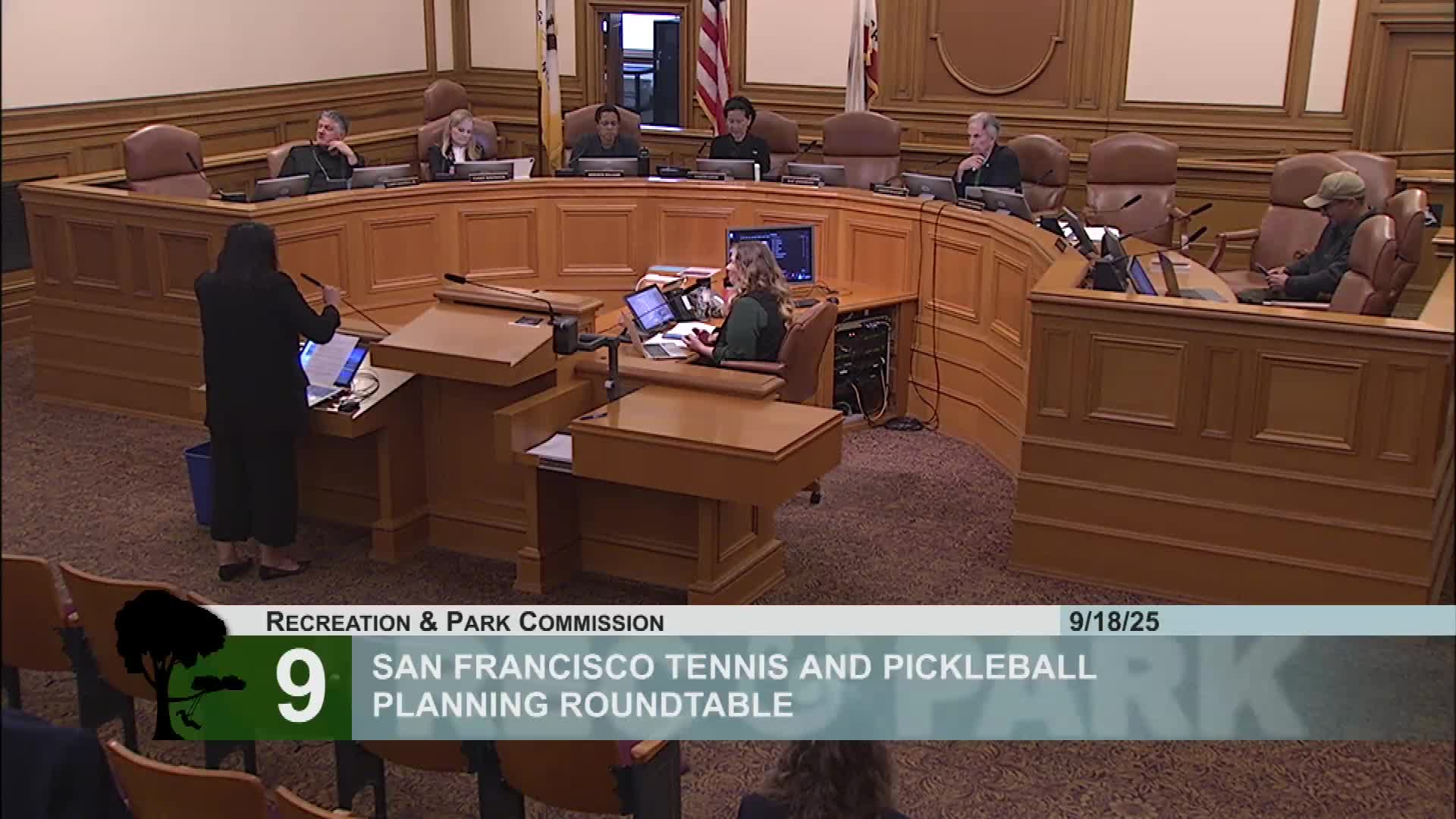
Department staff and community volunteers presented results from the San Francisco Tennis and Pickleball Roundtable (TAP) to the Recreation and Park Commission on Sept. 18, describing survey results, site evaluations and next steps for accommodating growing pickleball demand.
Beverly Eng of Rec and Park said TAP conducted an outreach program that drew about 1,700 survey responses (approximately 1,400 online responses and 111 on‑site intercept surveys) and included focus groups and site assessments. Staff said the city now manages roughly 90 courts but demand continues to exceed supply, producing waitlists, crowding and user conflicts at multi‑lined tennis courts.
TAP’s site analysis began with about 230 candidate locations and was narrowed to 36 and then nine viable Rec and Park sites. If all nine sites were developed and funding becomes available, Rec and Park staff said the nine could provide roughly 44 dedicated courts. The TAP committee and staff identified three top candidate locations for further pursuit: Hamilton Recreation Center, John McLaren Park (Lewis Sutter Field), and Moscone Recreation Center. Crocker Amazon was cited as an example where staff converted an underused volleyball area to four dedicated courts that opened in August.
Survey highlights included a multi‑generational player base, a roughly even split between players preferring open “drop‑in” play and those preferring reservations, a strong desire for courts within 15 minutes of home, and heavy interest in lighting to support evening play. TAP volunteers emphasized that new venues should avoid a “cookie‑cutter” approach and should accommodate both drop‑in and reserved play where possible.
Funding and next steps: TAP organizers said realizing new courts will depend on public‑private partnerships and capital funding; the committee has begun informal fundraising outreach and is seeking a fiscal sponsor for capital projects. Commissioners commended the research and asked department staff to continue coordination; several members emphasized the need to balance tennis and pickleball interests and to pursue solutions beyond Rec and Park property alone.
Ending: staff said TAP will publish a final report and continue to refine cost estimates and site feasibility if community fundraising and public partners progress.