Get Full Government Meeting Transcripts, Videos, & Alerts Forever!
Get email alerts on the Budget Finance topic
No spam. Unsubscribe anytime.
SFMTA reports FY 2024–25 ended with modest surplus as fare compliance and parking revenues rose
Summary
The SFMTA reported a roughly $84 million positive difference between revenue and expenditures for fiscal 2024–25, driven by improved fare compliance, higher parking revenues and one‑time capital recoveries, the agency's CFO said.
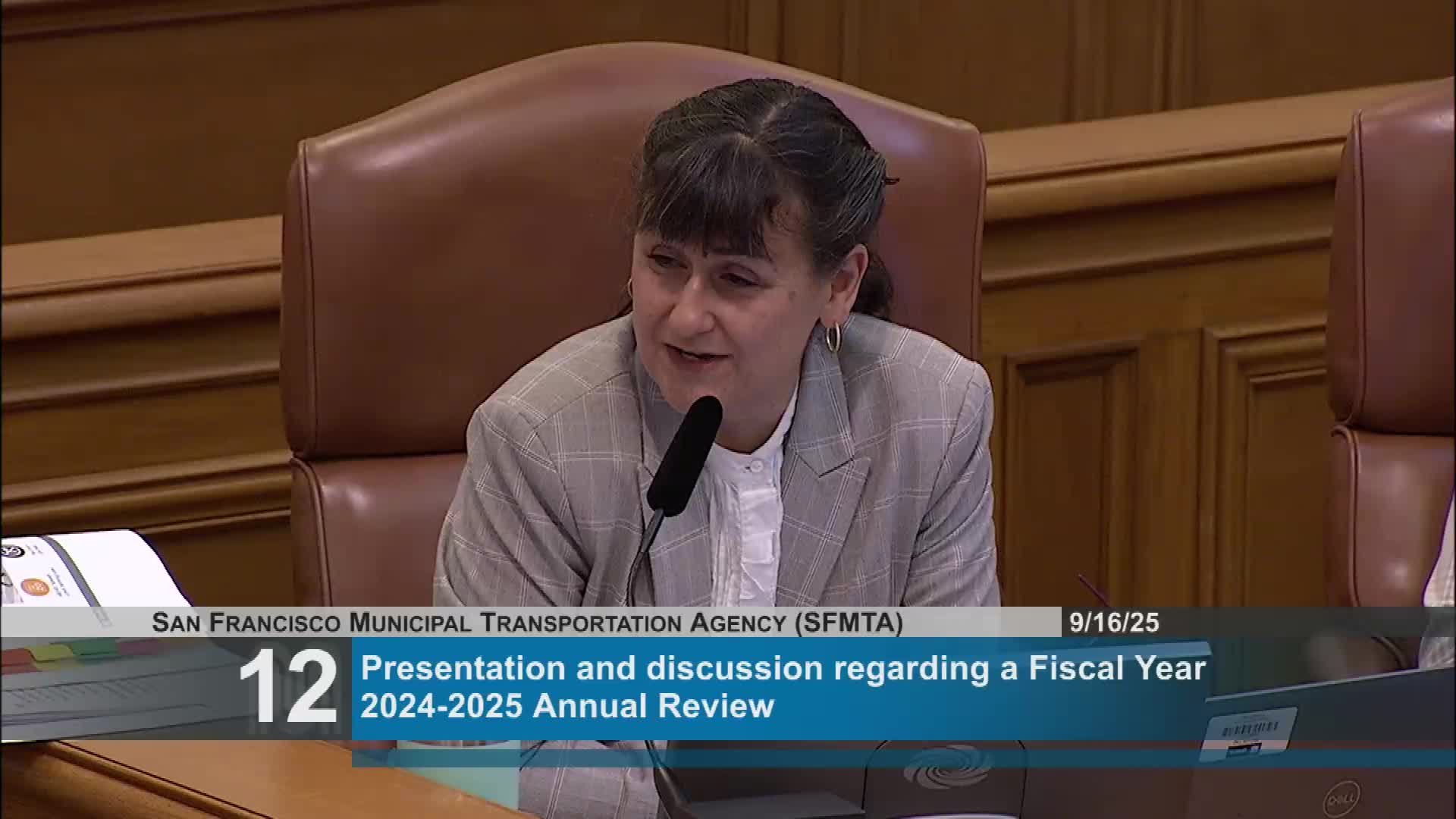
SFMTA Chief Financial Officer Bree Mahorder told the board that the agency finished fiscal year 2024–25 with about $84 million more revenue than expenditures after a year of revenue optimization and tight expenditure controls.
Mahorder said the agency's revenue gains came from two primary sources: increased fare compliance and stronger parking revenue. Transit fare revenue exceeded budget by roughly $2–3 million; SFMTA staff estimated about $2.1 million of the revenue gain was attributable to increased fare compliance rather than ridership alone. Parking revenue was about $11 million above budget. Mahorder also said about $40 million of the year's favorable result came from one‑time capital recoveries tied to federally reimbursable overhead on capital projects; about $10 million of the improvement was ongoing operating savings.
Why it matters: The agency faces a projected multiyear operating shortfall beginning in FY 2025–26 that staff described during the meeting as on the order of several hundred million dollars. Mahorder and Director Wise said the year's gains provide a modest cash cushion (fund balance) but are not a substitute for structural solutions. Mahorder emphasized that one‑time capital recoveries should not be treated as recurring revenue.
Board discussion focused on how the year’s results affect reserves and the coming two‑year budget process. Mahorder explained that the $84 million would fall to the agency's fund balance and recommended considering policy options for whether to convert portions of that one‑time fund balance into a formal reserve. Directors also asked staff to present tradeoffs between using one‑time funds for reserves, one‑time investments, or other financial tools.
Quotes from the meeting included Mahorder's summary: "Due to revenue optimization... and fiscal control... we're actually going to end the year having collected $84,000,000 more in revenue than we expended." Director Wise framed the broader context: "If we can't meet our economic climate and house goals without a well‑functioning Muni system... where are we?" (Victoria Wise).
What comes next: Staff said the agency will begin the two‑year budget process in October, bring policy options for reserves and one‑time spending, and continue monitoring fare compliance and parking strategies as part of revenue planning.
Speakers quoted or referenced in this article: Bree Mahorder, Victoria Wise.