Get Full Government Meeting Transcripts, Videos, & Alerts Forever!
Get email alerts on the Open Enrollment topic
No spam. Unsubscribe anytime.
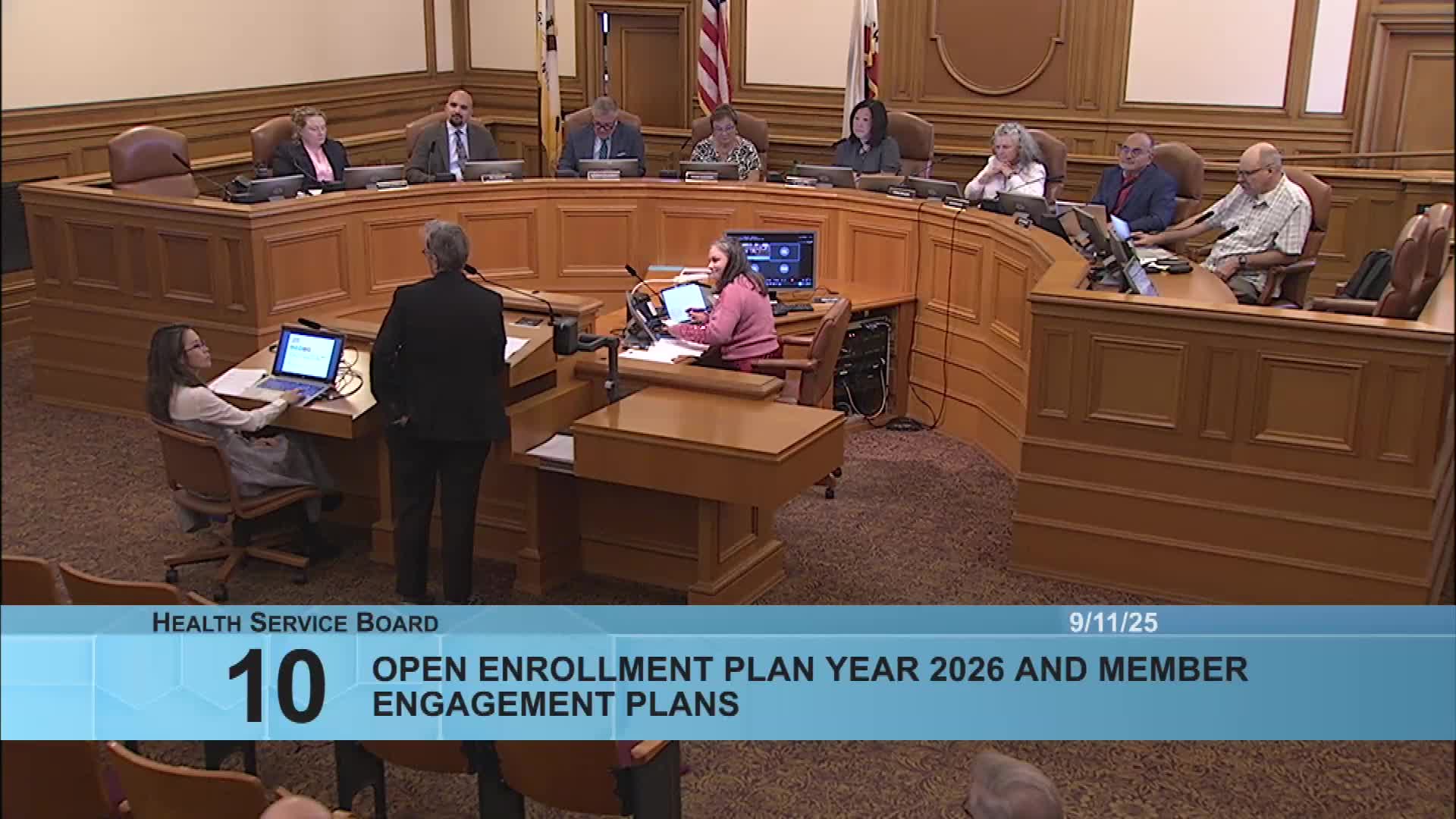
Health Service Board previews open enrollment changes for plan year 2026
Summary
San Francisco Health Service System (SFHSS) staff outlined open enrollment dates, new online tools, changes to flexible spending accounts, a new life/disability vendor benefit, and a pivot in flu-clinic plans for the 2026 plan year.
San Francisco Health Service System staff on Sept. 11 told the Health Service Board that open enrollment for plan year 2026 will run Oct. 1–24 and described several member-facing changes intended to streamline enrollment and outreach.
The open enrollment period will allow members to enroll, waive coverage, add or drop dependents and (for active employees) elect flexible spending accounts, SFHSS Chief Operating and Experience Officer Ren Coleridge said. Coleridge said SFHSS will continue a passive enrollment approach that rolls many elections forward, but Flexible Spending Account (FSA) elections must be made annually.
Board members were told new online functionality will let members compare plans they are eligible to enroll in, with side-by-side copay information for in‑ and out‑of‑network services. Coleridge described an email pilot with several departments to reduce printed mailing costs and reach members more efficiently.
The board also heard that New York Life will replace the prior life and disability vendor. Coleridge said New York Life’s negotiated benefit includes a $200,000 employee guarantee‑issue life benefit and a $100,000 spouse guarantee‑issue benefit, both without medical review. She said additional services such as estate‑planning resources are included in the vendor package.
SFHSS will give newly enrolling Blue Shield members the ability to designate a primary care provider during enrollment so the carrier receives that information on file and members are less likely to be auto‑assigned a provider, Coleridge said.
Coleridge described revisions to dependent‑care FSA administration in response to IRS nondiscrimination testing and a statutory increase in the dependent‑care FSA limit. To allow some members access to the higher $7,500 limit while preserving nondiscrimination compliance, SFHSS will operate a two‑tier dependent‑care FSA for plan year 2026: employees predesignated as highly compensated employees (HCEs) may elect up to $3,000; non‑HCEs may elect up to $7,500, Coleridge said.
SFHSS said open enrollment letters will be mailed beginning Sept. 22 and confirmation letters will be mailed in late December. The agency will provide a digital benefits guide and other materials on a dedicated microsite; staff said no general printed benefit guides will be produced this year but that members can request printed material when needed.
The board was told the annual flu clinics will be run differently in 2025 because SFHSS could not finalize a vendor contract consistent with city terms. Carrie Beshears, SFHSS well‑being manager, said staff will run a public‑education campaign and direct members to obtain vaccines through their carriers and local providers; SFHSS will partner with departments to push targeted messages and include information at benefit fairs.
Why it matters: open enrollment is the annual window for members to change their health elections; the changes affect how members choose plans, the dollar limits available for dependent care FSAs, and how SFHSS will deliver enrollment communications and vaccinations.
Board members asked for clarity about printed materials for retirees and other members who lack internet access; staff said members can request specific printed pages or booklets from member services.
SFHSS staff encouraged board members to note the Oct. 1–24 enrollment window and the October meeting cancellation (the board later voted to cancel its Oct. 9 meeting).