Get Full Government Meeting Transcripts, Videos, & Alerts Forever!
Get email alerts on the Affordable Housing Financing topic
No spam. Unsubscribe anytime.
Committee asks departments to study enhanced infrastructure financing district to support affordable housing in West Side rezoning areas
Summary
The committee voted 3-0 to recommend a resolution requesting the Controller, Office of Economic and Workforce Development, and Mayor's Office of Housing and Community Development analyze the feasibility of forming an Enhanced Infrastructure Financing District (EIFD) to fund affordable housing in well-resourced neighborhoods under rezoning plans.
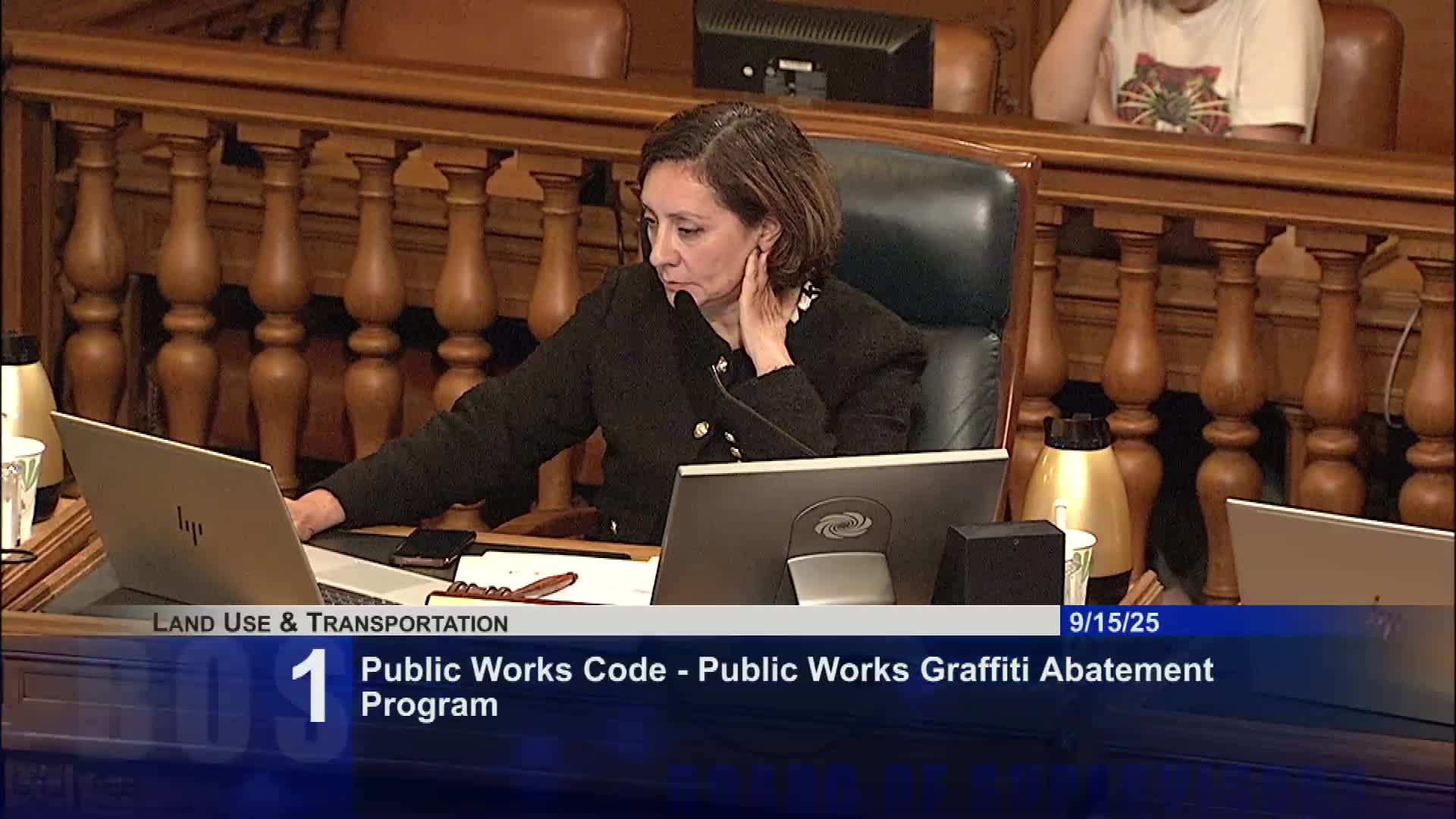
At its Sept. 15, 2025 meeting the Land Use and Transportation Committee of the San Francisco Board of Supervisors voted 3-0 to send to the full Board a resolution expressing interest in forming an Enhanced Infrastructure Financing District (EIFD) and requesting analysis from the Controller's Office, the Office of Economic and Workforce Development, and the Mayor's Office of Housing and Community Development on potential scenarios, revenue calculations and feasibility.
Supervisor Mirana Melgar said the resolution responds to a lack of a long-term affordable housing financing strategy for the West Side and other well-resourced neighborhoods that are being considered for rezoning. "We currently do not have a strategy for affordable housing financing on the West Side of town," Melgar said, and she argued an EIFD could dedicate a portion of future property-value growth to local affordable housing projects.
Vice Chair Supervisor Cheyenne Chen supported study of the tool while flagging concerns about tradeoffs with other local funding sources. Chen noted limitations in current funding buckets — housing trust funds with sunset dates, development fees that have been reduced, and one-time general obligation bonds — and asked whether recapturing increases in property tax might reduce resources available to other city needs. "By recapturing the increase in property tax ... does this draw down resources from the general fund that we could then otherwise go towards meeting the other needs of our community citywide?" Chen asked.
Melgar responded to those concerns in committee, saying the EIFD mechanism captures only the increase in assessed value (and under city policy would use 50% of that increase), and that the tool would not remove resources from existing funding used in priority equity geographies. Melgar said the resolution is a request for departmental analysis and does not bind the city to form an EIFD.
Whit Turner of the Housing Action Coalition testified in support during public comment, saying the coalition “strongly support[s] this resolution to explore any IFD” and urging clear revenue models and timelines so housing can be built predictably.
The committee voted to send the resolution to the full Board with a positive recommendation; the motion passed on a roll call of Vice Chair Cheyenne Chen, Member Bridal Mahmood and Chair Mirana Melgar (3 ayes). The committee packet and requested departmental analysis will inform future policy decisions; no formation action was taken at this meeting.