Get Full Government Meeting Transcripts, Videos, & Alerts Forever!
Get email alerts on the Arts Funding topic
No spam. Unsubscribe anytime.
Indy Arts Council seeks $1.3M in level city funding as leaders warn state and federal cuts threaten programs
Summary
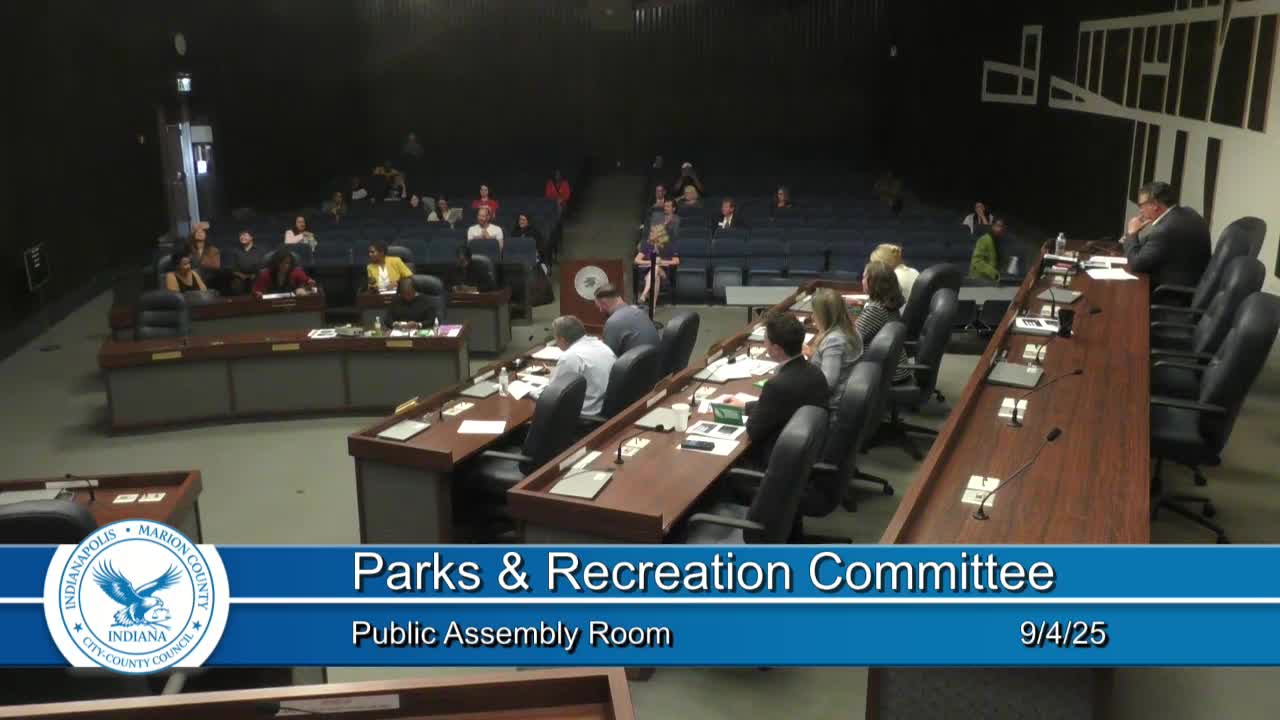
Indy Arts Council CEO Judith Thomas presented a strategic plan and requested level city funding of $1.3 million for 2026, warning of steep state and federal cuts to operating and project support. Multiple arts organizations urged the committee to increase arts investment during public comment.
Judith Thomas, CEO of the Indianapolis Arts Council, asked the Parks and Recreation Committee for level city funding of $1.3 million for 2026 and outlined a strategic plan that prioritizes sustainable funding, access, awareness, professional development and making the city an arts destination.
The council’s presentation and the subsequent public comment period emphasized the arts sector’s economic and civic role, while warning of a contraction in federal and state support that has already reduced project and operating grants to local organizations.
Why it matters: Arts groups told the committee that city funding supports public concerts, free programs, neighborhood activations and workforce development; they said cuts in other public grants — including NEA and state arts appropriation reductions — create gaps that threaten year‑round programming and community access.
What the Arts Council presented Thomas said the arts council distributed $1.95 million in grants to 103 organizations in 2025 — a 128% increase in awardees since 2016 — and highlighted growth in public activations, artist support and digital engagement. She said the council’s annual programs support an estimated 6.5 million attendees and contribute an estimated $524 million in economic impact to the city.
The arts council’s five strategic priorities for five years are: sustainable funding, everyday arts access, increased awareness, professional development/shared resources, and establishing arts and culture as a destination. Thomas described a working action plan assigning responsibility for action items to staff and board members.
Cuts at federal and state levels Thomas warned committee members that the sector is experiencing cuts outside the city’s control. She cited a 38% cut to the Indiana Arts Commission’s two‑year appropriations and projected decreases in state operating and project support: Central Indiana operating support down 19% and Marion County down about 23%; project support falls of 44% (Central Indiana) and 75% (Marion County), as reported by the Arts Council.
The council seeks level funding of $1.3 million in city investment for 2026 to sustain core grant programs and expand project grants for parks, libraries and public spaces. Thomas said the council has begun pursuing additional private funding and partnerships to grow project support beyond a current $50,000 city project‑grant line.
Public comment: arts leaders pressed for more city funding A series of public commenters — representing museums, theaters, arts nonprofits and neighborhood arts groups — told the committee that cuts have real consequences for programming, education and recovery initiatives:
- Julia Whitehead (Kurt Vonnegut Museum & Library) described a youth writing program that has expanded to serve more than 70% of IPS high school students and asked for increased funding to pay tutors and teachers for after‑school time.
- Steven Lane (Fonseca Du Bois Gallery) called the mayor’s proposed arts funding an "insult" compared with the scale of the city budget and urged redirecting resources toward creative community investments.
- Jenny Werner (New Harmony Project) described Playfest Indie, a yearlong playwright development program that lost a $40,000 NEA award and relies on city funding to move plays from development to full production.
- Julie Goodman (The Cabaret) and David Starkey (Indianapolis Opera) described audience reach, education partnerships and economic impact and urged restoring and increasing per‑capita arts investment.
Sector programs and special funding Thomas highlighted targeted programs supported in 2024–2025: opioid‑settlement mini grants (about $450,000 allocated citywide) for mental‑health and recovery work using arts interventions; microgrants reaching more than 140 individuals; and a regional venue study with IEDC and CICF to assess gaps in performance infrastructure.
Committee questions and follow up Councilors asked about timing and revenue sources: Council members asked whether the Capital Improvement Board (CIB), bond bank or other city partners could help fill gaps. Thomas said conversations with administration and funders are ongoing and that the arts council is exploring private and local public partnership options, including growing the city’s existing project grant line.
One councilor asked about a jump in the Public Art for Neighborhoods figure (from $106,000 toward a projected $700,000). Thomas explained the program is tied to development activity and a portion of public incentives for capital projects (the 1% public‑art contribution) and that greater development activity and ordinance changes could increase the fund in future years.
Ending: The committee received the presentation and public testimony; no vote was taken. Members signaled willingness to further explore partnerships and funding avenues during budget review and analysis sessions.