Sheriff’s 2026 budget centers on staffing increases; clashes erupt over ICE detainees during public comment
Loading...
Summary
The Marion County Sheriff’s Office presented a 2026 budget that increases detention staffing and preserves inmate services, while public commenters and several councilors pressed the sheriff over housing ICE detainees and access to counsel and court dates.
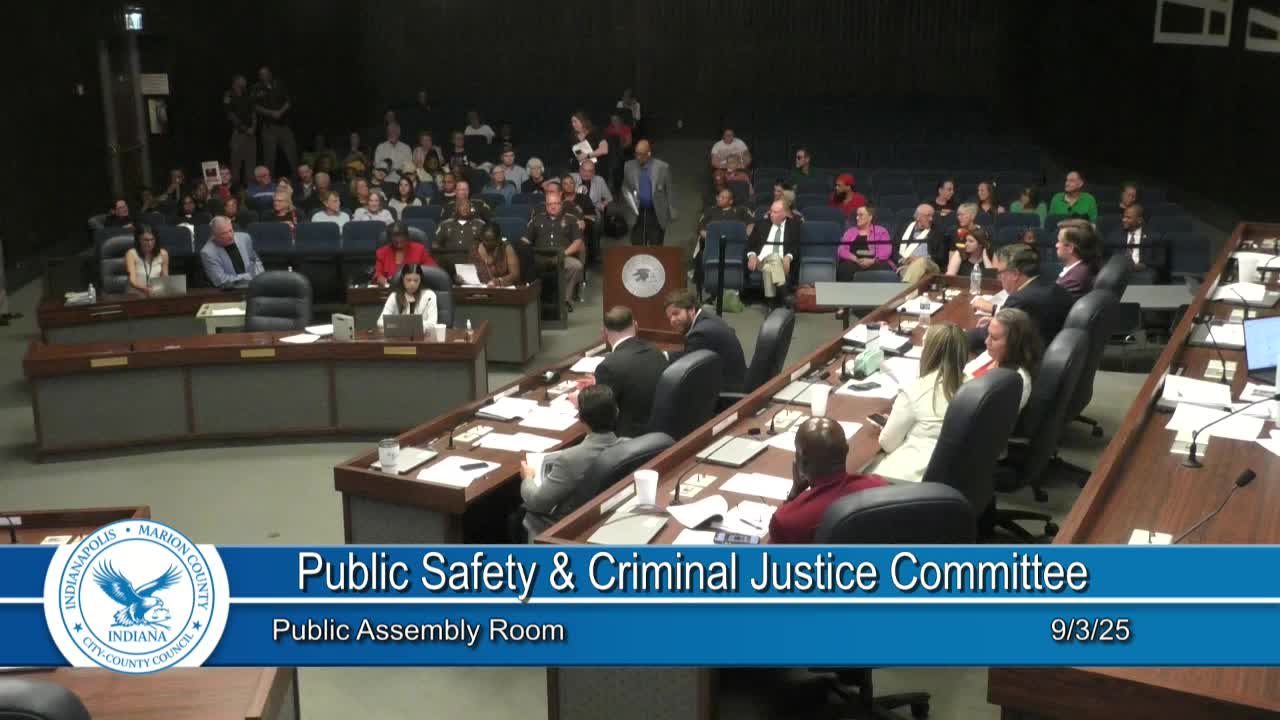
The Marion County Sheriff’s Office presented its 2026 introduced budget to the Indianapolis City-County Council Public Safety and Criminal Justice Committee on Sept. 3, emphasizing increased staffing in the adult detention center and continued investments in inmate services. The presentation touched off extended public comment and sharp questioning from councilors about the sheriff’s housing of ICE detainees.
Sheriff Carrie Forstall and CFO Callen Carr said the introduced 2026 budget totals $150,729,533 and includes funding to add 55 full‑time employees to the sheriff’s staffing model and 2.6% cost‑of‑living adjustments for non‑union staff. Carr said the office expects to budget 881 FTEs in 2026, up from 826 in the 2025 adopted budget, with 535 FTEs allocated to the adult detention center and 307 detention deputies.
Why this matters: The adult detention center holds more than 2,400 inmates, according to the presentation, and staffing levels are a central determinant of operations, overtime costs and detainee welfare. Councilors and community speakers directly linked the sheriff’s contract decisions to broader concerns about due process and humane treatment.
Budget and operational highlights
- Staffing: Carr said the 2026 budget adds 55 detention deputy FTEs, which officials said is intended to reduce reliance on overtime and move toward staffing levels recommended in a KPMG study. The presentation traces a staffing dip starting in 2020 and a recovery driven in part by collective‑bargaining salary increases.
- Jail population and services: The adult detention center (ADC) houses more than 2,400 people and provides medical, dental, programming and reentry services. Carr highlighted opioid‑settlement-funded enhancements to medication‑assisted treatment (including SUBLOCADE) and an in‑jail suicide‑prevention advocate program.
- Medical contract and procurement: The sheriff’s office said it has negotiated with Eskenazi Health on assuming medical services at the ADC; if Eskenazi does not do so, the office expects proposals for a medical contract that "will likely exceed $20,000,000," Carr said.
- Revenue and grants: Carr listed several grants that support jail programming (justice and mental health grants, behavioral management unit grants, COSUP for MAT) but noted the state JRAC award (about $275,000) was eliminated for 2026 and the sheriff’s office is seeking new funding.
ICE detainees and public comment
After the presentation the meeting devolved into extended public comment focused on the sheriff’s decision to house ICE detainees under federal authority and the broader legal and ethical implications. Speakers included residents, religious leaders and immigration advocates who urged the county to end or reconsider participation in federal detainee housing.
Sheriff Forstall said the office is following directives and legal guidance from state officials and noted that Marion County has housed federal detainees for years. "We house the federal prisoners, and that's all that we do," he said, and added that he believes the office is complying with state requirements.
Community members and councilors pushed back. Martin D'Agostino, a resident and community organizer, told the committee: "Use your power of the purse, to reject the sheriff's proposed budget, until and unless he commits to not being an agent, not being an instrument of the [federal] regime." Stuart Mora, an immigration‑defense practitioner, asked the sheriff to "cancel the US Marshals Service contract" and cited delays in court scheduling and difficulty accessing counsel for ICE detainees.
Several commenters described conditions or treatment concerns: Reverend Annettera Jones said requests to meet with the sheriff were ignored and called the policy "cowardice." Other speakers said detainees face interrupted sleep, limited interpretation services and barriers to obtaining immigration paperwork; the sheriff disputed some of the operational allegations and said housing for federal detainees is separate and that some statements were inaccurate.
Council questions and requests
Councilors asked for legal review and staff follow‑up. Councilor Kelsey McCormick and others requested that council legal staff (OCC) assess the attorney general’s letter cited at the meeting and determine the county’s discretion. Councilor Brianne Delaney and Councilor Keith Graves asked for improved access to legal services and language interpretation for detainees; Councilor Delaney also asked whether deputies would take on security duties previously covered by a private contract (the sheriff said deputies now handle that work after a private contract was eliminated to meet budget targets).
Other fiscal and operational notes
- Carr said the sheriff’s office projects an overtime budget of $9,800,000 for 2026, about $760,000 less than 2025. The office also expects state reimbursement gaps for housing state prisoners and noted a longstanding unpaid balance from the state dating to April 2020.
- The sheriff’s office said it averages about 101 ICE detainees and that the federal government reimburses roughly $75 per day for those beds.
Formal committee action
Late in the meeting the committee voted on a procedural member request to add a guest speaker to a future agenda (a motion to add the recommended speaker to the Oct. 22 meeting). The chair said he had previously denied the request and a roll‑call vote on the motion failed; the committee then adjourned. The committee did not take a substantive budget vote on the sheriff’s 2026 introduced budget during this meeting.
What’s next
Councilors asked for follow‑up legal analysis from the city’s counsel on the attorney general’s positions, and several members signaled interest in exploring options for expanded legal aid and language access for detainees. The sheriff’s office will continue budget briefings as the council completes fall budget review.